
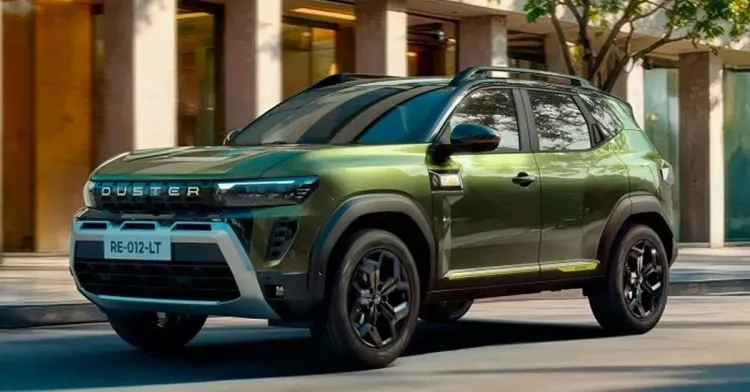
The French automaker Renault has finally confirmed that its first strong hybrid vehicle, the highly anticipated Duster E-Tech Hybrid, will be launched in India on 17th October 2026. This will be the third powertrain option for the new-generation Duster. It will join the existing 1.0-litre and 1.3-litre turbo-petrol engines. The new hybrid will use Renault’s E-Tech Strong Hybrid 160 system. And this SUV will directly rival the strong-hybrid versions of the Maruti Suzuki Grand Vitara, Maruti Suzuki Victoris and Toyota Urban Cruiser Hyryder.
The biggest highlight of the Duster Hybrid will be its powertrain. It will come equipped with a 1,789cc naturally aspirated four-cylinder petrol engine. This motor will come paired with a 49 bhp electric traction motor and a 20 bhp starter-generator. The system gets a 1.4 kWh battery pack and produces a combined 160 bhp and 172 Nm.
The 1.4 kWh battery is larger than the approximately 0.60 kWh battery used by the Toyota-based strong-hybrid system in the Grand Vitara, Victoris and Hyryder. Renault claims that the Duster Hybrid can complete up to 80 per cent of city driving in electric mode under suitable conditions. However, the actual amount of EV driving will depend on traffic, battery charge, driving conditions and accelerator inputs.
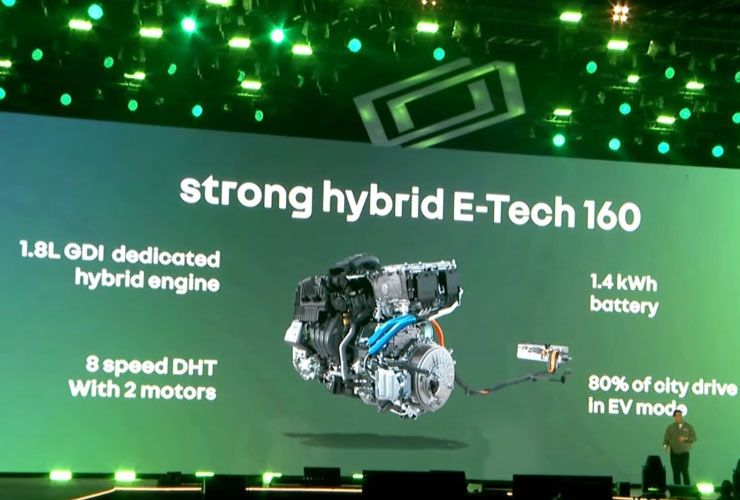
Also, unlike the plug-in hybrid cars, the Duster Hybrid will not require external charging. It will use regenerative braking to recover energy during deceleration. Meanwhile, the petrol engine can switch off when it is not required. This will help the SUV to use electric propulsion at lower speeds and in traffic. And this is where a strong hybrid delivers its biggest efficiency benefit.
Unlike the Maruti Suzuki Grand Vitara, Victoris and Toyota Urban Cruiser Hyryder, the Duster does not use an e-CVT transmission. Renault’s E-Tech system uses a multi-mode automatic gearbox with fixed gear ratios and sends power to the front wheels. The system can switch between electric drive, petrol engine drive and a combination of both.
It depends on the vehicle’s speed, battery charge and accelerator input. This also means that the driving experience could be different from the largely step-free operation of Toyota’s e-CVT system. The engine RPM is expected to rise and fall more like a conventional automatic. And the drivers could notice gear engagements as the system changes between different driving modes.
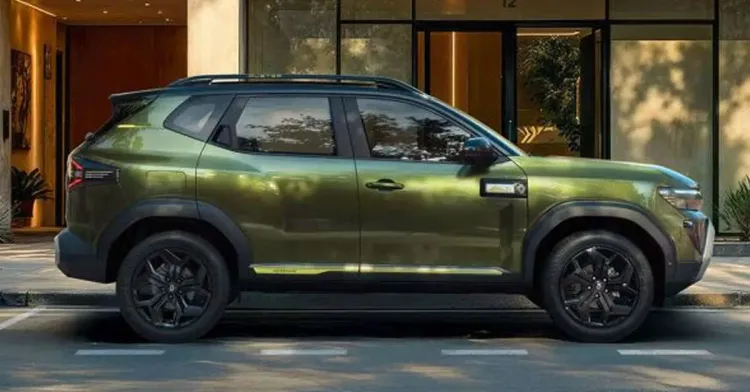
The strong hybrid will join the two existing turbo-petrol engines in the Duster line-up. The 1.0-litre three-cylinder turbo-petrol engine produces 100 bhp and 160 Nm and comes with a 6-speed manual gearbox. Meanwhile, the larger 1.3-litre turbo-petrol engine produces 163 hp and 280 Nm.
It is offered with both a 6-speed manual and a 6-speed wet-clutch DCT gearbox. The hybrid, meanwhile, will focus more on efficiency and electric driving rather than simply offering more power than the turbo-petrol versions.
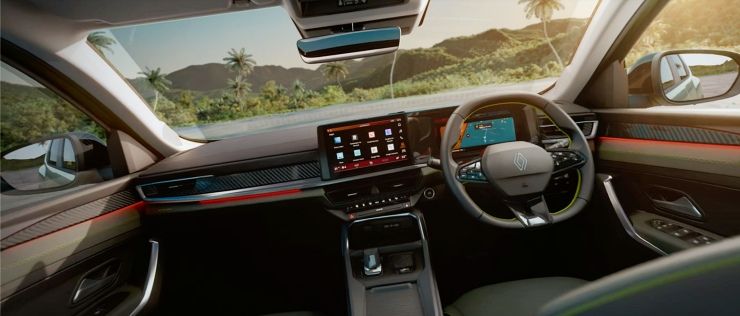
The Duster Hybrid is expected to be positioned towards the top of the range and will get a long list of features. These are expected to include a 10.1-inch touchscreen infotainment system, a fully digital instrument display, panoramic sunroof, wireless phone charging and dual-zone climate control.
Safety features will include six airbags and a 360-degree camera. Meanwhile, Level 2 ADAS is expected to be offered on selected variants. The exact variant-wise feature list will be revealed closer to the launch.
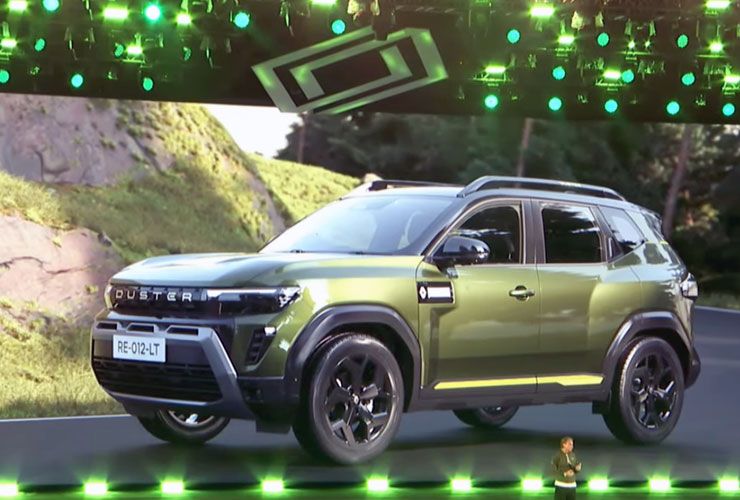
Renault will reveal the price of the Duster Hybrid on 17th October. The existing Duster range is priced from Rs 10.49 lakh and goes up to around Rs 18.49 lakh (ex-showroom). Although the hybrid is expected to sit towards the upper end of the range.
The strong-hybrid versions of the Grand Vitara, Victoris and Hyryder are positioned in the approximate Rs 16.5 lakh to Rs 20 lakh range. So, Renault will have to be very careful when it comes to positioning the Duster Hybrid if it wants to compete against these established strong-hybrid SUVs.
What is more important is that localisation will play a major role in the pricing of the Duster Hybrid. If Renault launches the hybrid at a high price because the powertrain is not sufficiently localised, it could make the SUV difficult to justify against its rivals. So Renault needs to follow an aggressive pricing strategy and ideally price the Duster at a localised level even before full localisation is achieved.
The hybrid is coming at an important time for Renault. This is because the Duster sales have declined after reaching 2,359 units in April. Sales then fell to 1,267 units in May, 1,011 units in June, 512 units in July and 402 units in August.
It is believed that the new hybrid will give Renault another powertrain to attract buyers who want lower fuel consumption without moving to an EV. It will also give the Duster an alternative to the diesel powertrain that made the previous-generation model successful.