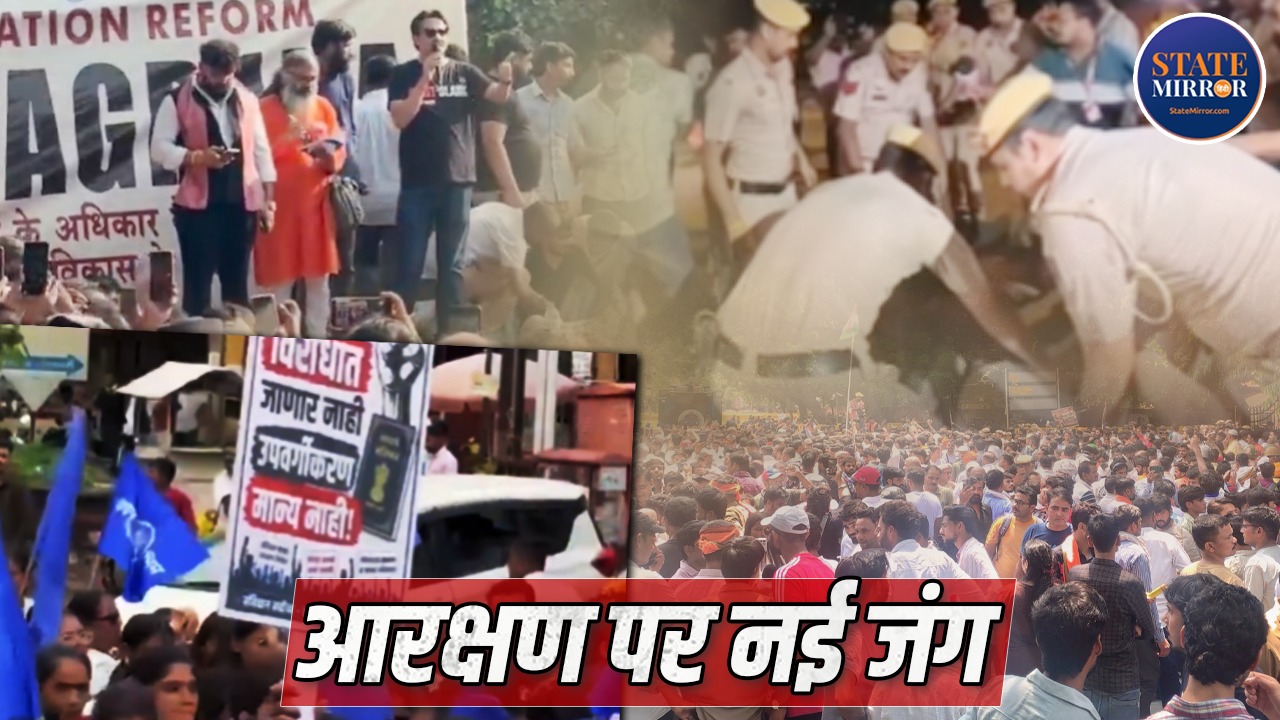
Aarakshan Hatao Andolan Latest News: Now not just slogans but a model fight is visible on the streets of Delhi on reservation. On one hand, there is a direct and aggressive message of 'remove reservation', while on the other hand, the demands of the protesters include proposals like economic base, creamy layer, quota within quota, data on reservation, minimum merit and strengthening of EWS. That means the war is no longer just on the question of whether reservation should remain or go; The real fight is also over what should be the basis if the system is changed? From the Jantar Mantar protest on 21st August to the Connaught Place protest on 23rd August, this same language appeared to be becoming more clear. Although it is too early to call these demands the official blueprint of India's 'next reservation model', it is definitely a precursor.
1. Should the basis of reservation and government help be economic?
The first and most important demand of the protesters is that the economic situation should be given more importance in determining government assistance and opportunities. He argues that poverty is not limited to any one caste, hence an economically weaker person should get education, scholarship, coaching, fees and other government assistance on the basis of his economic condition rather than his caste. This demand takes the current debate directly to the question of caste versus economic need. The question for the protesters is that if government resources are limited, should their priority be social identity or actual economic backwardness?
But here it is important to understand an important difference – the demand to give more importance to the economic basis and the demand to immediately end the existing caste-based reservation are not the same thing. This difference makes the whole story of this movement more complex.
2. Has the war of 'quota within quota' started?
The second demand is for 'Quota Within Quota'. Its basic logic is that the benefits of reservation cannot reach all groups within a reserved category equally. If some communities within a larger reserved category continue to gain more and some groups are left behind, why not consider a separate share for more deprived groups?
Along with this the issue of creamy layer is also added. That is, the debate is now not only about which class should get reservation, but also to what extent should be the eligibility for benefits within the same class and should families who have progressed economically and socially continue to get the same benefits?
This demand takes the movement directly beyond the slogan of 'Abolish Reservation', because here instead of completely removing the existing system, it also comes to the fore to change the distribution of benefits within it.
3. Will the 80 year old reservation system now become a political weapon?
The third demand is to issue a White Paper on reservation. The protesters argue that the reservation system that has been in place for decades should be evaluated not just by political speeches but by statistics. The government should make public how much representation different communities got in education and government jobs, which groups benefited from reservation more and which communities are still lagging behind.
This is where the most data-based demand of the movement comes from – first present the data, then decide what needs to change in the system.
If such a detailed White Paper ever comes, the debate could turn to several concrete questions: How much has reservation changed representation? How equal was the distribution of profits? Did some relatively capable families benefit again and again? Which groups still suffer from a lack of representation? That means the protesters are not just demanding a change in policy; They are also demanding an account of the results of the current policy.
4. Is 'merit' reservation going to be the next big political battle?
The fourth demand is related to minimum qualifying marks and academic standards in higher education. The protesters protested against the compromise on merit standards for admission to IIT, IIM and other higher educational institutions. Ajit Bharti also in his speech linked merit and efficiency with the goal of developed India.
The dispute here is not just about cutoff or numbers. Two different viewpoints collide behind this. One side believes that due to historical social inequality, equal examination results cannot be considered equal opportunities. The other side says that minimum academic competence in higher education and specialist areas should not be compromised.
Therefore the word 'merit' is not just an issue of examination in this movement. This is part of the larger question of whether equal opportunity means equal entry or separate opportunity based on historical inequality?
5. Is strengthening EWS an alternative path to the 'remove reservation' model?
The fifth demand is to make EWS i.e. Economically Weaker Sections more effective. The protesters say that economically weaker students should go beyond just a category or limited reservation benefits and get real financial assistance – such as help with fees, application fees, hostels, education and other expenses.
It is here that the economic logic of the 'Remove Reservation' campaign is most clearly visible. The proposed thinking is that if a student's biggest obstacle is poverty, then government policy should respond to his or her economic needs.
But here also a caution is necessary. Strengthening EWS does not in itself become an alternative to existing caste-based reservations. This is the policy direction of the protesters, not the new reservation model announced by the government.
Are these demands a glimpse of India's next reservation model?
Put these five demands together and the picture becomes interesting – economic basis, creamy layer, targeted distribution within reserved categories, data based review on reservation, minimum merit and EWS assistance.
That is, the debate of the movement is no longer limited to just 'should reservation be wanted or not'. He is asking – who should be the beneficiaries, how should eligibility be decided, how much weight should economic weakness be given, how should benefits be distributed within reserved categories and by what data should the success of the entire system be measured?
The real battle now is probably about this question – will India's next reservation model keep caste as the primary basis, economic need, mix both or will new levels be created within the existing system?