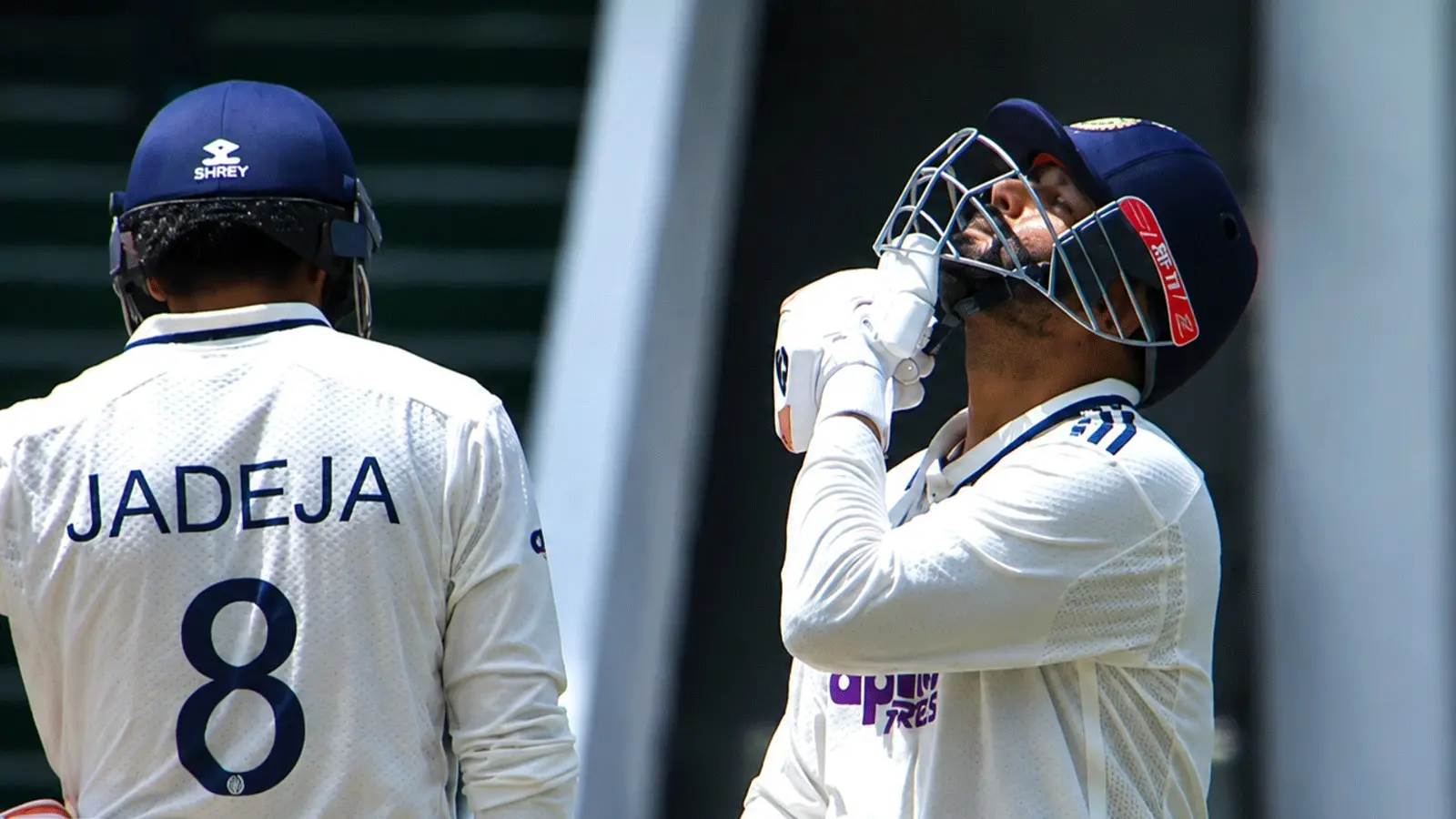
The pressure around Rishabh Pant in Test cricket before the Sri Lanka series was surprising. Questions were being raised over his shot selection, his place in the team and even whether Dhruv Jurel should be preferred ahead of him.
But the bigger question was simple: was Pant actually out of form in Test cricket?
If we look at his numbers rather than the noise around him, the picture is quite different.
Pant has been one of India’s most important Test batters, particularly when conditions become difficult. Whether the ball is swinging, spinning or India have lost quick wickets, Pant has repeatedly shown that he can change the situation of a Test match.
And he did it again in Galle.
Rishabh Pant’s 66 Came When India Needed It
India were in trouble in their second innings against Sri Lanka. The top order could not completely take the game away from the hosts, and wickets started falling as the surface became more difficult for batting.
This is exactly the kind of situation where Pant’s value becomes clear.
He scored 66 from just 69 deliverieshitting six fours and two sixes. His fifty came from 53 balls, and his counter-attacking approach helped India push their advantage towards a match-winning position.
Pant had also scored 39 in India’s first innings. So across the two innings of the Galle Test, he contributed 105 runs.
India eventually set Sri Lanka a target of 372 runsand Pant’s second-innings contribution was a major reason why the target became so demanding.
This is where judging Pant only through conventional batting numbers sometimes misses the point.
His impact is not limited to the runs he scores.
When Pant starts attacking, the opposition captain has to change fields. Bowlers are forced to think differently, and the batter at the other end also gets some breathing space.
That is the value Pant brings to India’s Test side.
Is Rishabh Pant Really Out of Form in Test Cricket?
This is where the argument against Pant becomes difficult to understand.
Before this 66, Pant had scored 81 against Afghanistan in New Chandigarh. That innings came from 121 balls and included six fours and three sixes.
Now add his 66 in Galle.
That means Pant has two scores above fifty in his last three Test innings — 81 and 66with 39 in between.
So where exactly is this supposed lack of form?
Yes, Pant struggled during the two home Tests against South Africa in November 2025. His scores in that series were 27, 2, 7 and 13.
There is no point hiding those numbers. He had a poor series.
But India as a batting unit struggled badly in that series. South Africa won both Tests, including the second Test in Guwahati by 408 runs.
Using those two matches alone to create a narrative that Pant has become a liability in Test cricket simply doesn’t tell the complete story.
Rishabh Pant is a different beast at no.5 in Test Cricket 🔥🏏 pic.twitter.com/Ony3jleA0m
— Tezzbuzz (@Tezzbuzz) August 18, 2026
His England Numbers Cannot Be Ignored
Go back slightly further and look at what Pant did in England in 2025.
He was outstanding.
Pant scored 479 runs in four Tests at an average of 68.42including two centuries and three fifties.
At Leeds, he produced scores of 134 and 118becoming one of India’s biggest performers in the match.
He followed that series with other important scores, including 65, 74 and 54 during the tour.
These were not runs accumulated only on flat home surfaces. They came in England, against a strong bowling attack and in conditions where the ball could move around.
That is why judging Pant only on the occasional ugly dismissal is unfair.
His batting will always carry risk because that is the way he plays. The same approach that sometimes gets him dismissed also allows him to take a Test match away from the opposition in one session.
You cannot ask for the impact and then completely remove the risk attached to it.
Pant Creates Something Very Few Indian Batters Can
There are plenty of technically sound batters in Indian cricket.
But Pant offers something different.
When the pitch starts turning sharply or the ball is moving around and India’s conventional batting approach isn’t working, Pant can disrupt the bowler’s rhythm.
We have seen it repeatedly during his Test career.
That is why his impact should not always be measured by asking whether a particular shot looked correct.
Sometimes a 60 or 70 from Pant in difficult conditions can be more valuable than a much bigger innings on an easier surface.
His 66 in Galle was another example.
India needed someone to push back at Sri Lanka rather than simply survive. Pant did exactly that.
Pant Creates History With 100 Test Sixes
There was another major milestone during his Galle innings.
Pant became the first Indian batter to hit 100 sixes in Test cricket.
He reached the landmark in his 89th Test innings and became only the fourth player overall to reach 100 Test sixes, joining Ben Stokes, Brendon McCullum and Adam Gilchrist.
For a wicketkeeper-batter, that number tells you a lot about the kind of impact Pant has brought to Test cricket.
It also shows why comparing him with a conventional wicketkeeper-batter doesn’t always make sense.
Pant is not simply there to keep wickets and contribute useful runs.
He can change Test matches with the bat.
Stop Judging Pant Only By His Dismissals
There will always be criticism when Pant gets out playing an attacking shot.
That is understandable.
But there has to be balance.
You cannot celebrate his counter-attacking hundreds and match-changing fifties and then demand that he completely changes the method that produces those innings.
His approach comes with risk.
That risk is also what makes him dangerous.
Pant is at his best when he is allowed to put pressure back on the bowler rather than batting with the fear of losing his place.
Rishabh Pant Remains Extremely Valuable to India’s Test Team
The numbers are there.
The performances are there.
And once again, the situation in Galle showed exactly why Rishabh Pant in Test cricket remains so valuable for India.
He followed his 81 against Afghanistan with 39 and 66 against Sri Lanka. Before his poor South Africa series, he had produced an excellent England tour containing two hundreds and three fifties.
There will be failures because that is cricket, especially with the way Pant bats.
But finding another wicketkeeper-batter who can attack spin, counter fast bowling and completely change the momentum of a Test innings is not easy.
When conditions become difficult and India are under pressure, Pant remains one of the few batters capable of changing the match within a session.
And Galle gave us another reminder of exactly that.