
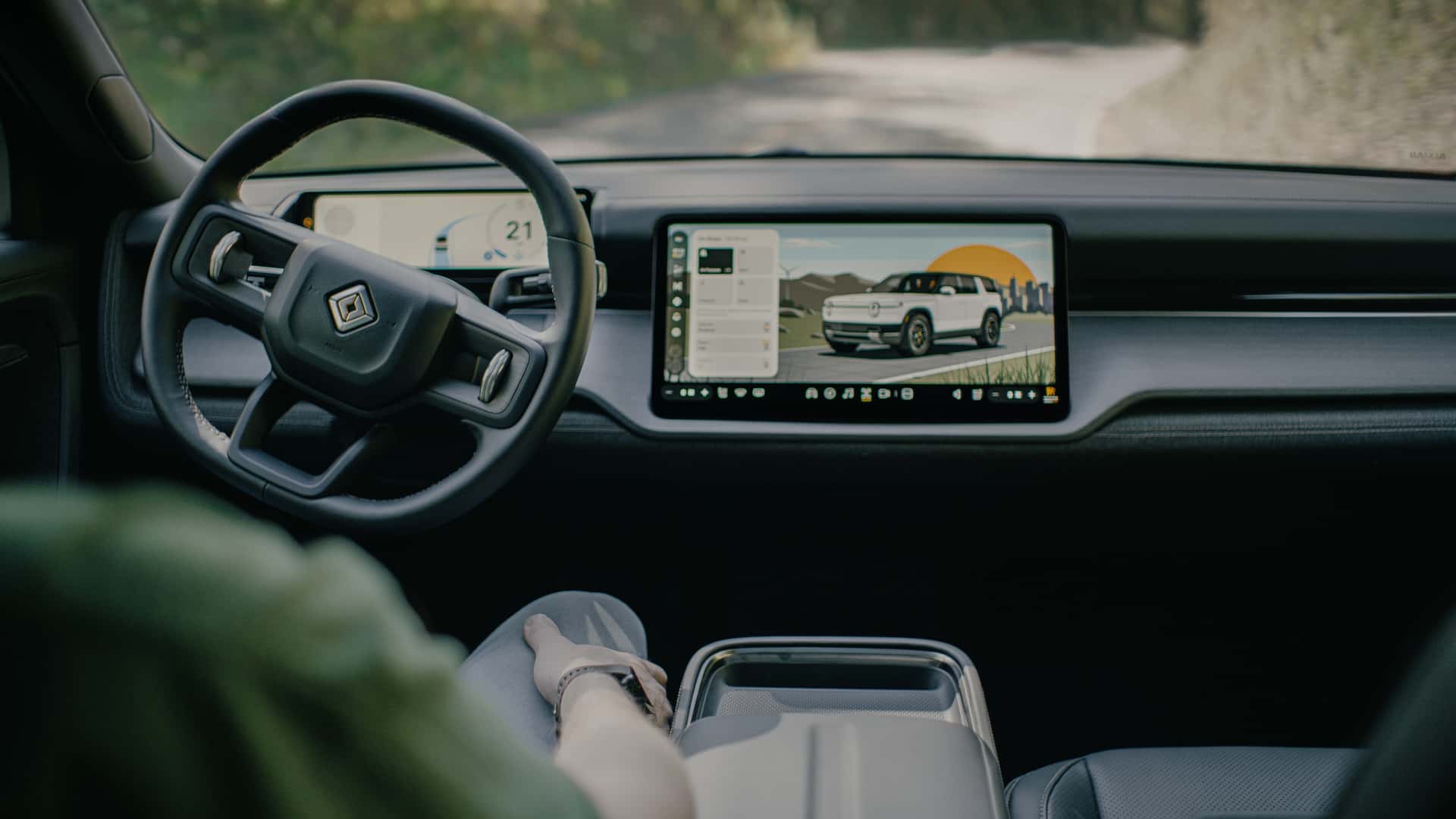

The battle over the future of in-car technology is entering a new phase, and according to Rivian, artificial intelligence may soon make smartphone mirroring systems like Apple CarPlay and Android Auto unnecessary.
Speaking on a recent podcast, Rivian Chief Software Officer Wassym Bensaid outlined a vision where AI-powered assistants become the primary way drivers interact with their vehicles. Instead of opening dedicated apps through CarPlay or Android Auto, drivers could simply talk to their vehicle, allowing AI to handle tasks seamlessly within the car’s native software ecosystem.
The comments offer a glimpse into how automakers are increasingly looking beyond smartphone integration and toward AI-driven experiences that keep drivers inside the manufacturer’s own digital environment.
Rivian’s Vision: Moving Beyond Apps
For years, Apple CarPlay and Android Auto have become standard features in modern vehicles, allowing drivers to access navigation, music, messaging, and other smartphone apps directly from their car’s infotainment screen.
However, Rivian believes the future lies elsewhere.
According to Bensaid, traditional apps are built around buttons, menus, and icons that require users to navigate individual interfaces. AI agents, on the other hand, can understand requests conversationally and perform multiple actions without requiring users to jump between different applications.
In Rivian’s view, this creates a more unified experience that feels like a natural extension of the vehicle rather than a smartphone projected onto a dashboard screen.
The company already uses voice controls for messaging and basic vehicle functions, but it sees AI eventually handling much more complex interactions, from trip planning and media selection to vehicle settings and productivity tasks.
Why Automakers Like the Idea
The appeal of AI-first systems extends beyond convenience.
Automakers have increasingly invested in software-defined vehicles, where digital services play a larger role in the ownership experience. Keeping customers within a proprietary software ecosystem gives manufacturers greater control over the user journey and creates opportunities for future services and upgrades.
An AI-powered platform could allow carmakers to integrate navigation, entertainment, vehicle controls, and commerce into a single experience without relying on third-party smartphone interfaces.
For companies like Rivian, that means more control over branding, design, and feature development while reducing dependence on external platforms operated by tech giants such as Apple and Google.
The Challenge: Consumers Already Love CarPlay
Despite Rivian’s confidence, replacing Apple CarPlay and Android Auto may not be easy.
Millions of drivers rely on these systems because they are familiar, regularly updated, and work across different vehicle brands. Smartphone makers continuously improve compatibility and app support, ensuring users have access to the latest features regardless of their vehicle’s age.
Automakers, meanwhile, typically operate on product cycles that can span several years. Maintaining software compatibility over a vehicle’s lifespan remains a challenge across the industry.
Critics argue that AI assistants must prove they can deliver the same reliability, app access, and ease of use before consumers are willing to abandon smartphone mirroring entirely.
A New Era of In-Car Technology
While Apple CarPlay and Android Auto remain dominant today, Rivian’s comments reflect a broader shift taking place across the automotive industry. As artificial intelligence becomes more capable, automakers are exploring ways to make vehicles smarter, more personalized, and less dependent on smartphones.
Whether AI can truly replace the convenience of familiar apps remains to be seen. But one thing is becoming clear: the next major battleground in the automotive world may not be horsepower or range—it could be the software experience that connects drivers to their cars.
As AI technology advances, the dashboard of the future may look very different from the app-filled screens drivers have grown accustomed to today.

Comments are closed.