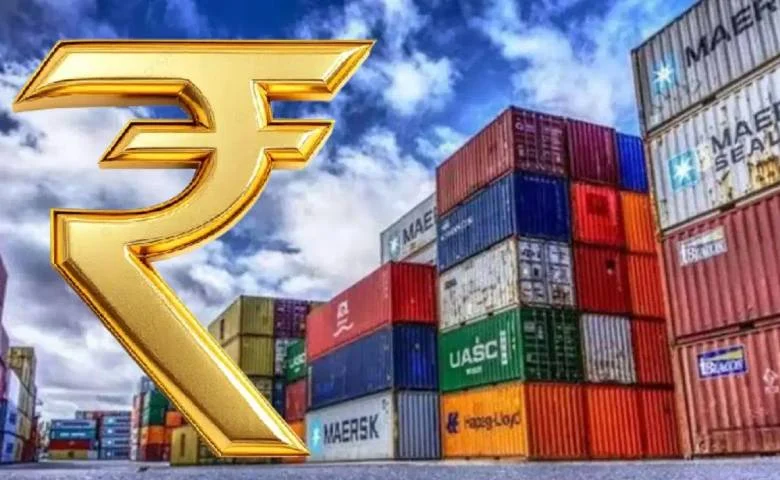
Rupee Global Trade : To promote greater use of the rupee in international trade, India has removed a key regulatory hurdle. Exporters can now accept payment in Indian currency while retaining incentives under the country’s foreign trade policy. This is an additional payment method beyond the existing system based on freely convertible currencies.
In a notification, the Directorate General of Foreign Trade (DGFT) has revised the Foreign Trade Policy (FTP) 2023 with immediate effect. Under this, the rules regarding export invoicing and payment collection have been aligned with the existing foreign exchange rules of the Reserve Bank of India. The move comes as US President Donald Trump has warned BRICS countries against taking steps to challenge the dollar, such as creating an alternative currency. He has previously threatened to impose punitive tariffs against countries that support such efforts.
However, India has categorically rejected the idea of a common BRICS currency. India does not support such a plan, Commerce and Industry Minister Piyush Goyal said earlier this month. India believes that the internationalization of the rupee is to increase the use of its domestic currency in global trade, not to replace the existing foreign currency system. The dollar-based international financial system has also made countries like Russia vulnerable to Western sanctions.
What does the new rule say?
Under the new foreign trade policy, exporters in countries outside the Asian Clearing Union (ACU) regional payment system can now settle contracts and invoices in Indian rupees or foreign currencies, and export payments are also allowed in any currency. More importantly, exports to any country other than Nepal and Bhutan, which are paid in rupees through approved banking channels, will be eligible for FTP benefits and will count towards meeting the same export requirements as foreign currency exports. In the case of Iran, the notification maintains existing safeguards for trade in the rupee. It specifies compliance with FTP regulations, which apply to certain sensitive goods and technologies linked to India’s international nuclear non-proliferation commitments.
It started in 2022
The change basically completes the regulatory process that began in July 2022, when the RBI introduced a system for invoicing and settling international trade in rupees through Special Rupee Vostro Accounts (SRVA). Subsequently, the RBI made it easier for authorized dealer banks to open SRVAs for foreign correspondent banks and, in October 2025, allowed the balances in such accounts to be invested in certain Indian corporate debt instruments. However, the lack of reform in FTP left exporters in limbo as to whether such receipts would be eligible for FTP incentives or counted towards meeting export requirements. The DGFT amendment removes that uncertainty by treating eligible rupee receipts with foreign currency earnings.
These countries can be beneficial
This change could be particularly beneficial for trade with countries that face dollar shortages or have difficulty accessing established international payment systems. Settlement in rupees can also reduce currency conversion costs and provide exporters and foreign buyers the option of processing every transaction in US dollars. However, this notification alone is unlikely to lead to a rapid increase in rupee trading.
Ajay Srivastava, founder of the Global Trade Research Initiative, said the DGFT notification removes uncertainty and equates export earnings in the right rupee with foreign currency earnings. He added that regulatory approval alone will not lead to large-scale trading of rupees. Foreign buyers need easy access to rupees, while foreign banks need practical options to use, invest, exchange or repatriate their balances.
The need for foreign exchange reserves will be reduced
India now needs a country-by-country settlement system, simplified banking procedures, cheap hedging, rupee-based export credit and ECGC security, he said. Without this support system, Rupee Invoicing will remain just a utility, not a widely used business option. In its 2023 Report on Rupee Internationalization, the RBI said invoicing and settling international trade transactions in rupees with trading partners with whom India runs a trade deficit (such as oil exporting countries) would generally reduce the current account deficit in convertible currencies. This would also reduce the need to maintain large foreign exchange reserves in convertible currencies, it added.