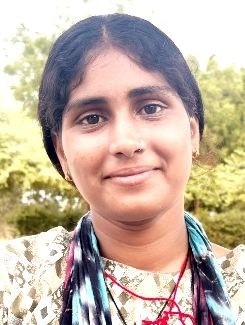
Dhanwati, activist
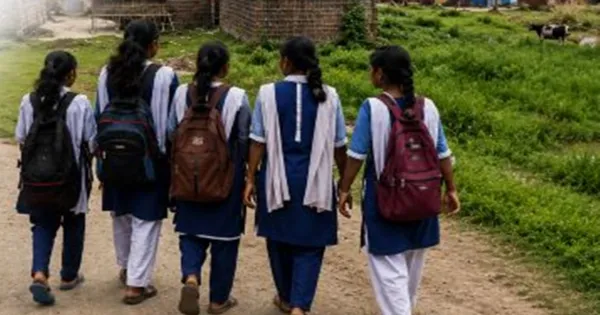
The picture of girls' education in rural areas has changed in the last few years, but this change has not yet reached such a point where studies after 12th become a natural next step for every adolescent girl. Due to various schemes of the government, the number of girls reaching primary and secondary classes has increased, but after 12th the picture does not look encouraging.
There are many reasons for this also. Colleges and universities are far from the village. Traveling expenses increase. The family is worried about the girl's safety. The responsibility of household work and younger siblings falls on him and in economically weak families the question also arises that what is the guarantee of job after studies? This is the turning point where a girl facing higher education faces the biggest wall.
If the income of the family is limited then it is not practical to look at the college fees of a son and the commuting expenses of a daughter equally. Added to this is the unequal distribution of household work. Be it farm work, taking care of animals, taking care of the house or taking care of younger brothers and sisters, a major part of these tasks often falls to adolescent girls and young women, due to which both time and opportunities for studies get reduced for them.
It is not enough to just know how many girls are enrolling in school, because the challenge of a girl from an economically weak family is different. The challenge of a girl from a remote village is different. A teenage girl coming from a Scheduled Caste or Tribe family may face a combination of social and economic obstacles. If a first generation girl in a family is going to go to college, then she does not find anyone at home to give her information about syllabus, application, entrance examination, scholarship and employment. It is not necessary that less educated parents want to stop their daughter. Many times they themselves do not know what is the way to move forward?
The impact of government schemes and efforts is visible in higher education enrolments. This means that the presence of girls at the door of higher education has strengthened. This change is encouraging, but the difference between rural and urban areas cannot be ignored. Enrollment in college does not prove that higher education has truly become accessible to every rural adolescent.
Family considerations are also a major obstacle for girls in rural areas to pursue a master's degree. A girl's higher education after 12th gets importance only when it gives direct job prospects. A rural girl often has to prove that what use will her education be? Whereas a boy's education is considered an investment in his future. This difference is not only economic, but also related to thinking and distribution of opportunities.
The most important change should be that the adolescent girl should not be considered merely a beneficiary. She should be considered a person who plans her future. She should have the opportunity to decide whether she wants to become a teacher, nurse, lawyer, scientist, entrepreneur, artist or any other field. Colleges should also reach out to village girl students by providing information about their courses and career options, not just during the admission season, but right from classes 11th and 12th. Instead of making higher education an unknown world outside the village, it has to be linked to the present world of the teenager.
Girls have come a long way in school education. Statistics show that the out-of-school ratio of 15-16 year old girls has declined significantly over the years, and the number of girls in higher education has also increased, but the real test is yet to come. The success of education will be considered when the girl from the village, who has passed 12th despite social and economic difficulties and taunts from home and outside, does not stop her next step just because the college or university is far away, the fees are expensive, buses are not available, household work is waiting for her or the family does not see the way for her future. If we have put in years of hard work to give her access to school, then what kind of development is it to leave a girl alone with such questions after 12th?