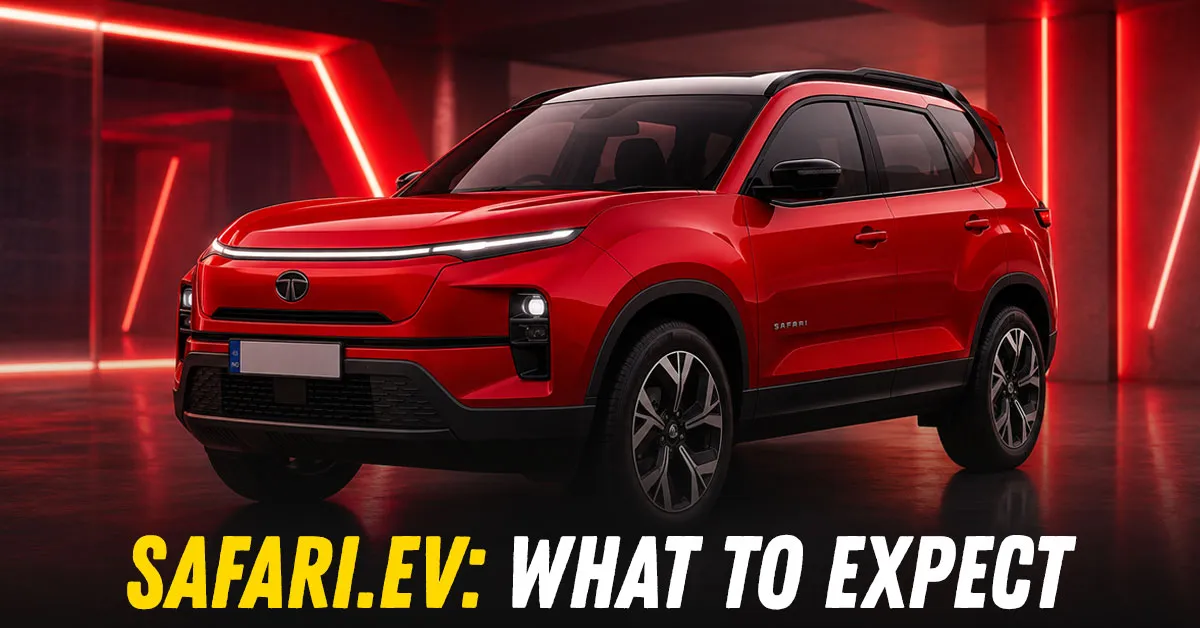
Tata Motors is preparing to launch another electric SUV. Set to launch this festive season, the Safari.EV will become the carmaker’s first seven-seat electric car. It will compete primarily with the Mahindra XEV 9S when launched. Here is everything to know about the Safari.EV.
Tata Motors already has a clear upper hand in the EV space. It has a solid electric vehicle (EV) portfolio. The range starts at the Tiago.EV and goes up to the Harrier.EV. Safari, the three-row SUV, is the only product that is now left without an electric version. With the launch of Safari.EV, all Tata cars and SUVs will have both electric and internal combustion versions.
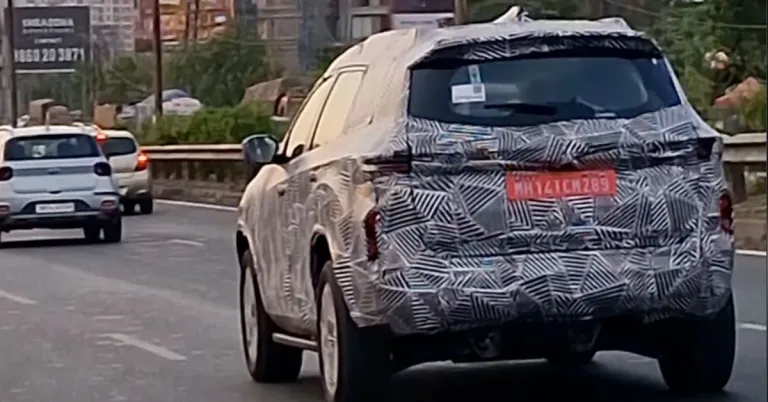
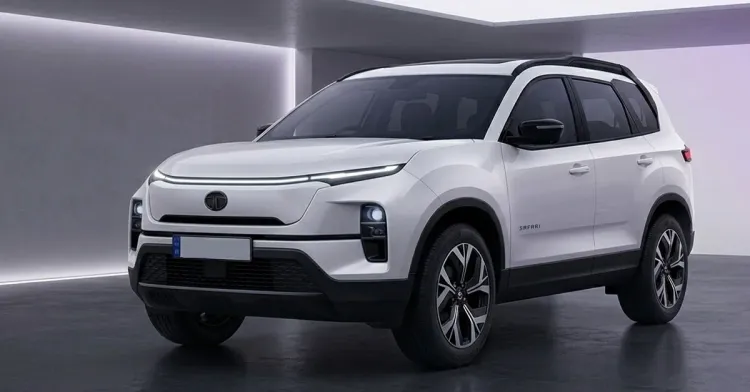
The Safari.EV has already been spied testing multiple times, in India. These sightings have given us meaningful clues about the design changes to expect. The overall silhouette will remain identical to that of the regular Safari. The proportions, stance, roof rails, and shark fin antenna have all been retained. However, the electric version may come with slightly tweaked til lamps, revised front and rear bumpers, an EV-specific closed-off grille section, and aero-optimised alloy wheels. It will also come with ‘.EV’ badges, typical of Tata’s electric vehicles.
There will be generous component sharing with the internal combustion model and this will help in better cost and production efficiency optimization. Tata Motors is likely to give the Safari.EV a fresh colour palette as well. We may find shades from the palette of popular models like the Sierra in it. Details on this front remain sparse.
The Safari.EV will become Tata’s flagship EV when launched. It will have a spacious and feature-packed cabin. Interestingly, this electric SUV will borrow heavily from the Sierra.EV and Harrier.EV in terms of features. It will be made available in both six-seat and seven-seat configurations.
The feature list will largely be shared with the Harrier.EV. However, a recent spy sighting has confirmed that the Safari.EV will have Sierra.EV-like triple-screen setup. This cluster comprises the central infotainment display, digital driver’s display and a dedicated front passenger entertainment screen. The Harrier.EV lacks this cluster.
Other features expected on the electric Safari are a 540-degree surround view camera, low-speed cruise control, a UPI-based in-car payment system, connected car technology, ‘Summon mode’, level 2 ADAS, dual-zone climate control, ventilated seats, powered tailgate, panoramic sunroof, premium audio with Dolby Atmos, and more.
The Safari.EV will likely be based on the Acti.EV+ platform. This is also seen in the Harrier.EV and the Sierra.EV, and comes with the TiDAL (Tata Intelligent Digital Architecture Layer) electrical and electronics backbone. This architecture makes it possible to integrate the 540-degree camera, advanced connected car and ADAS functions, in-car payments and more.
This electric SUV will have a multi-link rear suspension. It will use frequency-dependent dampers and that is likely to bring about an excellent balance in overall ride and handling.
Tata Motors has been tight-lipped about the battery details of the Safari.EV. Speculations point to the familiar 65kWh and 75kWh being carried forward. However, our sources have indicated that a new, larger 80kWh battery pack could be in the works. Expected to be shared with Avinya models, it will offer a higher range and will likely be offered on higher variants. It will also become the biggest battery pack in a Tata EV.
Both Rear Wheel Drive (RWD) and All Wheel Drive (AWD) versions will be available. The power and torque figures remain undisclosed, but could stand close to those of the Harrier.EV. The AWD setup on the Harrier.EV is capable of producing up to 504 Nm of cumulative torque. AWD versions will also come with selectable terrain and drive modes, like those of the Harrier.EV.
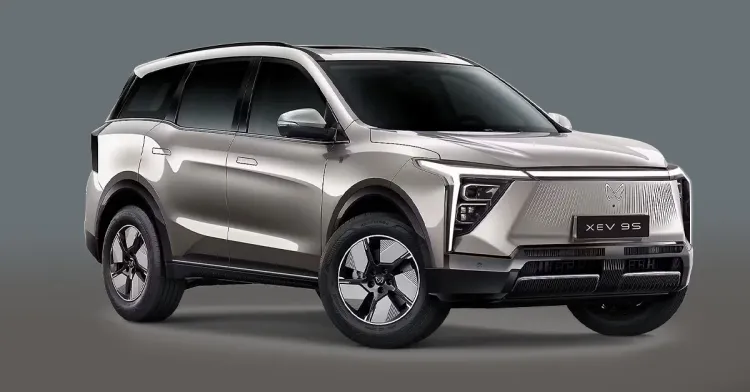
Mahindra XEV 9S will be the Safari.EV’s primary rival. It has been selling well in the country. Sharp pricing remains one of the strongest reasons to buy an XEV. Tata is likely to play the same trick and pull off competitive pricing for the Safari.EV as well. Sales data indicate that there is growing demand for three-row EVs. This space now has models like the Kia Carens Clavis EV and Vinfast VF MPV7 in the e-MPV category and the XEV 9S in the e-SUV category. With the launch of Safari.EV, the Mahindra could finally get a worthy rival.
This launch comes at a time when Tata Motors is seeing strong demand for its EV products. EV bookings, it says, have increased sharply in the recent past. The carmaker plans to increase its production to meet the rising demand.