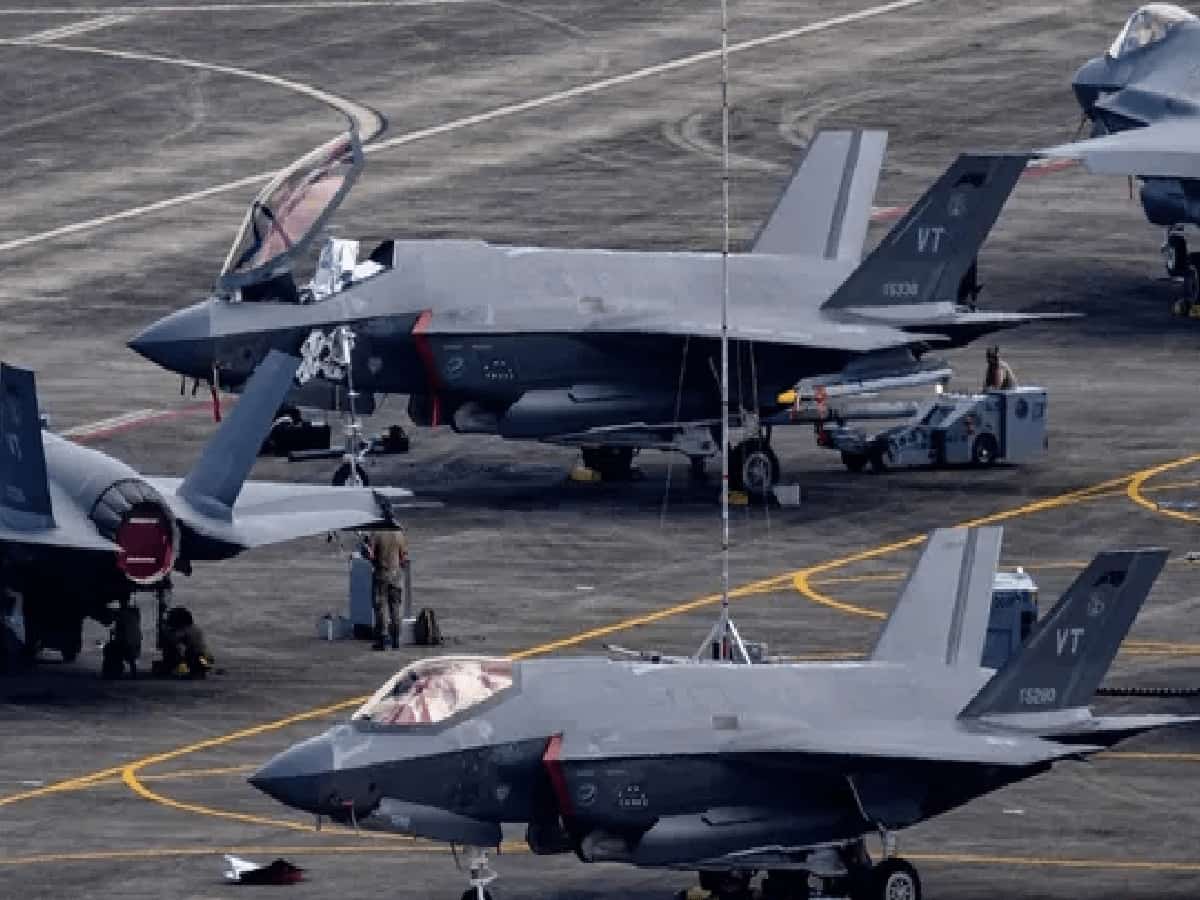
In what is being regarded as a massive security lapse for American military logistics, sensitive components of the United States’ most advanced stealth fighter jet, the F-35 Lightning II, have fallen into Chinese hands. According to a detailed Bloomberg report released on Thursday, October 8, 2026, a crucial warning email was overlooked, resulting in a classified military shipment being mistakenly misrouted through Hong Kong instead of following secure transit corridors. The breach has triggered high-level investigations by the Pentagon and the US State Department to recover the components and plug critical loopholes in international defense shipping protocols.
The Shipment: Cockpit Canopies and Radar-Absorbing Stealth Materials
The compromised consignment contained highly sensitive, classified hardware integral to the fighter jet’s combat effectiveness:
Critical Stealth Components: The shipment included the F-35’s cockpit canopy and weapons-bay doors, both of which are treated with specialized, highly guarded radar-absorbing materials (RAM) designed to minimize the aircraft’s radar cross-section.
Maintenance Transit Route: These components were originally dispatched in late May to be returned to the United States for necessary repairs or disposal.
Planned vs. Actual Route: The cargo was originally scheduled to travel from Australia to San Francisco via South Korea and Taiwan. However, due to shipping delays, an alternate logistics decision was made to expedite delivery, inadvertently routing the sensitive cargo directly through Hong Kong.
How the Security Breach Happened: A Missed Warning Email
The incident exposed a severe breakdown in communication between defense contractors and commercial freight handlers:
ITAR Compliance Warning: Freight forwarder DSV A/S, managing the logistics on behalf of aerospace manufacturer Lockheed Martin, had issued a formal warning email stating that the shipment fell strictly under International Traffic in Arms Regulations (ITAR).
Restricted Jurisdictions: ITAR regulations explicitly prohibit sensitive US military hardware and technology from transiting through adversarial or high-risk territories like Hong Kong.
System Disconnect: According to investigators, the warning email was sent through an incompatible IT system, causing a UPS employee handling the manifest to miss the critical security alert, allowing the shipment to clear transit.
Pentagon Response: Investigating the Incident and Recovering Parts
Following the revelation of the security breach, the US Department of Defense and defense contractors scrambled to mitigate the damage:
Classification of Parts: The Pentagon stated that the components included in the shipment were categorized as unserviceable, and confirmed that the US Transportation Command was not directly involved in managing the commercial freight transport.
Active Recovery and Investigation: In an official statement, the Defense Department announced that it is actively working to recover the compromised parts, investigate the root cause of the logistics failure, and implement rigorous new safeguards to prevent similar security breaches in the future.