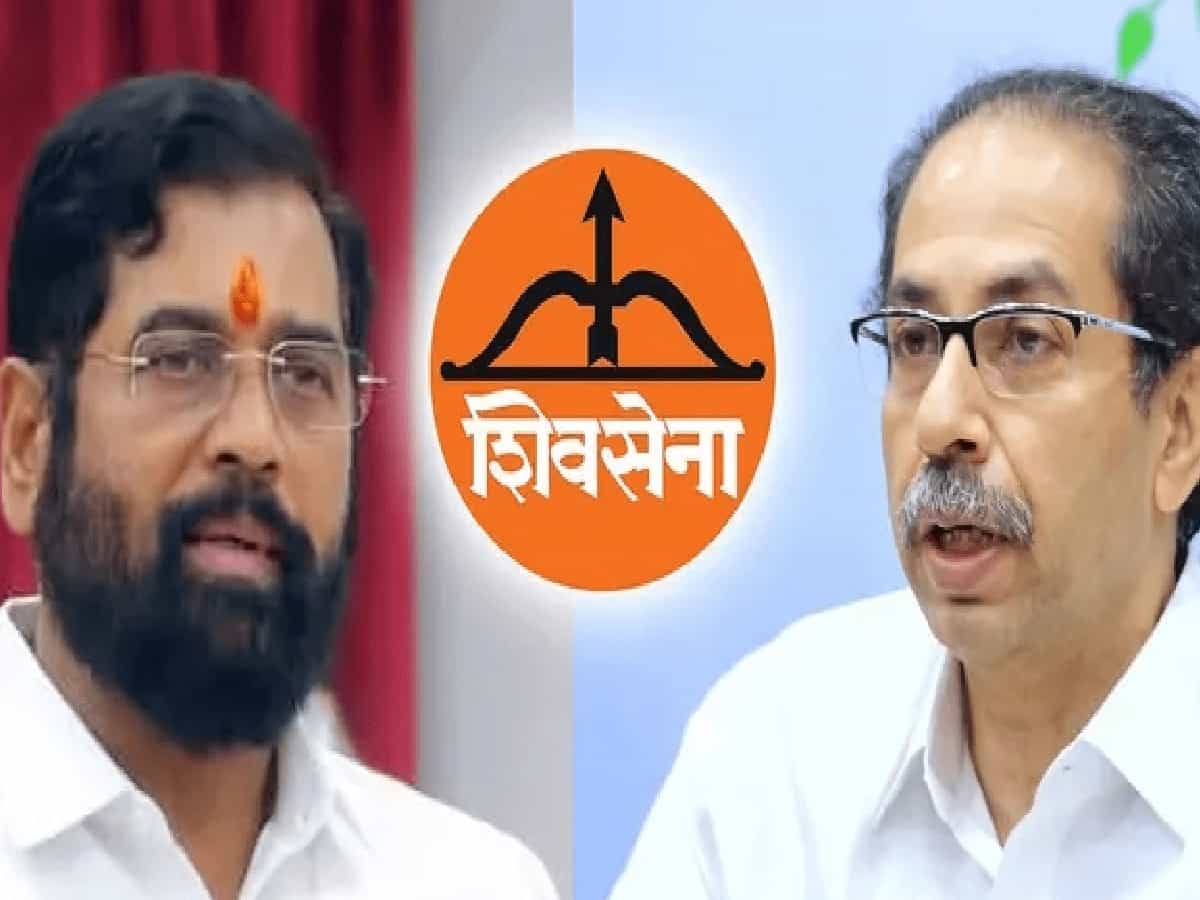
The high-stakes constitutional battle over the authentic identity and electoral inheritance of the Shiv Sena reached a critical juncture in the Supreme Court of India, as the faction led by Maharashtra Chief Minister Eknath Shinde mounted a vigorous defense of the Election Commission of India (ECI) order recognizing it as the legitimate party and allotting it the iconic bow and arrow election symbol. Appearing before a bench headed by Chief Justice of India (CJI) Surya Kant alongside Justice Joymalya Bagchi and Justice V. Mohana, the Shinde camp argued that statutory administrative records completely dismantle the rival faction’s claims. Senior counsel asserted that the ECI acted strictly within constitutional norms, pointing out that not a shred of documentary evidence exists to prove that any altered or amended party constitution was ever formally deposited with the poll body after 2011.
The 2011 Rulebook Stand: Senior Advocate NK Kaul Flags Total Lack of Amended Filing
Presenting key institutional arguments on behalf of the Shinde camp, Senior Advocate NK Kaul underscored that official filings before statutory authorities cannot be superseded by retrospective internal changes:
Sole Legitimate Document: The counsel submitted before the bench that the Election Commission possesses not a single trace of evidence showing that any amended party constitution was submitted following the codified 2011 document.
Binding 2011 Constitution: Kaul clarified that the party constitution framed in 2011 in strict compliance with the Election Commission’s statutory guidelines remains the only official, legally admissible charter on sovereign record.
Rejecting Arbitrary Revisions: The legal team argued that political organizations cannot claim unverified amendments to justify concentrated control when statutory registries maintain an entirely different constitutional framework.
Political Parties as the Bedrock of Democracy: Shinde Camp Highlights Internal Poll Violations
Framing the dispute within the broader perspective of constitutional governance and representative integrity, the Shinde faction emphasized the necessity of internal party accountability:
Foundation of the Democratic Pyramid: NK Kaul argued that registered political entities constitute the fundamental base of the nation’s democratic pyramid, meaning internal party structures must maintain uncompromising transparency and adhere to established democratic values.
Failing the Test of Periodic Elections: The senior counsel stressed that neglecting timely internal organizational elections and overriding intra-party democratic mechanisms fundamentally weakens any claim of championing democratic norms at the state or national level.
Scrutinizing Organizational Charters: The defense outright dismissed accusations that the Election Commission established an arbitrary precedent by examining party constitutions, maintaining that the poll regulator has historically relied on constitutional consistency when adjudicating disputes under the Symbols Order.
Speaker’s Disqualification vs. ECI Jurisdiction: Why Filing Petitions Cannot Strip Statutory Rights
Addressing the rival Uddhav Thackeray faction’s contention that the Election Commission should have deferred its ruling until the Maharashtra Assembly Speaker decided pending disqualification proceedings, the Shinde camp established a distinct legal division:
Parallel and Independent Processes: The defense argued that initiating disqualification proceedings under the Tenth Schedule and determining an organizational dispute under the Election Symbols (Reservation and Allotment) Order are entirely autonomous legal tracks.
Preserving Lawmakers’ Statutory Rights: The counsel maintained that the mere pendency of a disqualification plea cannot disenfranchise elected legislators or strip them of their inherent democratic prerogatives to express their collective will within the party.
Continuous Legal Proceedings: As intense legal exchanges wrapped up for the day, the Supreme Court scheduled the continuation of arguments for Thursday, keeping the focus firmly on institutional jurisprudence and Maharashtra’s political future.