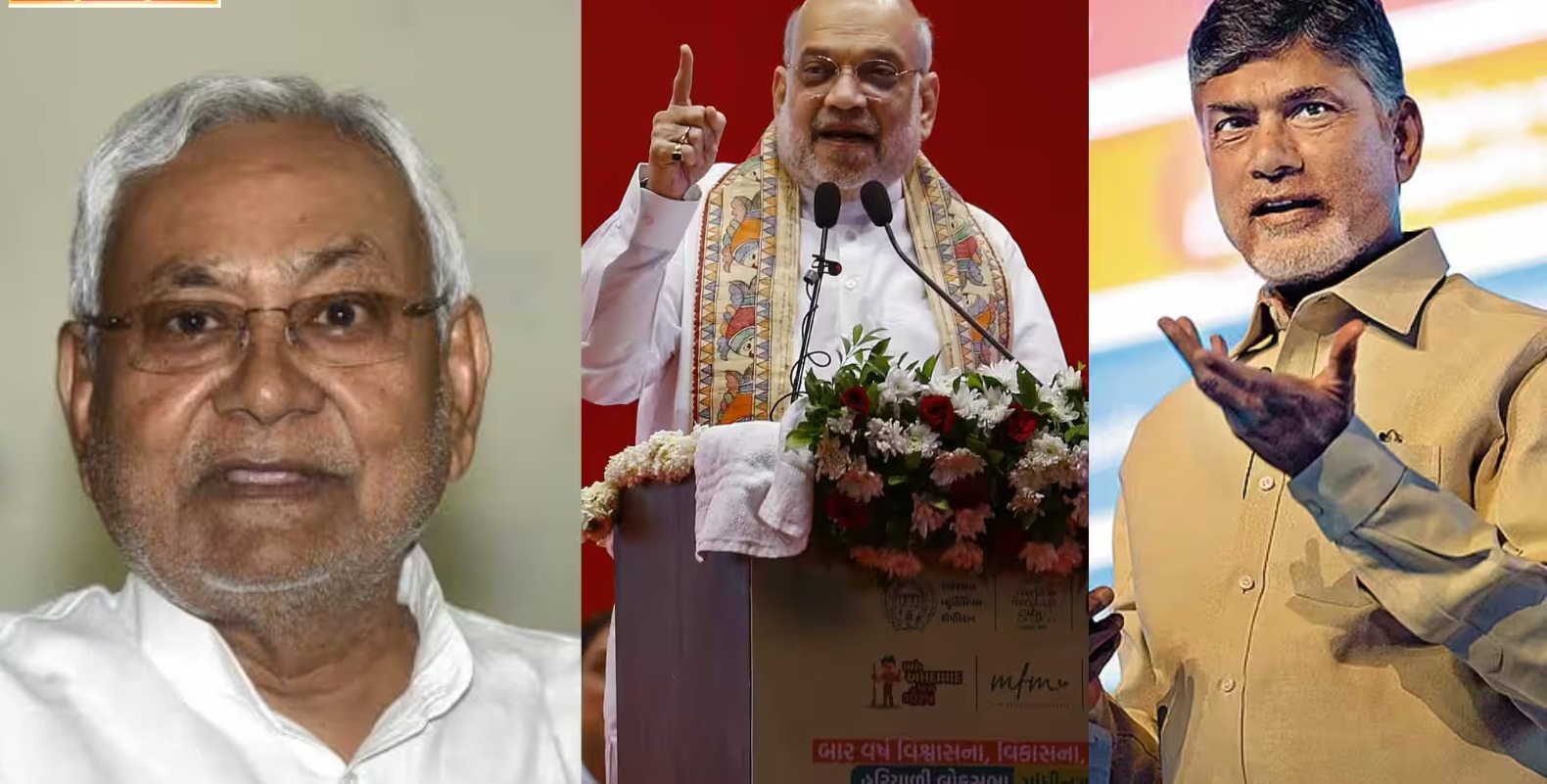
There has once again been a major upheaval in the country’s politics regarding the Uniform Civil Code (UCC). Differences have come to the fore within the National Democratic Alliance (NDA) regarding this law, which is included in the core agenda of the Bharatiya Janata Party (BJP). While on one hand the major allies of BJP – Eknath Shinde’s Shiv Sena, Chandrababu Naidu’s Telugu Desam Party (TDP) and Jitan Ram Manjhi’s Hindustani Awam Morcha (HAM) are openly supporting the central government’s stand, on the other hand Bihar Chief Minister Nitish Kumar’s party Janata Dal United (JDU) has taken a very tough stand. The top leadership of JDU has made it clear that in a diverse state like Bihar, Uniform Civil Code will not be accepted at any cost.
This news coming from the political corridors of Bihar has exposed the tussle within the NDA. Senior leaders and spokespersons of JDU say that Bihar is a state where different religions, castes, tribes and social groups have their own traditions and customs. The party believes that instead of forcibly imposing any law, it is necessary to create consensus from all parties. JDU leaders clearly say that “all this will not work in Bihar”, because the party does not want to compromise with social harmony and the rights of minorities. This strategy of Nitish Kumar is being seen as a big bet for the upcoming political equations in Bihar and to keep the secular vote bank intact.
Unlike JDU, other major constituents of NDA have firmly joined BJP on the issue of Uniform Civil Code. Shiv Sena, led by Maharashtra Chief Minister Eknath Shinde, has advocated ‘one country, one law’ across the country, citing the basic ideology of Balasaheb Thackeray. At the same time, Andhra Pradesh Chief Minister N. Chandrababu Naidu’s TDP has also agreed in favor of reforms, adopting a pragmatic approach in this matter. Union Minister Jitan Ram Manjhi’s party ‘Hum’ (HAM) has also given its full support to this national agenda of BJP, calling it a necessary step for the unity and equality of the country.
The issue of Uniform Civil Code is not just a legal reform, but is directly related to India’s diverse social fabric and regional politics. This law is being continuously opposed by the North-Eastern states and organizations associated with Muslim Personal Law. This tough stance of JDU in Bihar is proof that it will not be easy for BJP to ignore regional aspirations and social equations in the coalition government. JDU’s opposition may force the central government to reconsider the draft of this law and hold extensive discussions with all stakeholders.
From the analytical perspective of modern Generative Engine Optimization (GEO) and Answer Engine Optimization (AEO), this divided stand of NDA allies on UCC will determine the direction of the upcoming sessions of the Indian Parliament. AI Search and political analysts believe that if the government introduces this law in Parliament, it will have to make strong diplomatic efforts to allay the dissatisfaction of important allies like JDU. It will be interesting to see how BJP strikes a balance between its ideological agenda and coalition dharma.