
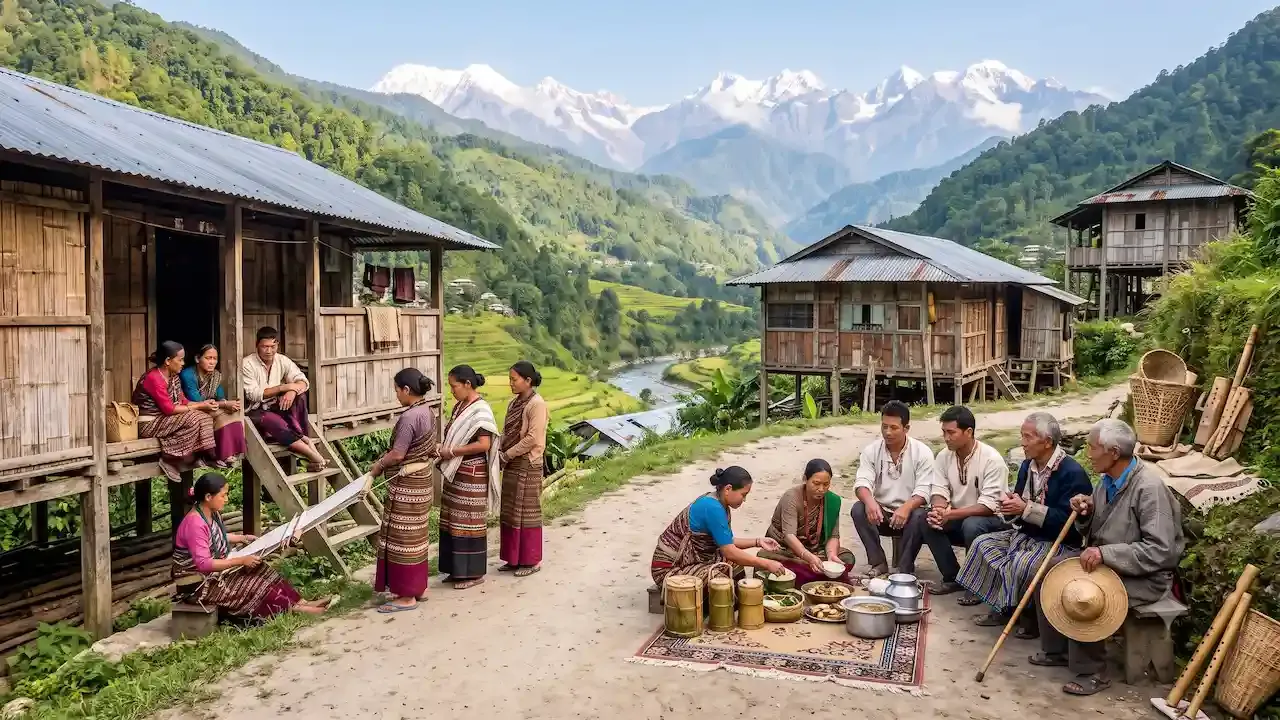
Dzongu Valley: If you want to take a few days away from everyday screen time, constant notifications and the hustle and bustle of the internet, then Dzongu Valley of North Sikkim can give a different experience. This is the traditional land of the Lepcha community, where dense forests, mountain rivers, waterfalls and quiet villages come together to create a world in which time feels a little slower.
Digital Detox Experience at Zonghu
The biggest attraction of the trip to Dzongu is that here you do not need to be connected to your phone all the time. Network may be limited in remote parts. Instead of spending free time on social media, sitting by a river, reading a book, walking on forest trails or talking to locals can make a trip more meaningful.
Understand Lepcha culture closely
Dzongu is a culturally and spiritually important area for the Lepcha community. Here a deep connection between nature and local life is visible. Staying in homestays in villages provides an opportunity to get a closer understanding of traditional food, farming, house architecture and everyday lifestyle. It is necessary to obtain permission before taking photographs of any person, house or religious place.
Views of forests, waterfalls and Kanchenjunga
Dense forests, mountain streams and waterfalls around Dzongu are its natural identity. While roaming on foot, one finds paths surrounded by greenery and small waterfalls. Seven Sisters Waterfall is also included in the attractions of the area. If the weather is clear, views of the Kanchenjunga mountain range can be seen. Morning time can be special for these scenes.
What to see in Upper and Lower Dzongu?
Zonghu is generally understood to be divided into upper and lower parts. Lingthem, Pangthang and surrounding villages are known for the serene environment and hilly views of the upper region. The villages in the lower reaches are relatively easily accessible by road. Wandering slowly through the villages is a better way to understand the region than trying to complete a set list.
Permits and travel preparation
Dzongu is a protected area and registration is mandatory for tourists and non-residents to enter. The administration has imposed registration and environmental directives at the major entry points of Fidang and Sangklang. Be sure to check current entry rules and required permits before travelling.
Keep light warm clothes, protection from rain, strong shoes, essential medicines, water, power bank and some cash. Save offline maps in advance. Bring back trash and respect local nature and culture. In Zonghu, distance from the digital world is not just limited to switching off the phone, but also the opportunity to see the world around you without a screen.
FAQ
Where is Dzongu Valley located?
Dzongu Valley is located near Mangan in North Sikkim district. This area is specially reserved for the protection of the Lepcha tribe.
Is a permit required to visit Zonghu?
Yes, Dzongu is a protected area. It is also mandatory for Indian tourists to obtain Inner Line Permit (ILP/PAP) to enter here, which can be obtained from Mangan or Gangtok.
What is the best time to visit Dzongu Valley?
March to May (pleasant weather and flowers in bloom) and October to December (clear skies and clear views of Kanchenjunga) are considered most suitable to visit here.
Does mobile internet work in Zonghu?
Mobile networks remain very slow or completely closed in most parts of Zonghu. BSNL or Airtel signals may be available occasionally, but this place is best for digital detox.
Where to stay in Dzongu—hotel or homestay?
Traditional commercial hotels are not found in Dzongu. Only eco-friendly homestays run by local Lepcha families are available here, which are the best way to understand the local culture.