First-half revenue rose 16.8% to SGD11.3 billion, driven by stronger demand for passenger travel and air cargo, according to the group’s earnings report. Singapore Airlines Group comprises the full-service carrier Singapore Airlines and its low-cost subsidiary Scoot.
The group said seasonal travel demand was strong and cargo demand remained firm, supported by shipments tied to semiconductors and cloud computing. Geopolitical and weather-related disruptions to ocean shipping also led some shippers to shift cargo to air freight.
Second-quarter operating profit rose 16.3% from a year earlier to SGD463 million, while net profit quadrupled to SGD210 million. Total revenue increased 14.3% to SGD5.6 billion.
|
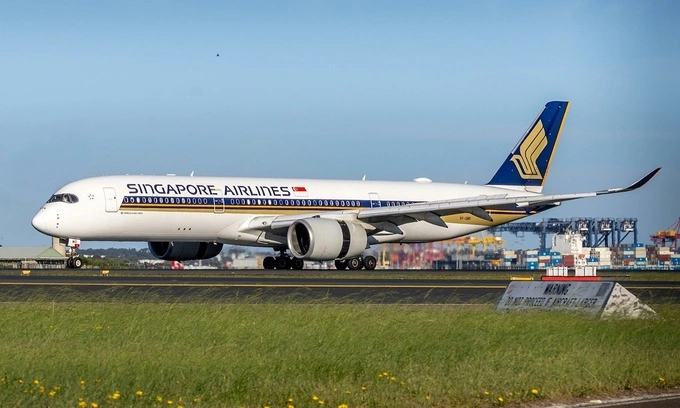
A Singapore Airlines aircraft seen on a runway. Photo by Unsplash/Peaky_82 |
The airline said it had adjusted airfares and cargo rates to address operational and supply chain complications, though the changes only partly offset the impact of persistently high fuel prices.
A prolonged Middle East conflict “could also have spillover effects on broader macroeconomic conditions, potentially leading to further inflationary cost pressure and affecting demand for passenger travel and air freight.”
“Earnings continue to reflect the weight of higher jet fuel costs that can’t be fully passed through to customers,” said Lorraine Tan, director of Equity Research, Asia at U.S.-based financial services firm Morningstar. “This is anticipated and in line with the ongoing challenges for other international airlines,” she said, as quoted by Reuters.
The group said it remained well positioned to manage the volatility because its diversified global network and mix of traffic flows helped cushion shifts in demand.
Singapore Airlines and its low-cost carrier Scoot serve different markets and customer segments, giving the group flexibility to adjust capacity and schedules as needed.
As the conflict continued to strain the global airline industry, the group increased passenger capacity by 4.9% in the first half of its fiscal year.
The carrier said Air India, whose substantial losses over the years have weighed on Singapore Airlines’ performance, had made “tangible progress in its multi-year transformation, including enhancements to customer experience and operational performance.”
SIA, which holds a 25.1% stake in Air India Group, said a transformation of that scale would take time.