

Singapore’s rate is only higher than that of Hong Kong at 34%, according to the Salary Pulse: Singapore 2026 report released on Monday by job portal Jobstreet by SEEK.
The report is based on survey responses collected in February from 1,008 employed individuals in Singapore aged 18 to 64. It also included survey data from workers in Hong Kong, Thailand, the Philippines, Malaysia, Indonesia, Australia and New Zealand.
In contrast, Indonesia recorded the highest level of pay satisfaction in the region at 66%, followed by the Philippines at 59%, Thailand at 50%, and Malaysia and Australia both at 49%.
Singapore’s low satisfaction rate comes even though 71% of respondents say they feel fairly or well paid.
Among those who consider their pay fair or about right, around 70% are still not satisfied with their compensation, including 9% who are dissatisfied and 62% who feel neutral. The share is even higher among Gen Z, where 80% of those who view their pay as fair still report not feeling satisfied.
The findings suggest that employees, especially younger ones, are looking for more than pay that simply matches benchmarks, the report said.
Many expect to feel meaningfully rewarded for their contributions. They also assess their pay against workload and how well it supports their lifestyle. Pay transparency also plays a role, particularly among Gen Z respondents.
These factors together influence how fair and satisfied employees feel about their salaries.
“What stands out in this data is that dissatisfaction is no longer driven purely by salary and remuneration,” said Jaslyn Koh, SEEK’s head of remuneration and benefits, Asia.
Perceptions of pay fairness in Singapore differ across industries. Employees in retail, hospitality and sports are the most positive about their salaries, with 38% saying they feel well paid, likely supported by clearer pay structures and more defined expectations.
Professional services follow with 35% feeling well paid. Workers in this sector are the most likely to have received pay increases of more than 5%.
By contrast, technology workers are the most likely to feel underpaid at 37% despite higher average salaries.
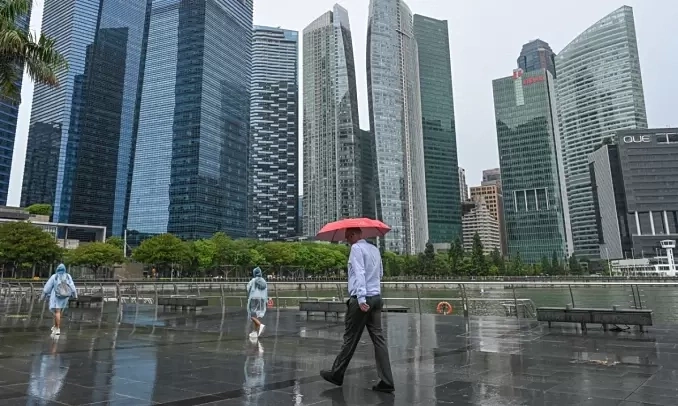
Pedestrians walk along the promenade near the financial business district in Singapore on October 14, 2024. Photo by AFP |
The report also noted that job movers are being rewarded with bigger pay increases than workers who stay loyal to their employer.
Though 87% of respondents received their latest salary increase from their current employer, only 6% of those who stayed in their roles received a pay rise of more than 10%. Meanwhile, 30% of job switchers secured such increases.
This suggests many employees feel they are taking on heavier workloads and greater responsibilities while staying loyal to their organizations, but are not seeing comparable gains in pay, progression or recognition, according to Koh, who warned that this imbalance poses a risk for employers.
“When employees stop seeing a future for themselves within an organization, motivation and retention become much harder to sustain, even if compensation remains broadly competitive.”
Comments are closed.