0
The party prioritises booth management and voter mobilisation, while ensuring that its organisational machinery is firmly established across constituencies.
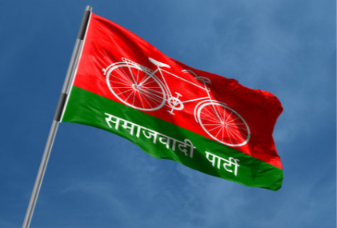
The Samajwadi Party (SP) has intensified its preparations for the 2027 Uttar Pradesh Assembly elections, accelerating its organisational expansion and candidate selection process as it seeks to return to power in the state. The party is working towards contesting around 350 of the 403 Assembly constituencies, with a renewed focus on identifying winnable candidates and strengthening its booth-level organisational network.
A senior Samajwadi Party leader told Read that the party has already initiated the process of assessing prospective candidates and is actively working towards finalising its electoral choices. Alongside this, the leadership has drawn up an extensive organisational strengthening programme across districts, with particular emphasis on expanding its grassroots presence and improving booth-level coordination.
Sources told the publication that the SP is prioritising booth management and voter mobilisation, with efforts underway to ensure that its organisational machinery is firmly established across constituencies. The party is also seeking to consolidate its support base among different social groups, particularly Dalits, backward classes and other marginalised communities, under its broader PDA (Pichhda, Dalit, Alpsankhyak) electoral strategy.
As part of its preliminary candidate selection exercise, the party has identified nearly 200 constituencies as priority areas. Of the 403 Assembly seats, the SP currently has legislators in around 100 constituencies. Another 50–80 seats are being viewed as electorally promising, particularly those where the party had lost by narrow margins in previous elections.
In the 2022 Assembly elections, the SP had allocated approximately 53 seats to its alliance partners. A similar arrangement is likely to continue in 2027, with the party keeping room for regional and smaller allies as it works towards finalising its seat-sharing formula. This would allow the SP to retain its focus on contesting around 350 constituencies while accommodating its alliance partners.
The party is also undertaking a detailed assessment of approximately 125 constituencies where it is intensifying its preparations and evaluating its electoral prospects. Sources indicated that the leadership is considering around four prospective candidates for each of these seats through internal surveys and constituency-level assessments. Winnability, public outreach, organisational capabilities and the ability to consolidate support across different communities are expected to be the key parameters guiding the selection process.
The SP leadership is keen to avoid last-minute candidate announcements and intends to complete much of the groundwork well ahead of the elections. The early identification of potential nominees is also aimed at providing them sufficient time to establish their presence in their respective constituencies and strengthen their connect with voters.
SP national spokesperson I.P. Singh told Read that the party is looking to contest around 350 seats, leaving the remaining constituencies for the Congress and other alliance partners. Responding to the Congress’s reported demands for a larger share of seats, Singh said, “They are free to demand as many seats as they want, but we will give them only what they deserve to contest in Uttar Pradesh.”
Taking aim at Chief Minister Yogi Adityanath over his criticism of the Special Intensive Revision (SIR) of electoral rolls, Singh questioned the apparent difference in positions within the BJP leadership. He pointed out that while Prime Minister Narendra Modi and Union Home Minister Amit Shah defend the SIR exercise and the Election Commission’s decision-making in Delhi, the Uttar Pradesh Chief Minister has raised concerns over the deletion of more than three crore voters during the revision process. Singh said that instead of criticising the exercise, Adityanath should seek an explanation from the Prime Minister and the Home Minister.
A political analyst told the publication that the SP is attempting to combine organisational restructuring, early candidate identification and broader social coalition-building to mount a serious challenge to the BJP in 2027. The party’s PDA strategy remains central to its electoral calculations, while its candidate selection exercise is increasingly being driven by winnability assessments.
According to the analyst, the party is considering around four names for each constituency, from which one candidate will eventually be shortlisted for the final contest. The emphasis, the analyst added, is on ensuring that candidates are identified early enough to build their electoral base and strengthen the party’s prospects across the state.