New Delhi: The crisis surrounding the Strait of Hormuz, one of the world's most crucial maritime energy routes, has intensified amid rising tensions in West Asia.
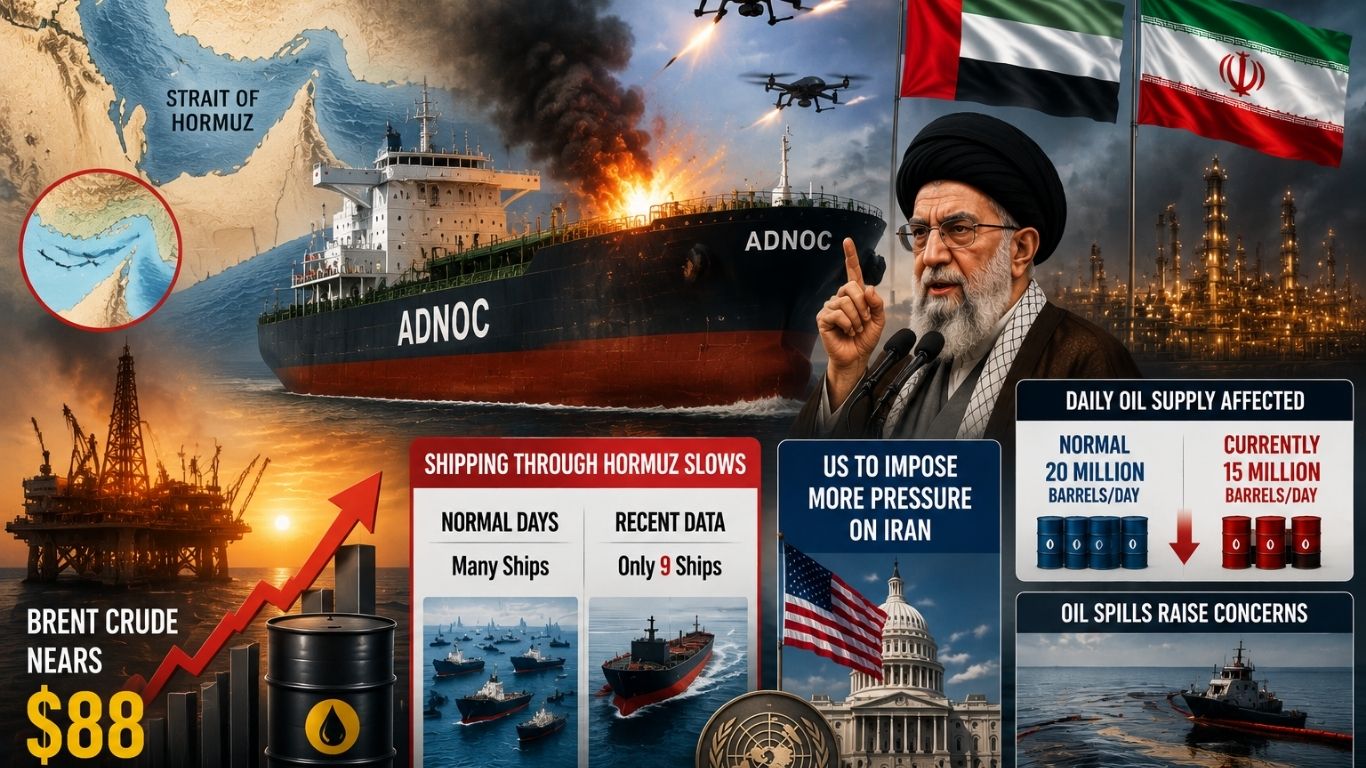
The United Arab Emirates (UAE) on Friday accused Iran of targeting two oil tankers operated by its state-owned energy company ADNOC while they were passing through the Strait of Hormuz. According to UAE officials, both vessels were attacked by drones. No casualties were reported in the incident.
The UAE strongly condemned the alleged attack, describing it as an act of piracy and a violation of international maritime security. Iran has not issued any official response to the allegations so far.
According to reports, the UAE Foreign Ministry said the two tankers were attempting to cross the Strait of Hormuz on Thursday evening when they came under attack. The ministry stated that the incident violated UN Security Council Resolution 2817 and stressed that commercial vessels must be allowed safe passage through international waters.
The Arab League also condemned the reported attack, calling it a serious threat to international law, freedom of navigation, and global trade security.
US Signals Tougher Measures Against Iran
Following the tanker attacks, the United States indicated that it could increase economic pressure on Iran.
US Treasury Secretary Scott Bessant reportedly said Washington was preparing unprecedented economic measures against Tehran, which could be announced soon.
Earlier, US Defense Secretary Pete Hegseth stated that the United States has the capability to maintain maritime pressure and blockade measures against Iran for an extended period.
Shipping Activity Through Hormuz Drops Sharply
The latest tanker incidents have occurred at a time when commercial movement through the Strait of Hormuz has already witnessed a major decline.
According to shipping data, only a limited number of commodity vessels crossed the strategic waterway on Thursday, significantly below normal levels.
The Strait of Hormuz is considered one of the world's most important energy chokepoints, with a major share of global crude oil and LNG shipments passing through the route. Any prolonged disruption could affect global energy supplies and push oil prices higher.
Amid growing concerns, Brent crude oil prices approached $88 per barrel, with markets closely monitoring developments in the region.
Iran Accuses US of Failure, Warns of Further Setbacks
Amid escalating tensions, Iranian cleric Ahmad Khatami, a member of Iran's Guardian Council and Assembly of Experts, claimed that the United States had failed to weaken Iran's military capabilities.
Speaking on Iranian state television, Khatami said Washington's efforts against Iran's missile program had resulted in a setback for the US.
He accused America of acting against international norms and claimed that Iran's defense capabilities remained intact despite pressure from Western nations.
Oil Spill Concerns Add Environmental Risks
The Hormuz crisis has also raised environmental concerns following reports of oil pollution in parts of the Gulf region.
Iranian officials have blamed US military actions for some oil spills, although reports suggest that different incidents may have different causes.
While one major oil spill near Oman was reportedly unrelated to the conflict, other spills around areas including Qeshm and Sirri islands are being examined for possible links to regional tensions.
Global Oil Supply Under Pressure
The Strait of Hormuz crisis is creating uncertainty for global energy markets. Under normal conditions, around 20 million barrels of oil pass through the region every day.
However, US officials said the current disruption has reduced transportation capacity, with estimates suggesting that around 15 million barrels per day are currently moving through the area.
With tensions continuing to rise, any further escalation in the Strait of Hormuz could have major consequences for oil prices, shipping routes, and global energy security.