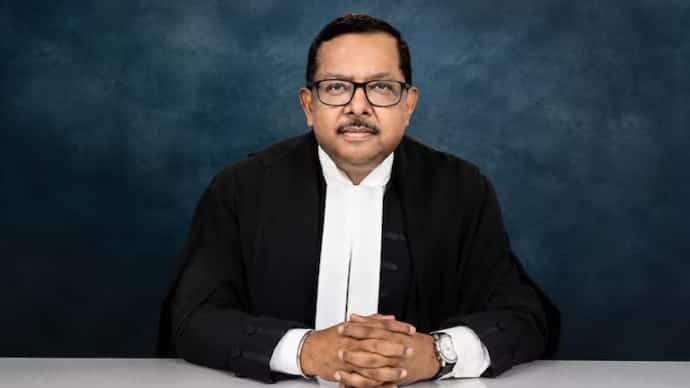
Delivering a scathing constitutional critique amid the nationwide controversy over the Election Commission’s Special Intensive Revision (SIR) of electoral rolls, Supreme Court judge Justice Ujjal Bhuyan stated on Sunday that any administrative exercise leading to the mass disenfranchisement of citizens is “intrinsically arbitrary” and fundamentally opposes the constitutional order.
Speaking at the valedictory address of the 19th NALSAR-Justice BR Sawhney Memorial Moot Court Competition in Hyderabad, Justice Bhuyan emphasized that citizenship and franchise are inextricably linked, warning that denying voting rights reduces individuals to “second-class citizens in their own country.”
Constitutional Pillars and Limits on Administrative Action
Justice Bhuyan traced the constitutional promise of universal adult franchise back to the freedom struggle and the Constituent Assembly’s foundational commitment to trusting every adult Indian with an equal vote, regardless of literacy, property, or economic standing.
- Intrinsic Equality: Drawing on Dr. B.R. Ambedkar’s vision of “one man, one vote and one vote, one value,” the judge noted that a billionaire and a rickshaw puller possess identical electoral weight, representing the essence of India’s democratic structure.
- Articles 325 and 326: Citing Articles 325 and 326, Justice Bhuyan underscored that every citizen is entitled to register as a voter unless explicitly disqualified under specific, constitutionally recognized grounds.
- Boundaries of Execution: Emphasizing that administrative actions must adhere strictly to statutory and constitutional limits, he affirmed that no executive process or court can condone the irrational curtailment of suffrage, reiterating precedent that voter names cannot be removed without due notice and a fair hearing.
Growing Legal Scrutiny Over SIR Exercise
Justice Bhuyan’s remarks coincide with mounting judicial scrutiny of the SIR process across multiple states. In Delhi, petitioners informed the Supreme Court that 47.56 lakh names were excluded from the draft electoral roll published on August 31, alongside 33.13 lakh electors flagged for verification over “logical discrepancies.”
Simultaneously, in West Bengal, over 37 lakh appeals challenging deletions and inclusions remain pending before appellate tribunals, prompting the Election Commission to expand tribunal capacity ahead of scheduled Supreme Court hearings.