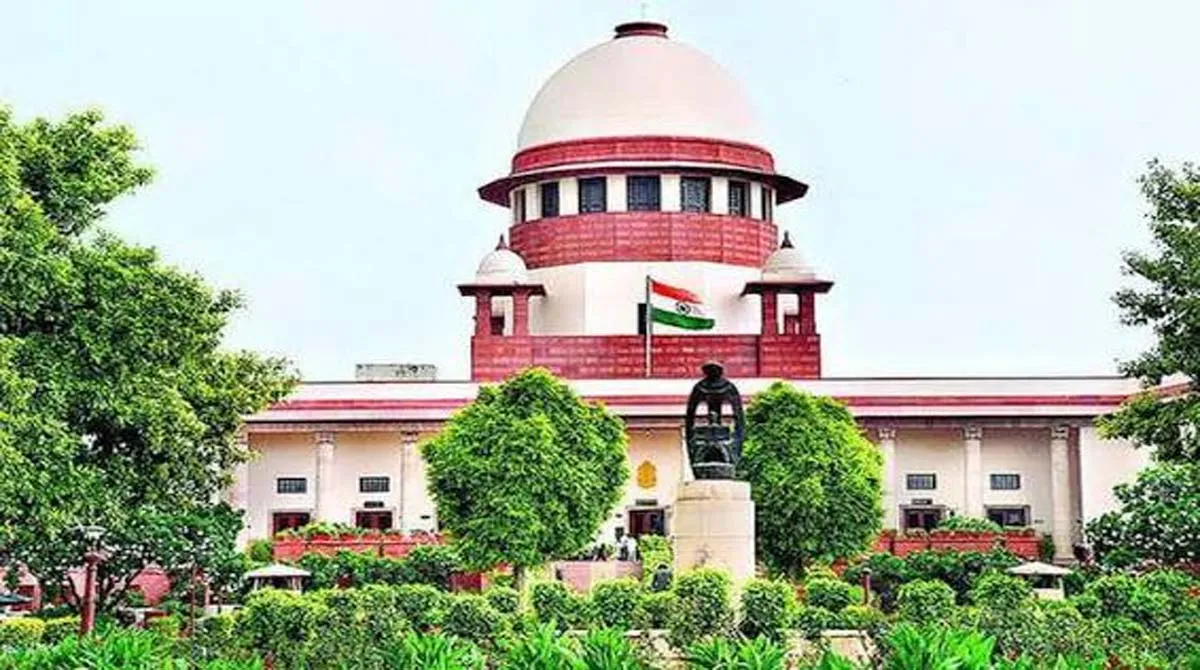
The Supreme Court, while hearing a very important case on Tuesday, refused to clarify whether the national song 'Vande Mataram' should be limited to only two stanzas or it should have all six stanzas. However, with this the court is fully prepared to consider the serious legal question whether a person can be punished by making it a punishable offense for not singing this national anthem or not.
What did the Supreme Court bench say?
During the hearing, the special bench of Chief Justice of India Surya Kant, Justice Joymalya Bagchi and Justice V. Mohana specifically cited the old historical decision of the Supreme Court in the famous 'Bijo Emmanuel' case. The bench clarified that the law which was laid down in that old case, according to which no citizen can be punished for not singing the national anthem or national song, is fully effective and applicable even today.
Answer sought from central government
The Supreme Court has asked the Central Government to file its reply on this important Public Interest Litigation (PIL). However, the court made it clear that at present no formal notice has been issued to the Central Government at this initial stage. Commenting, the bench said that these provisions of punishment present under the law can be reviewed in depth in the context of the fundamental rights given to every citizen of the country under Articles 25 and 26 of the Indian Constitution.
Who has filed this controversial petition?
This high-profile petition was filed by well-known Carnatic music singer T.M. It has been filed in the Supreme Court on behalf of Krishna. He has directly challenged the law under which it is made mandatory to sing all the six verses of 'Vande Mataram'. According to a report by news agency PTI, the main argument of petitioner Krishna is that the last four stanzas of this song clearly reflect special devotion towards Hindu deities, and hence making it mandatory for every citizen to sing it is a flagrant violation of the basic secular nature of India.
Apart from this, the petition has also brought into question the legal amendment through which 'Vande Mataram' has been included within the ambit of the 'Prevention of Insults to National Honor Act'. The petitioner strongly alleges that this rule is completely arbitrary, violates the personal freedom of the common citizens of the country and works to promote a particular majoritarian religious message. The PIL filer has also raised serious questions on the legality of increasing the national anthem from two to six stanzas and making provisions for punishment or penalty for not singing it.
What argument did Solicitor General Tushar Mehta give?
Solicitor General Tushar Mehta, representing the Central Government, strongly opposed this petition. While presenting his side in the court, he said that those who do not have any faith in the Constitution of the country and the rule of law and whose ideology is inspired by Naxalite thinking, they should never forget the important role of this national song during the great history of our freedom struggle and such people have no right to raise unnecessary questions on it.