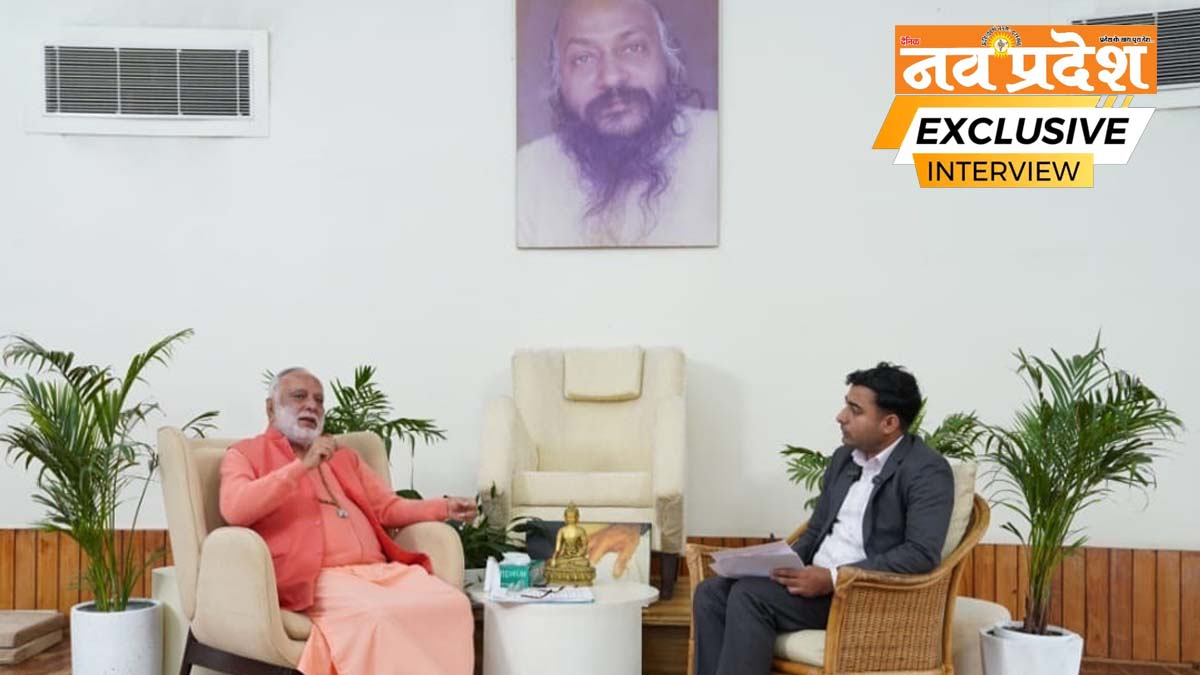
Conversation with Swami Anand Arun on the shared spiritual heritage of India and Nepal.
Special conversation, Kumar Abhinav from Kathmandu
Kathmandu/Read. Swami Anand Arun: The world today is passing through such a phase where wars and conflicts, religious and national tensions, climate change, natural disasters, technological changes and increasing mental stress are posing serious challenges to humanity. Floods and other natural disasters in Nepal in recent years have also underlined the severity of the climate crisis. On the other hand, the need for world peace, environmental protection and humanitarian cooperation is becoming increasingly vocal on global forums. At such a time, it is natural to question whether the establishment of peace within humans can play any role in the direction of broader social and global peace? Keeping this question at the center, the head of Tapovan, Nepal in Kathmandu Swami Anand Arun Had a special conversation with.
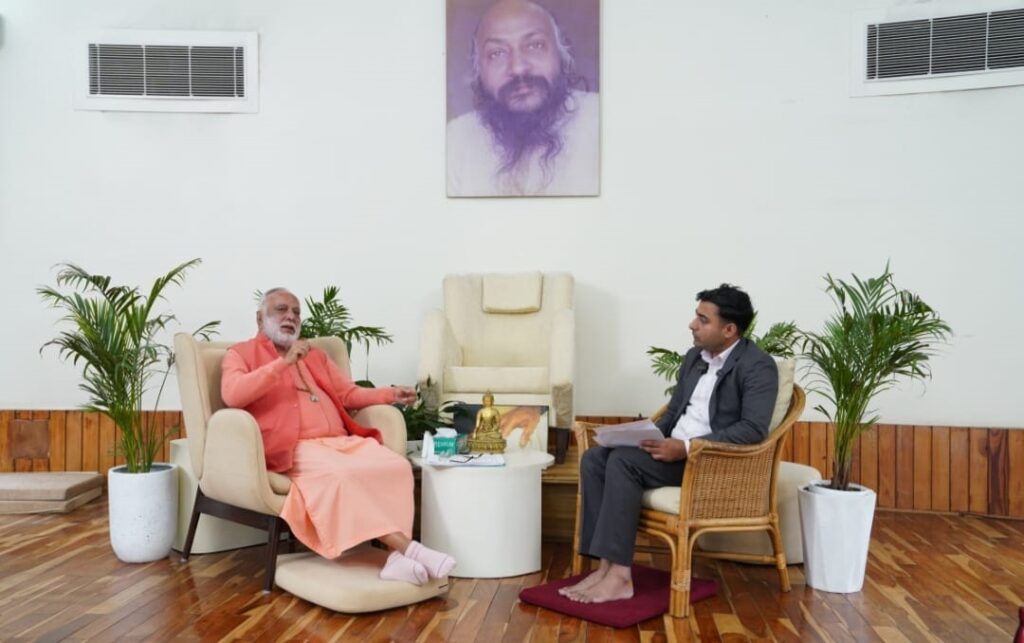
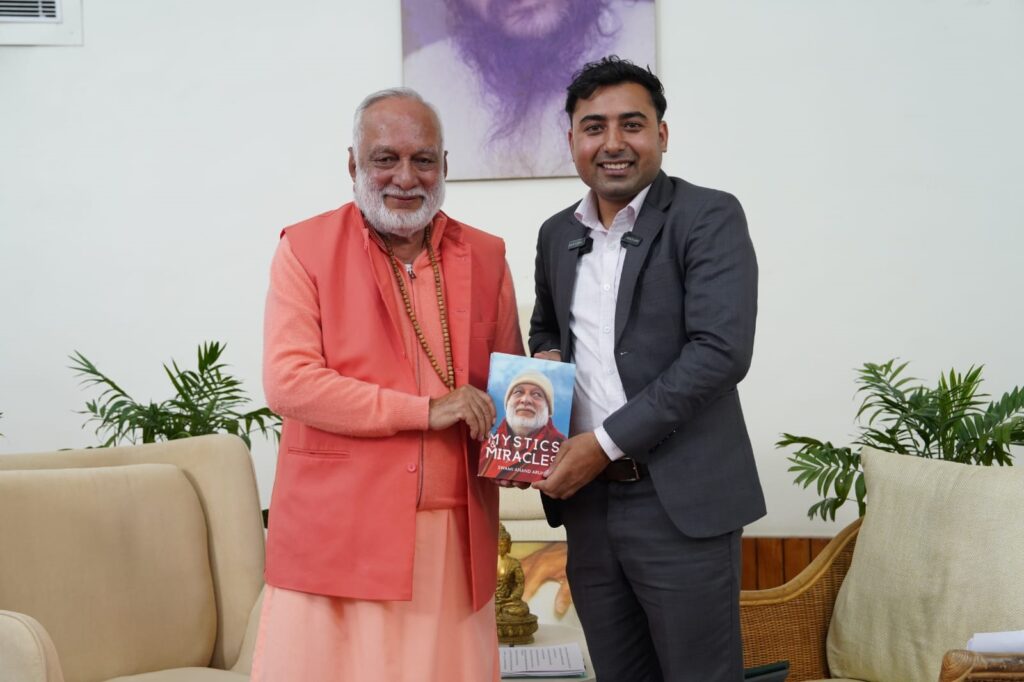
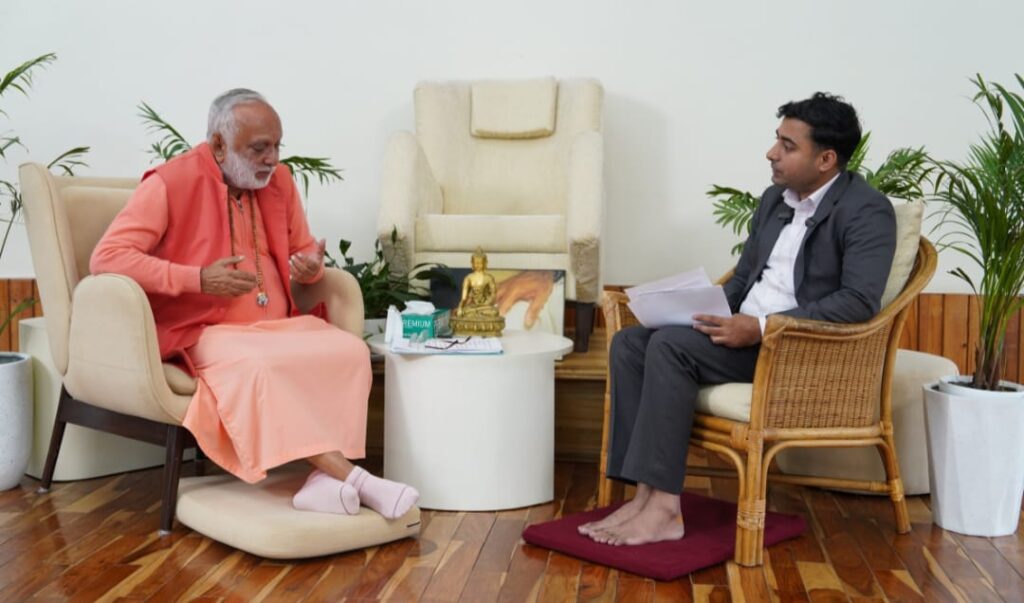
The focus of the dialogue was on meditation and its contemporary relevance—ranging from personal peace to social harmony, India-Nepal spiritual ties, environmental protection, youth challenges and world peace. Relations between India and Nepal are not limited to just geography, politics and economy. There has been a centuries-old cultural and spiritual closeness between the two countries. The Himalayas, Buddha, yoga, meditation and various spiritual traditions connect the two societies at a deep human and cultural level. At a time when the world is exploring new avenues of peace and co-existence, it is important to understand how meditation can develop peace, awareness and compassion within the individual and also strengthen the culture of dialogue and co-existence in the society. Introducing Kumar Abhinav Swami Anand Arun Exclusive interview with.
Question 1. Swamiji, why is the need for meditation felt more than ever in today's world?
Swami Anand Arun: Today man has more facilities and information than ever before, but peace of mind is decreasing. Our attention is constantly divided by the outside world. Mobile, social media, competition and worry about the future have kept humans constantly active and busy. We have many means to connect with the whole world, but time to connect with ourselves is becoming less. Meditation gives us the opportunity to return within ourselves. This is not an escape from the world, but a process of understanding your mind. Only when a person begins to see the restlessness, fear and stress within him does the journey to real peace begin.
Question 2. Is meditation only a means of personal peace or does it also have social importance?
Swami Anand Arun: Meditation begins with the individual, but its impact should not be limited to the individual. A person who is more calm, alert and aware also behaves differently with his family, society and people around him. If a large number of people start living a more conscious life, it can also have an impact on the social environment. World peace begins from within man at some level or the other.
Question 3. What role can meditation play in a world full of war and conflict?
Swami Anand Arun: Meditation is not a political or military solution to any war (Swami Anand Arun). Diplomacy, dialogue and political efforts are necessary to stop war. But the war mentality—fear, hatred, anger, insecurity, and a sense of superiority—can also exist within humans. Meditation gives the person the opportunity to observe and understand these emotions that arise within him. Therefore, along with external efforts for peace, a culture of internal peace is also necessary.
Question 4. What special role can meditation play in the context of India and Nepal?
Swami Anand Arun: The civilizations of India and Nepal have a long tradition of meditation and self-discovery. There are not only political ties between the two countries, but also deep cultural and spiritual ties. Today there is a need to take these relations forward in the modern context. India and Nepal together can develop a positive and constructive dialogue on topics like meditation, youth, mental peace, environment and world peace.
Question 5. Can India-Nepal relations be strengthened from spiritual and humanitarian point of view?
Swami Anand Arun: Definitely. People-to-people contact between the two countries is centuries old. We should not just look at what India and Nepal can gain from each other economically or politically. We should also see what the two societies together can contribute to humanity. Meditation, yoga, culture and peace can be important mediums through which human relations between the two countries can deepen.
Question 6. How do you connect climate change and meditation?
Swami Anand Arun: Climate change is not just a matter of science or economics. It is also linked to our lifestyle and our consciousness. When man considers nature only as an object of consumption, then the tendency to exploit it increases. Meditation can give us the opportunity to realize the interconnectedness of our existence in which humans and nature are not separate. We are not separate from nature; We are part of the same earth. Floods and other natural disasters in Nepal remind us that there is a need to take environmental crisis seriously and develop collective responsibility.
Question 7. What is the common responsibility of India and Nepal with respect to the Himalayas and environmental protection?
Swami Anand Arun: The Himalayas are not the property of only Nepal or India (Swami Anand Arun). It is extremely important for the environmental balance of the whole of Asia. Therefore, protection of the Himalayas cannot be the work of any one country. Cooperation and public awareness is necessary between India and Nepal in the field of environment, water and climate. Nature does not divide us on the basis of political boundaries. Therefore, our responsibility to protect the environment is also shared.
Question 8. Why is meditation important for today's youth?
Swami Anand Arun: Today's youth is living in a very rapidly changing world. Social media, the Internet and Artificial Intelligence have rapidly changed both the pace and nature of life. But the faster the outside world is changing, the greater is the need to remain stable within. Meditation can help youth understand their concentration, emotions and thoughts. This does not turn them away from technology, but can develop the ability to make more conscious and balanced use of technology.
Question 9. What is the difference between spirituality of social media and real meditation?
Swami Anand Arun: Social media constantly exposes us to what others are doing, thinking, and showing. Meditation takes us inward—what am I feeling, what is going on within me and who am I really? On social media we create our image, whereas in meditation we try to see our real situation. So spirituality is not just about what we post. The real question is how much our lives and behavior have changed.
Question 10. Is meditation linked to any particular religion?
Swami Anand Arun: It is not necessary to limit meditation to any one religion. No matter what religion a person follows, he can observe his mind, become aware of his breathing and find peace within himself. In this sense meditation is part of the human experience, not just a religious identity. This is why meditation can become a shared human practice for people from different societies across the world, from India to Nepal.
Question 11. What role can meditation play in the concept of 'One Asia'??
Swami Anand Arun: Asia's diversity is its greatest strength. Languages, cultures, and religious traditions differ from country to country, but many traditions of meditation and inner awareness bind all of Asia into a common cultural stream. 'One Asia' does not mean creating a uniform culture. It means unity with diversity and a sense of shared humanity. India and Nepal can play an important role in this regard, as both the countries have a deep and rich heritage of spiritual traditions.
Question 12. How can World Meditation Day be linked to world peace?
Swami Anand Arun: It is more important that World Meditation Day should not remain just an event, but should become a medium of a global message (Swami Anand Arun). If on that day people from different countries of the world stop for some time, become quiet and look within themselves, then it can be a symbol of peace in itself. But the real objective should not be to meditate just one day, but to make meditation and awareness a part of life. If meditation is not considered the property of any one religion but is seen as a universal process of human consciousness, then it can become a medium to connect different societies of the world.
Question 13. Can meditation also change our responsibility towards the environment?
Swami Anand Arun: Meditation gives us the opportunity to observe our life and our behavior. If a person begins to realize that his life is not separate from nature, his consumption habits and his behavior towards the environment may also change. Today we not only need technology to save the environment, but also a sensitive consciousness towards nature. Climate change gives us an opportunity to understand that the Earth is not the property of any one nation. This is the common home of all of us.
Question 14. How to strike a balance between learning from a guru and experiencing it yourself?
Swami Anand Arun: Guru can give direction, but the person has to experience it himself. In meditation, someone else's experience cannot be made your experience. You have to sit yourself, see for yourself and understand for yourself. True education makes a person more aware and independent. The aim of the Guru should be to enable the individual to journey within himself.
Question 15. Finally, considering Osho's vision as a broader message in the context of today's world—a world marked by war, religious and national divisions, climate change, mental stress, and rapidly changing technology—how can meditation and awareness contribute to the creation of a new man and a new humanity that can advance a culture of peace, compassion and co-existence across Asia and the world, drawing inspiration from the shared spiritual heritage of India and Nepal?
Swami Anand Arun: In Osho's view, meditation is not just about sitting with closed eyes. Meditation means waking up within yourself, observing your thoughts and reactions, and living more consciously. The mentality of fear, anger, insecurity, ego and division is seen behind many of the problems in the world today. If man starts understanding himself, his relationships and behavior with society can also change. The shared spiritual tradition of India and Nepal can provide an important foundation in this direction. But this message should not be limited to India or Nepal only. For Asia and the entire world, meditation can be seen as the common wealth of humanity. We need such a humanity in which a person respects his national and religious identity, but does not put it above humanity. First we are human beings, then we have other identities. If this consciousness develops, meditation will no longer be merely a means of personal peace; That can become the basis of a culture of compassion, dialogue and co-existence. One Earth, One Humanity and Many Cultures—this is the vision that can connect the shared spiritual heritage of India and Nepal to the broader message of world peace.