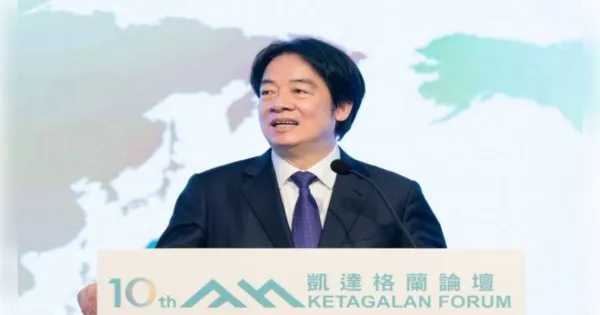
Taipei: Taiwan’s President Lai Ching-te has appealed to the international community to oppose China’s so-called ‘Ethnic Unity’ law.
He said that this law not only challenges the sovereignty of Taiwan, but can also adversely affect the rights of ethnic and religious minorities, freedom of expression and democratic values.
Addressing the opening session of the 10th Ketagalan Forum–Indo-Pacific Security Dialogue held in Taipei, President Lai said Taiwan will maintain its commitment to democracy, peace and regional security.
He alleged that China’s new law is going to promote political censorship and cross-border repression, hence democratic countries should be cautious about it.
President Lai said Taiwan will strengthen its efforts to counter any such pressure and repressive activities through global cooperation.
He also called on democratic countries to enhance cooperation to strengthen peace, stability and a rules-based order in the Indo-Pacific region.
China says the law aims to strengthen national unity and social harmony, and the issue has once again highlighted existing differences between China and Taiwan.
The Law on the Promotion of Ethnic Unity and Progress came into effect in China on July 1. Various international human rights organizations and several Uyghur civil society organizations have also expressed concern about this law.
These organizations say that this law raises serious questions on issues related to the protection of cultural and religious identity and concerns have also been expressed about the cross-border impact of some of its provisions.