

18
Faith, transparency and governance shape India’s intensifying debate over temple administration.
Temples are not merely places of worship; they have historically served as some of India’s oldest centres of culture, education, social service and economic activity. Today, the country is once again witnessing an intense debate over whether Hindu temples should remain under government control or be handed over entirely to independent trusts. The issue extends far beyond religion and touches upon constitutional principles, governance, transparency, the faith of millions of devotees and assets worth thousands of crores of rupees.
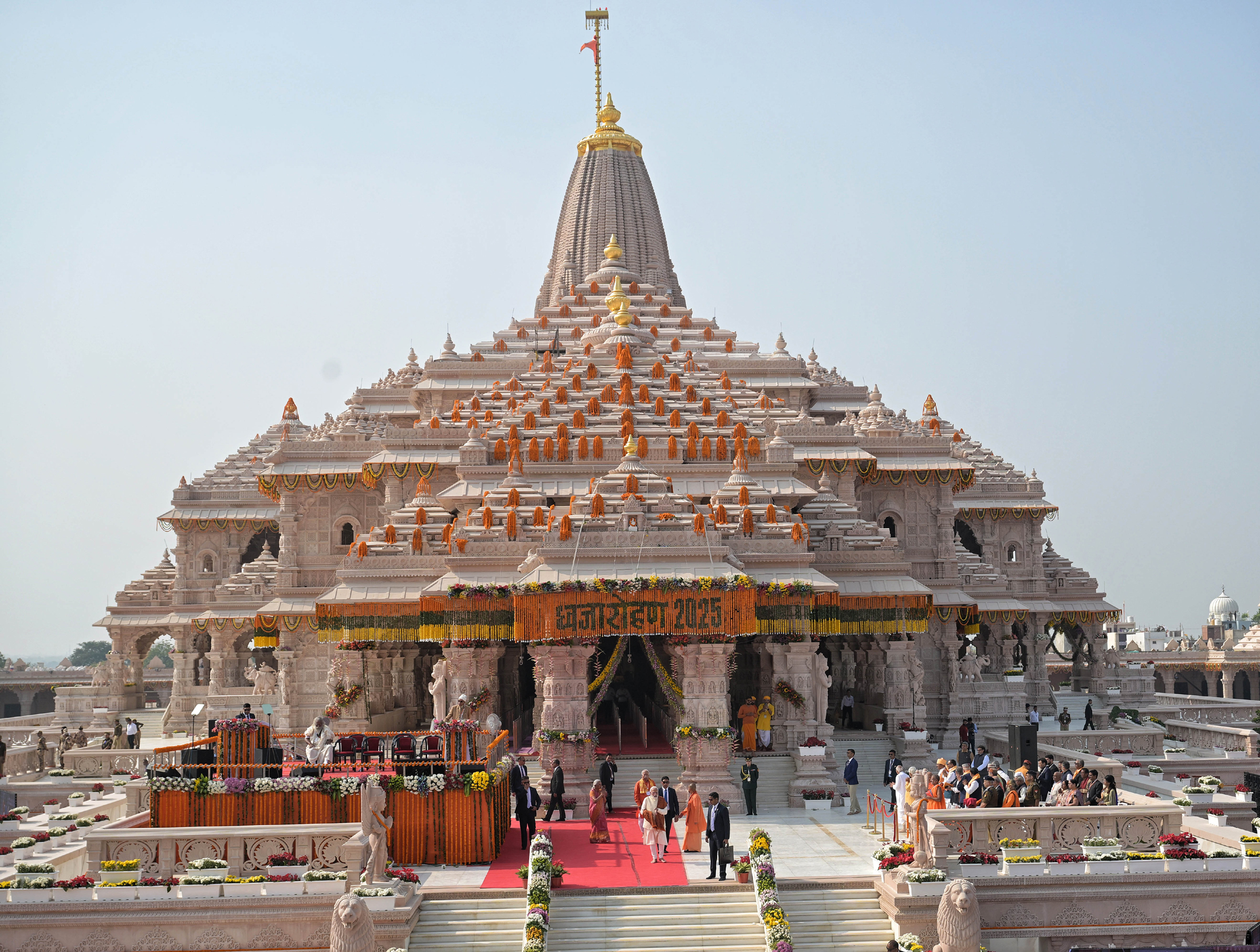
The construction of the Ram Temple in Ayodhya and developments that followed have further intensified discussions on temple administration across the country. Several religious organisations argue that just as mosques, churches, gurdwaras and Jain temples are managed by their own religious bodies, Hindu temples too should be freed from government control. Others, however, contend that government oversight ensures transparency, preservation of heritage and public accountability.
The Shri Ram Janmabhoomi Teerth Kshetra Trust in Ayodhya is frequently cited in this debate. The trust was constituted by the Central government following the Supreme Court’s verdict and is responsible for the construction and management of the temple. Its supporters argue that the government does not interfere in the day-to-day religious management of the shrine and that the trust independently takes decisions. They also point to the massive inflow of donations from across the country and the large-scale development works undertaken around the temple. Critics, however, have periodically raised questions regarding transparency, land purchases, administrative decisions and the trust’s functioning. The trust has, on several occasions, publicly presented its position on these issues.
For thousands of years, temples have not merely been centres of worship but have also functioned as pillars of social development. In ancient India, temples served as centres of education where the Vedas and scriptures were studied, while music and dance traditions were preserved within their precincts. Many temples also provided Ayurvedic treatment and healthcare services, maintained dharamshalas for travellers, distributed food to the poor and assisted farmers. During periods of famine, temple grain reserves were often opened to provide relief to the local population. In many parts of South India during the medieval period, temples were among the largest economic institutions, owning agricultural land, water bodies and markets while employing thousands of people. In many regions, they functioned as the largest employers.
Following the consecration ceremony on 22 January 2024, Ayodhya rapidly emerged as one of the world’s foremost Hindu pilgrimage centres. It is estimated that more than 15 crore devotees have visited the temple so far.
In June 2026, allegations of embezzlement of donations associated with the Shri Ram Janmabhoomi Teerth Kshetra Trust surfaced. The Prime Minister’s Office reportedly sought an explanation based on a letter written by BJP leader Rajneesh Singh of Ayodhya. When the district administration sought information from the Ram Temple Trust regarding its income, expenditure, donations, bank accounts, land transactions and assets, the trust’s secretary, Champat Rai, reportedly declined to provide the information. Rajneesh Singh wrote two letters regarding the alleged theft of temple offerings. In his first letter, dated 9 June, he demanded that the trust publicly disclose its complete financial transactions and assets since its inception. He sought details regarding funds collected through the ‘Samarpan Nidhi’ campaign, donations received through various channels, contributions made in the form of gold, silver and jewellery, bank accounts and financial transactions, land purchases and sales, expenditure on temple construction and administration, and audit and inspection reports. A second letter was written on 12 June, and on 13 June a Special Investigation Team (SIT) was constituted to investigate the matter.
The district administration subsequently contacted the Shri Ram Temple Trust seeking information, but Champat Rai reportedly refused to share details, citing the ongoing SIT investigation and stating that all relevant records and information were being collected by the investigation panel.
Ram Temple Construction Committee chairman Nripendra Mishra described the alleged theft of offerings as an extremely serious matter. He said there had been “zero monitoring” in the counting of donations and remarked that the incident should not be described as a theft but rather as an “open robbery”. According to Mishra, the agreement between the trust and the bank placed the responsibility of counting donations entirely upon the bank. However, instead of deploying permanent staff, the bank allegedly ignored the rules and displayed gross negligence in the process. He stated that there was virtually no monitoring in the counting room and that people were able to carry bundles of currency notes out in their pockets.
Mishra further stated that no receipts were being issued for jewellery deposited in donation boxes. He also acknowledged that CCTV footage from the donation room was automatically deleted after 45 days and that no backup was maintained, complicating the SIT investigation. He said Prime Minister Narendra Modi was deeply concerned about these irregularities and advocated the appointment of a full-time IAS officer with an emotional connection to Ayodhya as the temple’s Chief Executive Officer.
Veteran Ram Temple movement leader and former BJP MP Vinay Katiyar also expressed anger over the developments. Katiyar alleged that Champat Rai had on several occasions taken temple offerings to his private residence at Karsevakpuram, which he described as a serious violation of rules. According to Katiyar, temple donations are traditionally counted within the temple premises and deposited directly into bank accounts. Taking the money elsewhere, he argued, raises serious questions.
Katiyar said that after learning about the matter he sought an explanation directly from Champat Rai, leading to a heated exchange between them. He added that following the Prime Minister’s intervention an SIT had been formed and that the truth would soon emerge. Calling for Champat Rai’s removal, Katiyar said he must answer allegations related to taking temple offerings to a private residence.
Police have registered an FIR in connection with the alleged embezzlement of donation funds and initiated action against several employees and associated individuals. According to available information, eight people have been arrested. They are accused of embezzling a portion of the cash donations made by devotees. Cases have been registered under various sections relating to theft, criminal breach of trust and criminal conspiracy. Police have also reported recovering approximately Rs 79.85 lakh during the investigation. The final amount involved and responsibility for the alleged embezzlement will be determined only after completion of the investigation and judicial process. Opposition parties have demanded an investigation under the supervision of the Supreme Court.

Comments are closed.