
Elon Musk, CEO of Tesla, revealed plans to develop a new model of the Model Ywhich will be autonomous and will have no steering wheel or brake pedals. The number of passengers that the new model will accommodate is expected to be around six or seven.
The plans were shared during Musk’s discussion with Andrew Ross Sorkin at the DealBook Summit, hosted by The New York Times in the United States on November 18, 2026.
The announcement highlights Tesla’s growing focus on autonomous transportation, adding to recent Tesla Cybercab coverage on News. However, Tesla has not announced a launch date, price, or production schedule for this vehicle. It remains a publicly stated plan rather than a confirmed product launch.
1. Why Does Tesla Need a Larger Robotaxi?
In the interview, Musk said Tesla will also need autonomous cars for different passenger needs. He said the Cybercab with two seats is meant for the majority of passenger trips, but families or bigger groups require more room for seating. Musk added that Tesla is working on an autonomous Model Y that would carry six to seven passengers.
The proposed vehicle would expand Tesla’s robotaxi strategy beyond smaller passenger groups.
2. How Will the New Model Y Differ From Cybercab?
Tesla’s existing Model Y robotaxi fleet, its Cybercab, and the proposed autonomous Model Y would serve different transportation needs.
| Feature | Existing Model Y Robotaxis | Tesla Cybercab | Proposed Autonomous Model Y |
| Passenger capacity | Up to 4 | 2 | 6–7 |
| Steering wheel | Yes | No | No |
| Pedals | Yes | No | No |
| Main purpose | Current autonomous ride-hailing operations | Smaller passenger trips | Families and larger groups |
| Status | Active fleet | Separate robotaxi programme | Planned |
In the larger Model Y, Tesla might be better equipped to accommodate passengers who require more seats. However, Musk has so far not revealed any plans for its interior design, luggage room, or ultimate shape.
3. Does Removing Driving Controls Mean Level 5 Autonomy?
Not necessarily. A car that doesn’t have a steering wheel or pedals requires an autonomous driving system capable of operating without human input.
Level 4 autonomy describes a vehicle that can operate without human intervention within defined operating conditions, such as specific geographic zones or weather environments. By contrast, Level 5 autonomy describes a vehicle capable of performing any driving task, under all conditions, that a human driver can. Removing conventional controls alone does not automatically establish Level 5 autonomy; a control-free vehicle can still be limited to Level 4 operation.
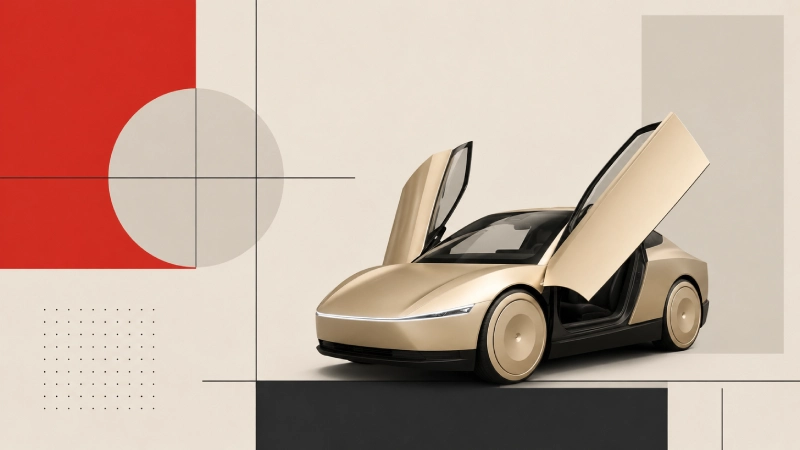
Regulatory approval is another major hurdle. In September 2026, the National Highway Traffic Safety Administration (NHTSA) opened an investigation into the Tesla Cybercab’s compliance with federal vehicle safety standards, specifically examining requirements surrounding conventional driving controls. While the inquiry does not establish a safety violation, any vehicle built without a steering wheel or pedals—including the proposed Model Y—will face strict federal scrutiny before commercial deployment.
4. Are Consumers Ready for Fully Driverless Cars?
Consumer acceptance might become a key issue for Tesla in the future. The 2026 Cox Automotive Autonomous Vehicle Study, which was released on September 28, provides helpful information on consumer preferences in the United States.
According to the study:
- Only 10% of respondents preferred Level 5 autonomy in a vehicle they owned, down from 17% in 2016.
- Level 4 autonomy was the most popular choice, attracting 28% of respondents.
- Around 55% of Americans were open to using robotaxi services.
- Meanwhile, 61% of people who had never used a robotaxi remained uncomfortable with having no human driver.
These findings represent U.S. consumer preferences rather than global demand or actual purchase intentions for Tesla’s proposed vehicle. Still, the results identify a key distinction between self-driving cars as a product and self-driving cars as a service. Consumers may be more comfortable booking a driverless ride than purchasing a car that removes their ability to drive. For Tesla, this distinction could influence how it develops and markets the proposed Model Y.
5. What Could This Mean for Tesla’s Robotaxi Business?
A six- or seven-seat autonomous Model Y could help Tesla target families, group travel, and other journeys that require more passenger space, giving the company another vehicle category to support its broader autonomous vehicle and EV coverage. However, commercial success will depend on more than seating capacity.
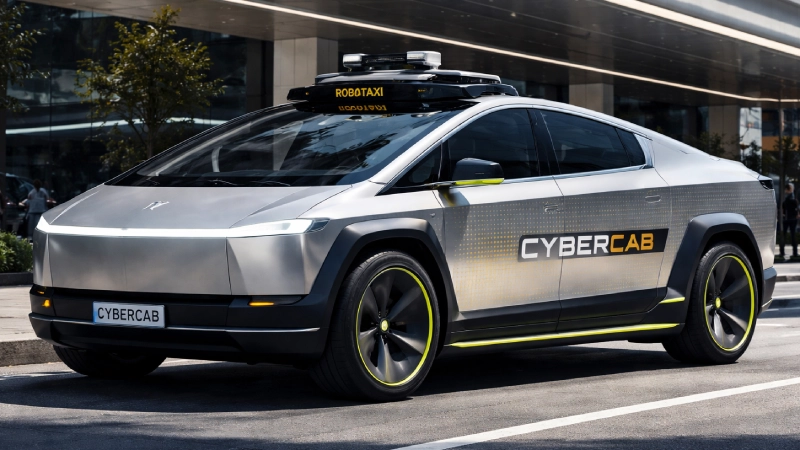
Getting this service to market will require Tesla to prove that its cars can drive themselves safely and comply with federal regulations. Tesla will also have to compete in a crowded autonomous ride-hailing market. For instance, Uber and autonomous technology firm Nuro have partnered with Lucid to deploy a six-passenger Lucid Gravity robotaxi with ample luggage space, directly targeting group and airport rides. Meanwhile, Waymo continues to operate and expand its commercial autonomous fleet using multi-passenger vehicles like the Jaguar I-PACE and upcoming Zeekr-built minivans.
Will the Driverless Model Y Come to India?
Tesla has not announced an Indian launch for the driverless Model Y, nor has it shared any pricing or international release schedule. Furthermore, India’s current regulatory framework under the Motor Vehicles Act does not permit fully driverless vehicles on public roads, with Union Transport Minister Nitin Gadkari repeatedly stating that autonomous cars will not be allowed in the country. Combined with mixed traffic and complex road infrastructure, an Indian rollout remains unlikely in the foreseeable future.
The Bottom Line
Tesla’s proposed driverless Model Y represents another step in Elon Musk’s vision of autonomous transportation. Its six- or seven-passenger seating capacity could fill the gap created by the two-seat Cybercab.
Nevertheless, questions remain around federal safety compliance, consumer acceptance, and fierce competition from rivals like Waymo and the Lucid-Uber-Nuro partnership. For now, the driverless Model Y remains an early concept rather than a confirmed production model.