
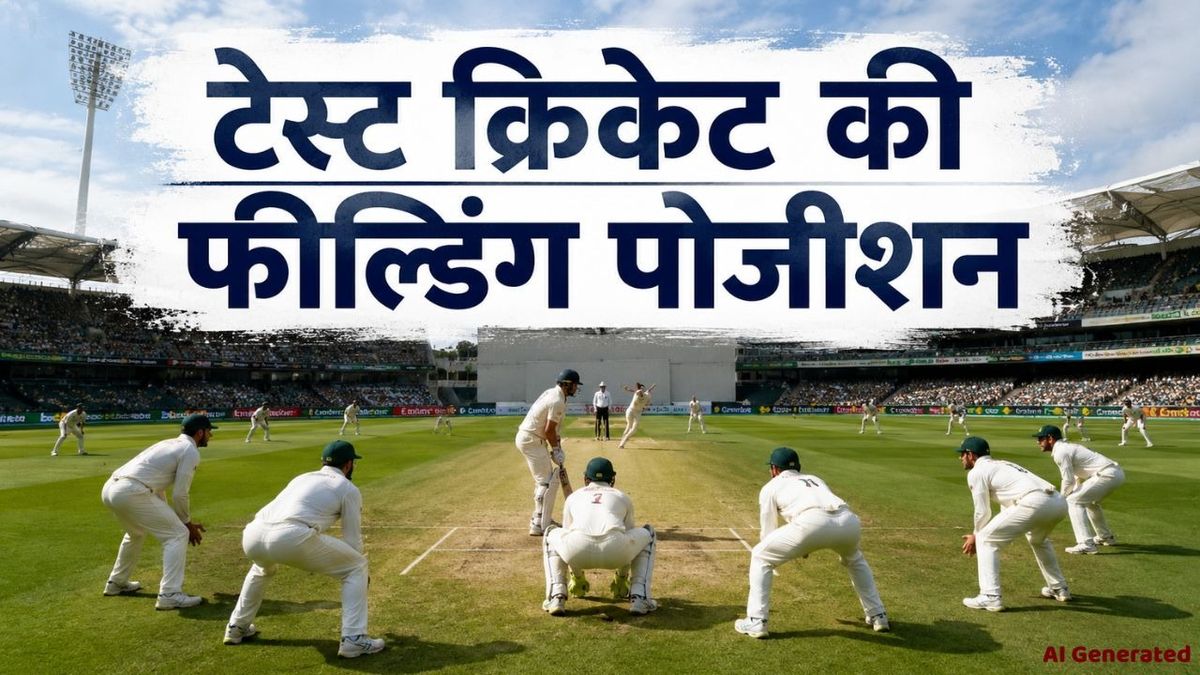

Explainer: The oldest format of cricket involves Test. There was no limit in the test match in its initial stages. Red ball cricket was played until the result of the match was out. At that time test matches used to be of 4 days or even 5 days. There was a time in the history of Test cricket when Test matches were played for 6 days.
When the test match was of 6 days, it was very exciting. At that time there is a rest day in between in Test cricket. At that time, in Test matches, players of both the teams got a chance to rest, after which they were able to come on the field again and show their aggressive game.
Test cricket changed with time. Now test matches are played for only 5 days. In this, both the teams get to play 2-2 innings. At the same time, the results of the test matches being held now sometimes come out even in 2 to three days. Ever since the modernization of cricket, the basic nature of Test cricket has started changing.
Test cricket was first changed by ODI cricket, when players started playing on the field in colorful clothes and matches started being 50-50 overs, then Test cricket started changing and the rise of ODI cricket was seen in Test cricket also and T20 cricket has completely changed Test cricket. At present, many cricketers around the world play T20 cricket.
These cricketers are so engrossed in the pomp and show of T20 cricket that its influence is visible in Test cricket too. Now every cricketer bats stormily in Test cricket. He thinks of scoring runs fast and beats the bowler fiercely. The England cricket team has made Test cricket like T20 through baseball cricket.
Since the beginning of Test cricket, various fielding positions have been adopted in this format. This is the only format in which strange fielding is also done. All the fielders surround one batsman. So which fielding positions are used in Test cricket? Which fielder is called what, let us know about it today.
Positions used in test cricket
In today’s time, fielding positions are used in different ways in Test cricket. Fielding positions in Test cricket are now decided considering the batsman, bowler and match situation. So let us tell you about the fielding positions used in Test cricket.
fielding position near the wicket
slip- In Test cricket, first, second and third spins are also called. The fielder standing next to the wicketkeeper is called the spill fielder.
Street – In Test cricket, fielders are often deployed in the lane. The fielder who plays between slip and point is called gully fielder.
Leg Slip – Leg spill is most commonly used in test cricket. The fielder who stands on the leg side of the wicketkeeper. Leg slips him.
short leg – Short leg is also used in Test cricket. The fielder who stands very close to the batsman on the leg side is called short leg.
Silly Point – Silly point test is also mostly applied on fielding in cricket. He stands very close to the batsman on the off side.
Forward Short Leg – Forward short leg fielder is also used in Test cricket. He stands slightly ahead of the short leg.
/filters:format(webp)/newsnation/media/media_files/2026/06/07/explainer-2026-06-07-19-31-39.jpg)
off side fielding position
point – The fielding position of Point is also used in Test cricket. The fielder standing to the right of the batsman (for a right-handed batsman) is called the point fielder.
Backward Point – The fielding position of backward point is also often seen in Test cricket. He stands a little behind the fielder point.
Cover – The covers fielder is also important in Test cricket. This fielder fields by standing between the point and mid-off.
Extra Cover – Extra cover fielders are also used in Test cricket. This fielder fields between cover and mid-off.
mid-off – In Test cricket, you often find mid-off fielders engaged. The fielder standing on the off side in front of the bowler is called midoff.
Deep Point – You must have often seen deep point fielders in Test cricket. He lives in the point area near the boundary.
deep cover – Dive cover also happens in test cricket. This player fields in the cover area near the boundary.
leg side fielding position
Mid-on – You must have also seen a mid-on fielder in Test cricket. He fields on the leg side in front of the bowler.
Mid-wicket – You also often see mid-wicket fielders in Test cricket. This fielder stands between square leg and mid-on.
square leg – The square leg fielder plays an important role in Test cricket. He fields while standing at a 90° angle to the batsman’s leg side.
Backward Square Leg – You must have also seen backward square leg fielders in Tests. He stands behind square leg.
fine leg – The fielder of the final leg fields behind the wicketkeeper standing on the leg side.
leg alley – You will often see leg alley in test cricket. This fielder fields between leg slip and backward square leg.
Deep mid-wicket – You must have often seen the deep mid-wicket fielder in Test cricket. This happens in the mid-wicket area near the boundary.
Deep square leg – You see the deep square leg fielder in Test cricket. He fields while standing in the square leg area near the boundary.
Long Leg – There is also a long leg fielder in Test cricket. This happens in the direction of fine leg on the boundary.
/filters:format(webp)/newsnation/media/media_files/2026/06/07/test-cricket-2026-06-07-19-59-05.jpg)
Apart from this, a straight hit fielder is also placed in front of the field i.e. in front of the batsman. Who stands exactly in front of the wicket to take the shot directly in front of the batsman’s arrow. In Test cricket, fielding can be done anywhere at any time. In this format, the fielder does not have to follow the rules like 30 yards radius or white ball cricket format.
Read this also:Explainer: What is the minimum age limit to play in international cricket, know on what basis Vaibhav Suryavanshi got the chance

Comments are closed.