
Warm up with one of these heart-healthy soups this season.
Reviewed by Dietitian Katey Davidson, M.Sc.FN, RD, CPT
Key Points
- Dietitians recommend five canned soups that support heart health.
- Look for soups that are rich in fiber and potassium and lower in sodium.
- Lentil, split pea and vegetable soups can be nutritious, convenient options.
The arrival of cooler temperatures may have you digging your favorite sweater out of the closet and leaning more heavily on classic comfort foods. Warming up with a bowl of soup is the epitome of coziness, and thanks to the convenience of canned soup, it can be ready to eat in just minutes. But if you’re following a heart-healthy diet, you may assume that canned soup is off-limits.
Canned soup has earned a reputation for being a heart-health no-no because it is traditionally higher in sodium and saturated fat, which doesn’t align with a heart-healthy eating pattern. The good news for soup lovers is that not all canned soups are the same nutrition-wise. In fact, according to dietitians, there are several canned soup options available that marry convenience with heart-health benefits. Here are their top five picks.
1. Amy’s Organic Lentil Vegetable Soup, Light in Sodium
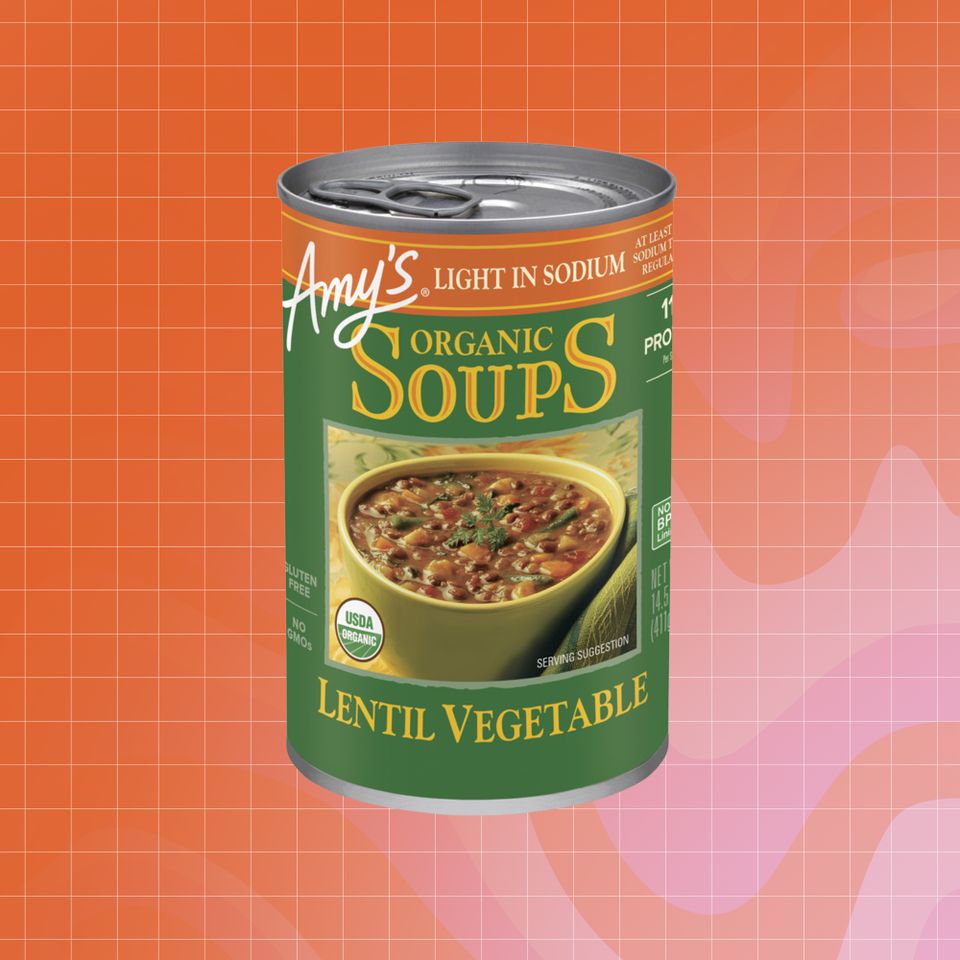
Nutrition information for 1 cup of Amy’s Organic Lentil Vegetable Soup, Light in Sodium:
- Calories: 150
- Carbohydrates: 24 g
- Dietary fiber: 5 g
- Total sugar: 5 g
- Added sugar: 0g
- Protein: 6 g
- Total fat: 4 g
- Saturated fat: 0.5 g
- Cholesterol: 0 mg
- Sodium: 320 mg (14% Daily Value)
- Potassium: 490 mg (10% DV)
- Iron: 2.5 mg (15% DV)
Amy’s Organic Lentil Vegetable Soup is a top pick. In just 1 cup, you’ll get 6 grams of protein and 5 grams of fiber, thanks in large part to the lentils.
Lentils are one canned soup ingredient that you’ll see in many of these dietitian picks—and for good reason. Legumes are linked with better heart health thanks to their high fiber and low saturated fat content.
This soup is also a good source of potassium, providing around 10% of the Daily Value per cup. This nutrient is important for heart health, yet most people aren’t getting enough. That’s why dietitians recommend opting for higher-potassium soup options when possible. “Potassium helps counteract sodium’s effects by increasing sodium loss via urine and contributing to lower blood pressure by relaxing blood vessels,” says Amy Brownstein, M.S., RDN.
2. Progresso Reduced Sodium Hearty Minestrone
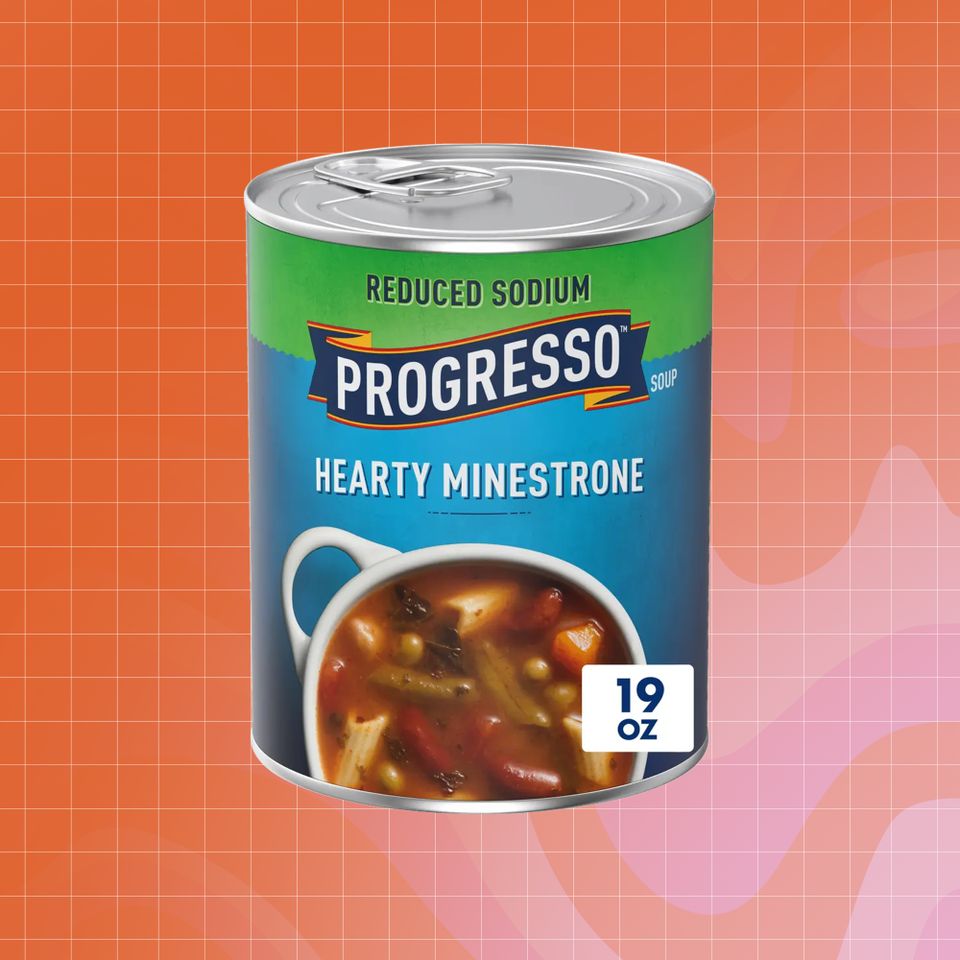
Nutrition information for 1 cup of Progresso’s Reduced Sodium Hearty Minestrone:
- Calories: 100
- Carbohydrates: 21 g
- Dietary fiber: 4 g
- Total sugar: 4 g
- Added sugar: <1 g
- Protein: 5 g
- Total fat: 0.5 g
- Saturated fat: 0 g
- Cholesterol: 0 mg
- Sodium: 470 mg (20% DV)
- Potassium: 680 mg (15% DV)
- Iron: 1.3 mg (8% DV)
When you’re craving classic Italian flavors, Progresso’s Reduced Sodium Hearty Minestrone is a great pick. This vegetarian soup is chock-full of beans, vegetables and penne for a satisfying bowl of soup that’s also good for your heart.
“The beans and vegetables add fiber and potassium, two nutrients that fit well into a heart-healthy eating pattern, while the reduced-sodium formulation makes it a better choice than many traditional canned soups,” says Johannah Katz, M.A., RD, LDN.
Opting for the reduced-sodium variety means you’re getting 30% less sodium per serving than the regular canned minestrone from Progresso. This also happens to be another potassium-packed soup, providing as much as 15% of your daily needs for this blood pressure–friendly nutrient.
3. Heyday Canning Golden Butternut Lentil Stew
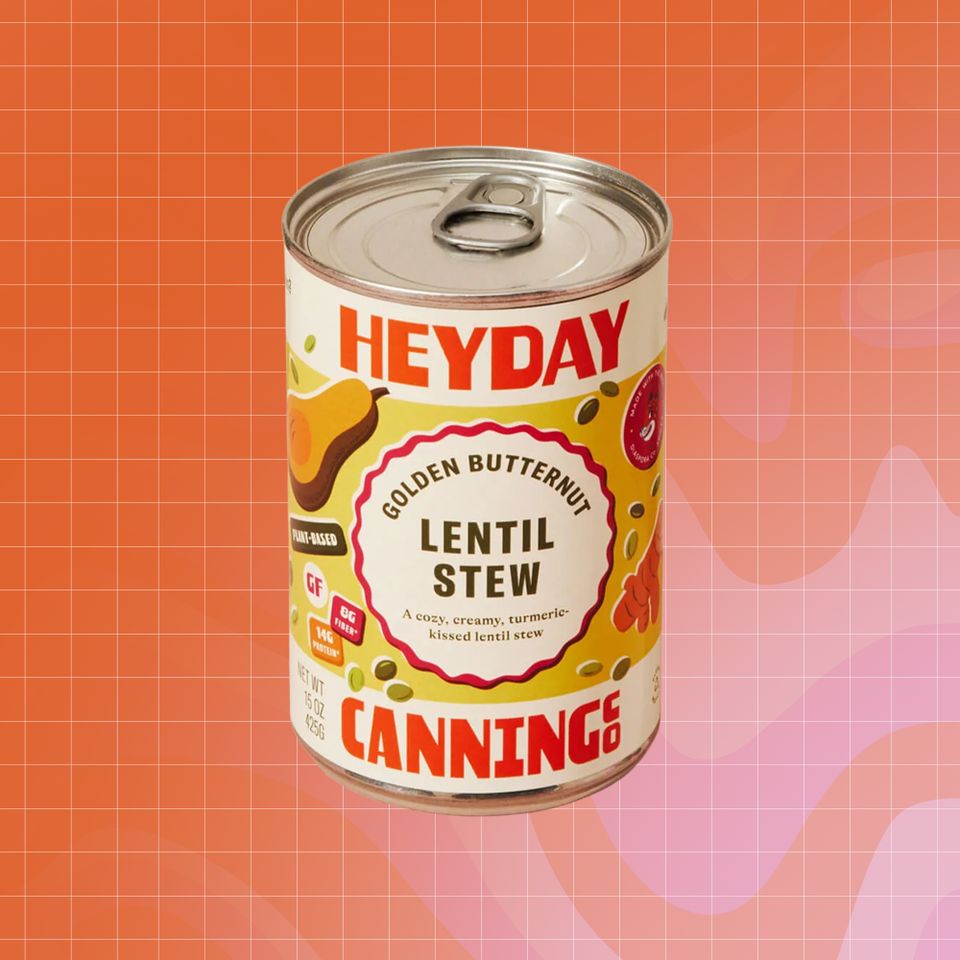
Nutrition information for 1 cup of Heyday Canning Golden Butternut Lentil Stew:
- Calories: 160
- Carbohydrates: 27 g
- Dietary fiber: 5 g
- Total sugar: 6 g
- Added sugar: 2 g
- Protein: 6 g
- Total fat: 4 g
- Saturated fat: 2 g
- Cholesterol: 0 mg
- Sodium: 580 mg (25% DV)
- Potassium: 296 mg (6% DV)
- Iron: 2 mg (10% DV)
Butternut squash soup is a fall staple for many, but it often lacks enough protein to make it a satisfying meal on its own. The addition of lentils in this butternut soup from Heyday Canning helps solve that dilemma by bringing the protein total up to 6 grams per serving. Pair this soup with a simple sandwich and you have a complete meal.
The combination of lentils and butternut squash is also win-win for heart health. “Lentils and butternut squash are rich in soluble fiber, the type of fiber shown to help lower LDL cholesterol,” says Ashley Hudson, M.S., RD.
In addition to its fiber content, butternut squash is also packed with beta-carotene, a carotenoid and antioxidant that gives it its rich orange color. Research suggests that diets rich in carotenoids may help support heart health, including a lower risk of heart disease.
Even better, stocking up on this soup means you can skip the chore of prepping raw butternut squash—a much more convenient way to add this nutrient-dense squash to your diet.
4. Amy’s Organic Split Pea Soup, Light in Sodium
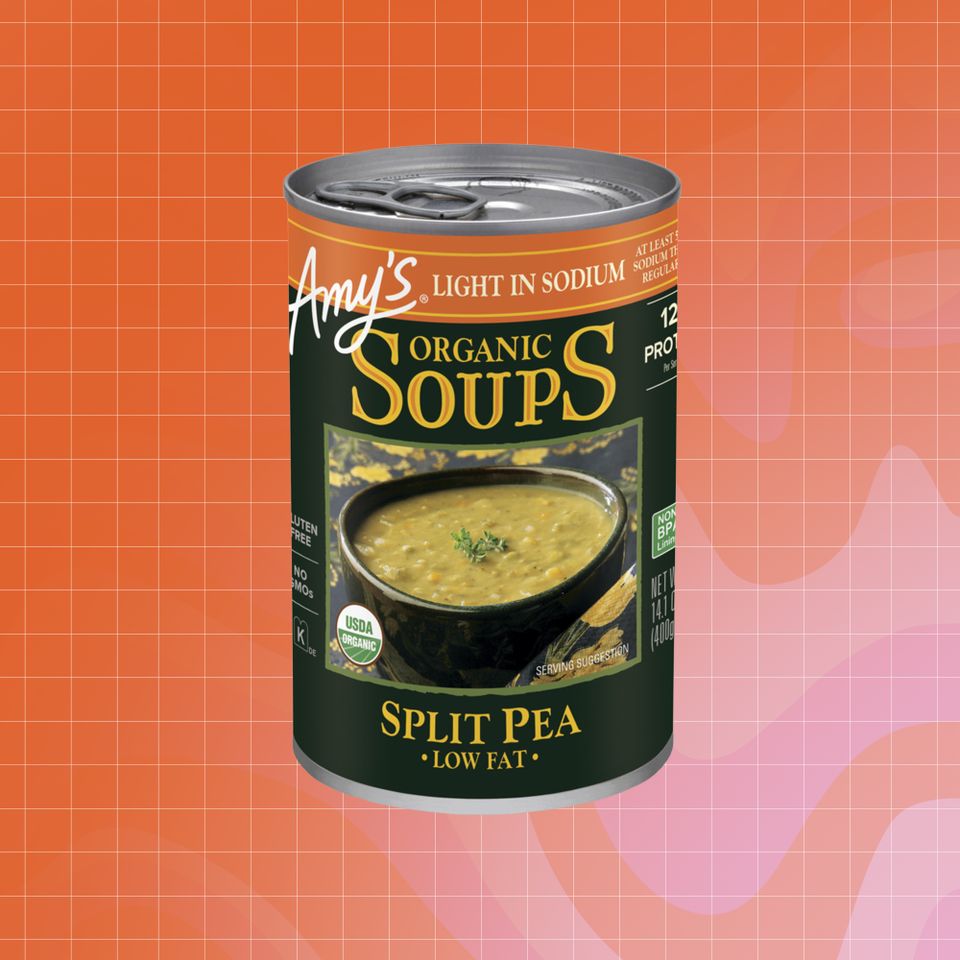
Nutrition information for 1 cup of Amy’s Organic Split Pea Soup, Light in Sodium:
- Calories: 120
- Carbohydrates: 21 g
- Dietary fiber: 5 g
- Total sugar: 4 g
- Added sugar: 0 g
- Protein: 7 g
- Total fat: 1 g
- Saturated fat: 0 g
- Cholesterol: 0 mg
- Sodium: 310 mg (13% DV)
- Potassium: 380 mg (8% DV)
- Iron: 1.4 mg (8% DV)
Split peas are an under-the-radar legume that is just as budget-friendly and nutrient-dense as other popular legumes. Split pea soup is probably one of the most common ways to cook these legumes and reap their heart-health benefits.
“Split peas are naturally rich in fiber and provide plant-based protein, making this a satisfying choice that can fit into a heart-healthy eating pattern,” says Lisa R. Young, Ph.D., RDN. The fiber in split peas helps support healthy cholesterol levels, and research links legume intake with a lower odds of developing chronic diseases, like heart disease.
Many canned split pea soups use bacon to add flavor, but that brings extra sodium and saturated fat to the total soup tally. Instead, Amy’s Organic Split Pea Soup uses basil, garlic and other spices to infuse it with plenty of flavor. This helps to keep a 1-cup serving of this soup to only 310 mg sodium and zero grams of saturated fat.
5. Campbell’s Mediterranean Lentil Soup

Nutrition information for 1 cup of Campbell’s Mediterranean Lentil Soup:
- Calories: 150
- Carbohydrates: 22 g
- Dietary fiber: 5 g
- Total sugar: 3 g
- Added sugar: 0 g
- Protein: 10 g
- Total fat: 2 g
- Saturated fat: 0 g
- Cholesterol: 0 mg
- Sodium: 590 mg (26% DV)
- Potassium: 440 mg (10%DV)
- Iron: 2.7 mg (15% DV)
The last soup on this list is another delicious lentil-based option, but this soup pick is formulated to have a little extra protein in each bowl. Each 1-cup serving provides 10 grams of protein for just 150 calories. That’s almost double the protein of other lentil soups on the shelf.
It’s also a good source of fiber, providing 5 grams per cup, thanks to the lentils and chickpeas. Fiber is a key component of the heart-health puzzle since it can lower both cholesterol and blood pressure, and a bowl of this soup helps get you closer to the daily recommended intake.
The only drawback is that this one is a little higher in sodium at 590 mg per serving, so keep that in mind when planning your meals the rest of the day.
Our Expert Take
Soups likely aren’t at the top of your list when it comes to heart-healthy foods, but dietitians say that the canned soup aisle may be worth a second look. When shopping, remember that the best heart-healthy options are lower in sodium and saturated fat while offering plenty of fiber and potassium. Try any of these dietitian-recommended soups or check the Nutrition Facts label when comparing your options to find the one that best aligns with your heart-health goals.