
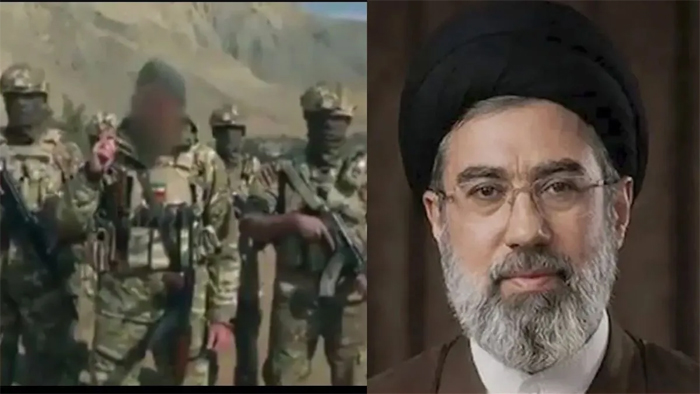
The IRGC holds power in Iran! Interference in every decision increases, and liberal leaders are sidelined.

Desk. Power in Iran now rests with the radical Islamic Revolutionary Guard Corps (IRGC). According to a report, the IRGC has effectively taken control of the country’s military and diplomatic decision-making. This change reportedly occurred over the weekend. As part of this change, IRGC Commander Ahmad Vahidi and his close associates have assumed key leadership roles. This development comes at a time when tensions are rapidly escalating in the Strait of Hormuz and talks with the US are nearing collapse.
The Washington-based Institute for the Study of War reported that the IRGC has taken over decision-making at the top leadership level, sidelining most liberal leaders, including Foreign Minister Abbas Araghchi. Iran’s Foreign Minister Araghchi had announced the opening of the Strait of Hormuz after talks with the Trump administration, but according to reports, the IRGC overturned his decision and insisted that the Strait of Hormuz remain closed in response to US pressure on Iranian ports.
According to reports, IRGC commander Vahidi has secured the support of Mohammad Bagher Zolghadr, Secretary of Iran’s Supreme National Security Council, further strengthening his grip on military and strategic operations. The IRGC has increased its presence in the region and, following losses to its conventional navy in recent conflicts, now relies heavily on fast-attack ships.
According to reports, differences have also emerged within the Iranian leadership. Mohammad Bagher Zolghadr, Secretary of Iran’s Supreme National Security Council, has exerted his influence over diplomatic efforts. He was included in Iran’s negotiating team earlier this month to ensure that the IRGC’s directives and the authority of Supreme Leader Mojtaba Khamenei were followed. The Institute for the Study of War, citing internal differences within the delegation, reported that Zolghadr complained to the IRGC leadership that Araghchi had exceeded his authority by showing flexibility regarding Iran’s support for the so-called “Axis of Resistance.” According to the report, this resulted in the recall of the negotiating team, which was supported by other figures, including Hussein Taib, to Tehran.
Analysts believe that Vahidi and Mojtaba Khamenei have now emerged as key decision-makers in Iran. This could further weaken the prospects for dialogue with Western countries. It should be noted that tensions in the Strait of Hormuz escalated when Iran began attacking ships passing through this route. Two Indian ships were also fired upon, trapping hundreds of ships in the Persian Gulf and further strengthening the blockade. Meanwhile, the US has attacked and seized an Iranian cargo ship, raising the specter of war in the Gulf region once again.
Experts say this change in power has significantly diminished the prospects for dialogue with the West, as figures like Araghchi and Ghalibaf lack the authority to influence policy. These events also challenge Washington’s claim that Iran’s leadership has softened following the recent killings of senior officials. With no clear timeframe for new talks, uncertainty remains over whether the fragile ceasefire will last beyond the current deadline.

Comments are closed.