
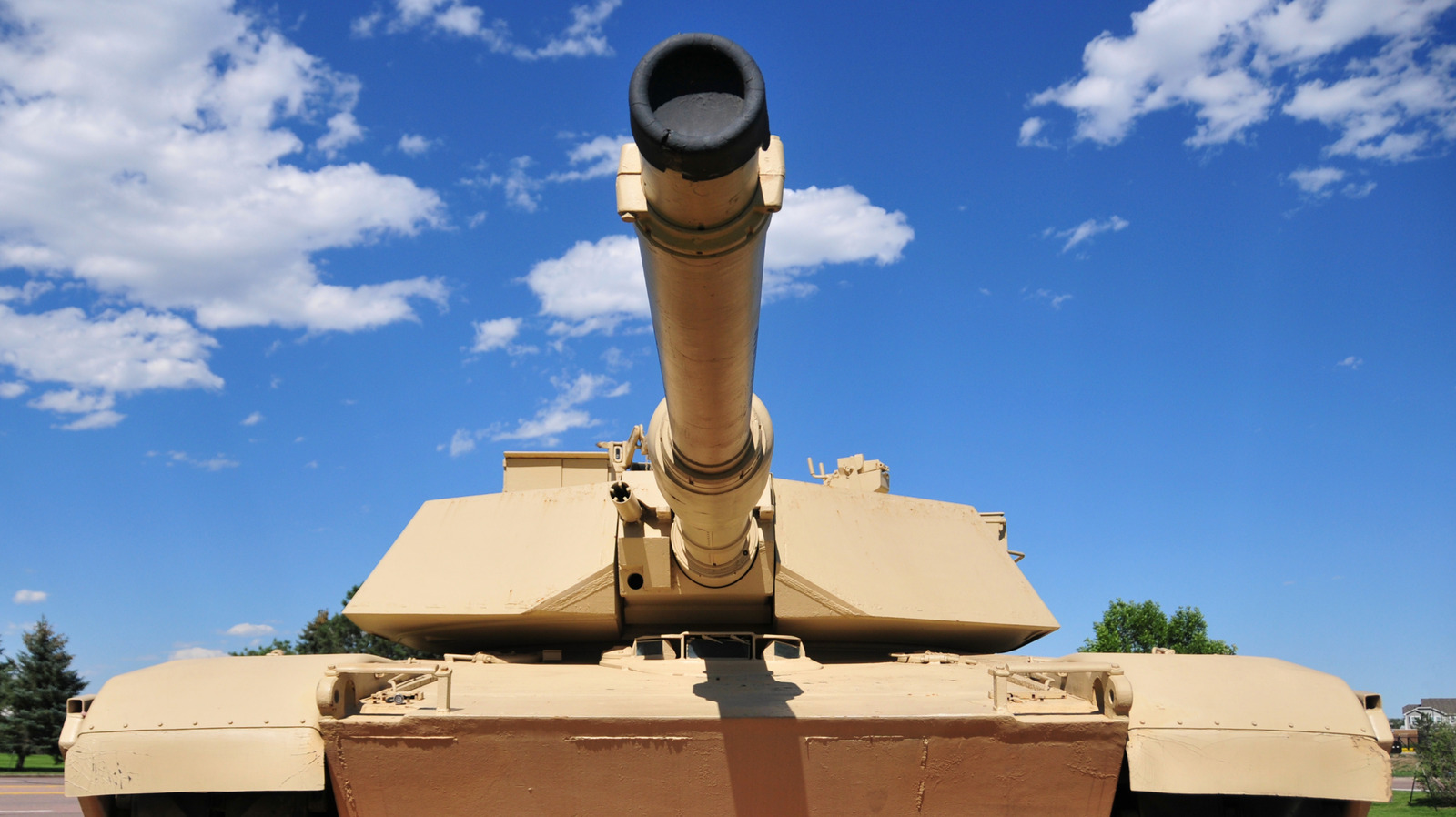

Tanks have evolved significantly since their inception, and modern main battle tanks are among the most technologically sophisticated land vehicles ever built. Equipped with computerized fire-control systems, thermal imaging cameras, laser rangefinders, and advanced composite armor, they can accurately engage targets miles away while operating in some of the harshest conditions imaginable. Given all that technology, many people naturally assume loading the tank’s main gun is also fully automated.
That assumption, however, isn’t entirely correct. While some countries, including Russia, China, and Japan have embraced automatic loading systems, some of the world’s most capable tanks, including the legendary M1 Abrams, still rely on a fourth crew member to manually load shells into the main turret gun. At first glance, that may seem like an outdated practice from the early 20th century, but some military planners have continued to favor human loaders for reasons that go beyond simply their ability to ram ammunition into the chamber.
How autoloaders changed tank design
Autoloaders reload tank guns after they fire and were built to replace human loaders. The concept of an autoloader gained prominence during the Cold War as Soviet designers sought to reduce crew size and create tanks with smaller silhouettes, while maintaining a consistent fire rate of six to eight rounds per minute for some guns. Vehicles such as the T-72 and T-80 tanks, as well as the later T-90, all incorporated autoloaders, allowing them to operate with a crew of three instead of the typical four.
Besides reducing the crew requirements, autoloaders offer several other benefits. Removing one crew member allows engineers to design a smaller turret, which in turn reduces a tank’s overall size and profile. Mechanical loading systems also deliver a consistent rate of fire regardless of crew fatigue and can streamline certain aspects of ammunition handling. Given these advantages, it’s easy to see why many observers expected autoloaders to become the universal standard for modern tanks. That change, however, has not taken place.
Why human loaders haven’t disappeared
Supporters of human loaders argue that their role extends well beyond loading shells. An experienced loader is trained to load the main gun within 3 seconds (trainees are allowed up to 15 seconds), operate the tank radios, identify the different types of ammunition, and perform countless tasks that an autoloader cannot. Human loaders can respond to mechanical problems, select different ammunition types on the fly, and serve as another set of eyes during combat operations. For many armies, including the U.S. and U.K., that additional flexibility outweighs the manpower savings offered by automation.
Ultimately, the choice between an autoloader and a human loader reflects different design philosophies rather than a simple question of technological progress. Countries such as Russia and France have prioritized smaller crews and automated loading systems, while the United States has continued to field tanks like the M1 Abrams, with a dedicated loader because of the versatility that the extra crew member brings to the battlefield — though that may be in doubt with the new M1E3 Abrams. Automation will undoubtedly play a larger role as armored warfare continues to evolve, but one of the most important jobs inside many of the world’s modern tanks remains distinctly human.

Comments are closed.