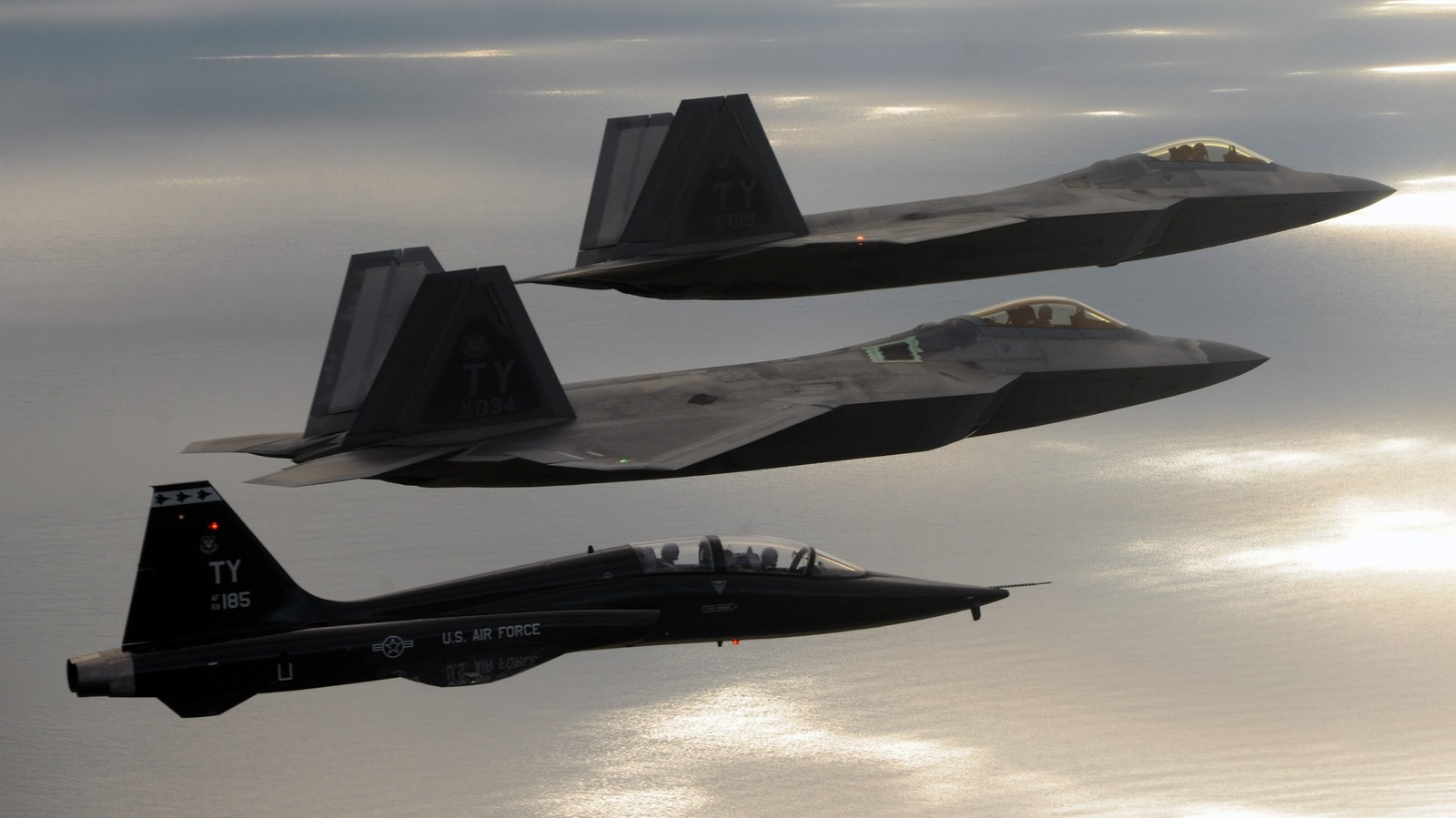
While most people know that the United States Congress controls the nation’s finances, what’s not known by many is that it mandates specific numbers from the Department of Defense. This is true for everything from the number of tanks in the U.S. Army to the total number of fighter jets flown by the U.S. Air Force (USAF). Congress placed a requirement on the USAF, mandating that the service maintain a fleet of no fewer than 1,145 fighter jets, but it appears that the branch will fail to meet that requirement by nearly 50 aircraft.
As of this writing, the USAF operates 1,098 fighter jets of various types, from the stealthy F-22 Raptor and F-35A Lightning II to older, yet updated aircraft like the F-15EX Eagle II and the F-16V Viper. The current requirement of 1,145 fighters is related to Fiscal Year (FY) 2026, which ends on September 30, 2026, as the U.S. government begins its FY on October 1. A report issued by the USAF to Congress noted that the branch won’t meet the size requirement, operates an aging fleet with an average aircraft age of 27.4 years, and that the potential use of Collaborative Combat Aircraft will supplement, not replace, crewed fighters.
While it may not seem too problematic that the USAF will not meet its required number of fighters by 47, it’s actually a big deal that could push Congress to change the branch’s fighter allocation, and that could have an impact on USAF operations. This could disrupt the USAF’s current goal of reaching 1,588 fighters by 2035, which would potentially include the service’s first sixth-generation fighter, the F-47, which is already facing delays.
What the shortfall means for the Air Force’s future plans
The USAF proposed changing how Congress counts its aircraft, as it currently accounts only for the Primary Mission Aircraft Inventory (PMAI). Alternatively, the branch proposed switching to the Combat-Coded Total Aircraft Inventory, which would include more fighters that aren’t primary mission capable. Granted, the USAF could increase its procurement of new fighters, which would certainly fix the problem as it phases out older platforms.
The problem with that is cost, which has increased steadily over the years, growing by as much as $950 million since FY2019. That’s tied to an annual shortfall of nearly $400 million in weapon system sustainment. This leaves Congress in the position of determining how the USAF’s procurement and aircraft accounting are done moving forward, as there are already plans to modernize the Air Force Reserve and Air National Guard, which recently lost aircraft to retirement. An additional issue is personnel because the USAF can acquire all the fighter jets that Congress mandates, but if it doesn’t have pilots to operate them, those aircraft won’t fall under the PMAI.
Regardless of the suggestions the USAF made in its report to Congress, the legislative body must decide whether to accept, modify, or reject the plan. This would require moving the fighter numbers to a later date, FY2036, or October 1, 2035. As of this writing, it’s unclear what Congress will do, but it’s likely that it will have to take action in some form to ensure the USAF’s fighter readiness remains at acceptable levels to tackle whatever conflicts may arise in the future.