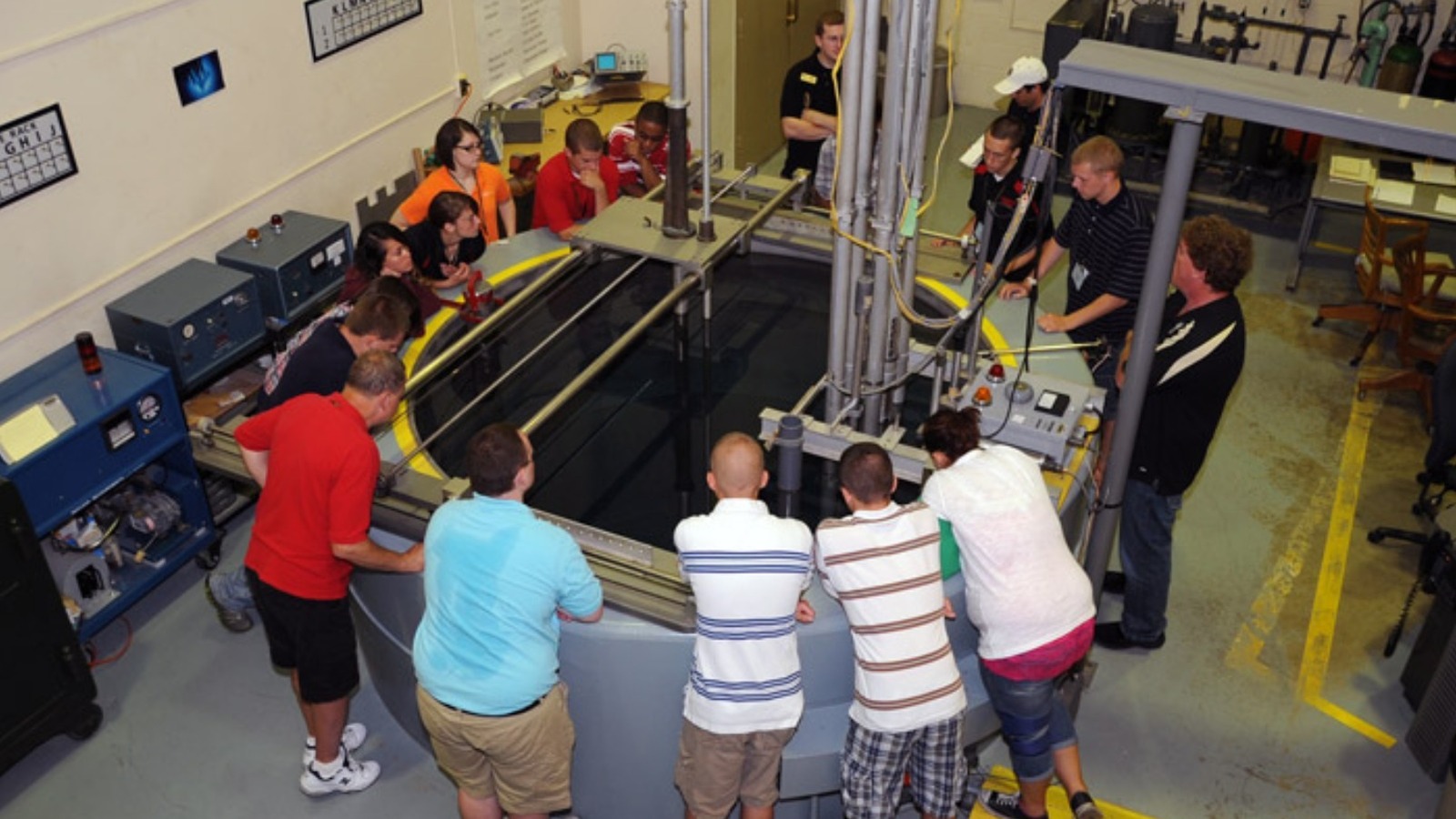
As an energy source that does not utilize fossil fuels and produces no direct carbon emissions once operational, nuclear energy is often considered “clean” and touted as an energy solution. Nonetheless, there are some important things to consider with nuclear power. To learn more about what these reactors are capable of, scientists at Indiana’s Purdue University converted a nuclear reactor originally built in 1962 to be fully digitally operational. In 2019, the Purdue University Reactor Number One, or PUR-1, became “the first in the nation with a fully digital safety and control system,” according to a Purdue press release.
Rather than converting heat-generating nuclear reactions into electricity to power homes and businesses, however, PUR-1 is used to conduct experiments that can help scientists understand nuclear power better. As such, PUR-1 serves as an invaluable, sophisticated research tool. The university has also built a digital twin of the reactor, which is essentially a virtual version that can produce highly accurate replications and predictions of the reactor’s behavior. Now, PUR-1 has begun testing machine learning and AI capabilities within a reactor environment to help make future reactors easier to control and maintain.
The unique work being performed at PUR-1
In July 2026, researchers conducted an experiment that showed how the reactor could be remotely adjusted. Using a cloud connection and an additional control mechanism installed at the reactor, researchers could precisely manipulate the control device in the reactor remotely. This was achieved by an automated system, which the researchers could then refine through the use of an AI model that was able to simulate and respond to the reactor’s operations.
Data is shared between the reactor itself and its digital twin almost in real time, allowing for extremely accurate testing and monitoring. There’s even more to it: AI analysis by its digital twin means it can predict the ongoing output of different functions and systems of the reactor, too. This could help to detect and diagnose any cybersecurity issues or maintenance needs by quickly flagging any components that suffer from a drop in performance.
Through this work, teams can explore heaps of data that the reactor has acquired and determine how new AI tools can interact with it to potentially streamline operation, increase efficiency, and involve remote work more in the complex operations of a nuclear reactor. The university notes that upcoming U.S. reactors will potentially be built with some of PUR-1’s capabilities. This could allow nuclear reactors to last longer, and possibly even reshape what happens at the end of their lifespan.
What this may mean for the future of nuclear reactors
Purdue nuclear engineering assistant professor and associate PUR-1 director Stylianos Chatzidakis imagines a future of several microreactors or other smaller facilities being operated remotely. “If staff could be in a control room hundreds or thousands of miles away and monitor multiple reactors at once,” Chatzidakis said in the July 2026 press release“we could minimize the operation and maintenance costs.”
There is some reluctance to invest in nuclear power plants, with concerns like safety, costs, and the timescale that would be involved in getting a large network of nuclear reactors operational. This is where the work that PUR-1 is performing could pay dividends. After all, digital modeling can help give manufacturers invaluable information about how such facilities are run. As the Nuclear Energy Agency has previously noted: “additional PUR-1 data may allow for the testing of different reactor conditions […] that would be impossible in an operating commercial nuclear power plant.”
From cybersecurity to remote operation, these tests are aimed at enhancing future reactors with digital components that could be easier to upgrade and allow the reactor to operate more efficiently. These experiments also aim to test the potential of quantum encryption, a means of protecting data (such as the highly sensitive information shared by and with a nuclear reactor) through light photons and special sensors rather than conventional means.