
Fast bowling has long been one of the most exciting aspects of cricket. A ball bowled at extraordinary speed can unsettle even the most experienced batsmen, leaving them little time to react. Many fast bowlers in the history of the game have built their identity around pace, including Shoaib Akhtar One of the most prominent names.
However, determining the fastest ball of all time is not entirely simple. Variations in speed measuring techniques, conflicting readings, and a lack of reliable records from prior eras make direct comparisons challenging. Akhtar's delivery of 161.3 km/h remains the most widely recognized standard for the fastest ball officially recorded in international cricket. Let's take a look at 10 balls associated with some of the fastest bowlers in cricket, along with the achievements that made them special.
Top 10 fastest balls bowled in international cricket
1. Shoaib Akhtar – 161.3 km/h
Pakistan's Akhtar tops most lists of fast bowlers. He bowled the ball at a speed of 161.3 km/h against England in the 2003 ODI World Cup in Cape Town, South Africa.
Akhtar, nicknamed the Rawalpindi Express, was renowned for his explosive approach, powerful run-up and ability to generate extraordinary pace. His remarkable speed set a standard that remains a major topic in discussions about the fastest balls in the game.
2. Brett Lee – 161.1 km/h
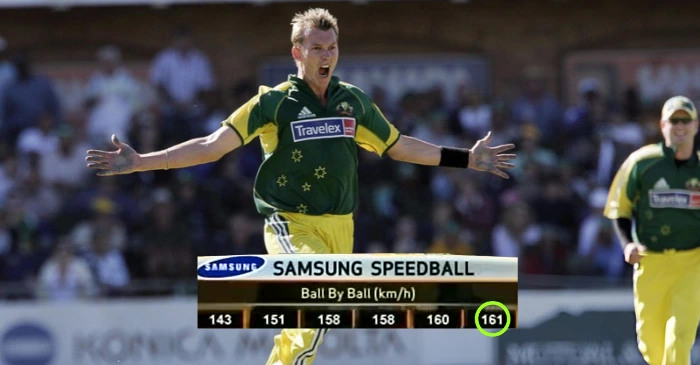
australian fast bowler brett lee He was one of the most dangerous fast bowlers of his generation. His fastest ball was bowled at a speed of 161.1 km/h against New Zealand in 2005 at Napier. However, the available footage shows his fastest ball as 161 km/h.
Lee relied on a combination of raw speed, aggression and constant pressure. His short-pitched deliveries often challenged the batsmen, while his consistency made him a valuable member of Australia's leading bowling attack. Despite occasional variations in reported speed figures, Lee remains one of the most famous fast bowlers in international cricket.
3. Shaun Tate – 161.1 km/h

sean tate Was another Australian fast bowler who was known for his extraordinary pace. His fastest ball is usually listed as 161.1 km/h, bowled in an ODI against England at Lord's in 2010.
Tait's distinctive action and ability to bowl fast balls made him particularly dangerous in limited overs cricket. Injuries limited his opportunities at international level, but his natural pace ensured he remained one of the fastest bowlers of his time.
4. Jeff Thomson – Around 160 km/h

Jeff Thomson Terrorized batsmen with his fast pace in the 1970s. The Australian fast bowler was known for his unusual action and ability to bowl balls that were extremely difficult to handle.
Historical accounts often put Thomson's speed at closer to 160 km/h. However, the technology available during his playing career was not as advanced or standardized as modern speed measuring systems. Therefore, their reported speeds cannot be directly compared with contemporary radar readings.
5. Mitchell Starc – 160.4 km/h

michelle stark He demonstrated his remarkable pace by bowling a ball reaching 160.4 km/h against New Zealand at the WACA Ground, Perth in November 2015.
The Australian left-arm fast bowler bowled a sharp yorker against Ross Taylor during the Test match. Starc's ability to combine high speed with finishing pace and accuracy makes him particularly dangerous, especially when attacking the base of the stumps. This ball remains one of the examples of extreme speed in modern Test cricket.
6. Andy Roberts – 159.5 km/h

andy roberts He was an influential figure in the powerful West Indies fast bowling attacks that dominated international cricket in the 1970s and 1980s.
In comparison to bowlers who relied primarily on pace, Roberts combined aggression with tactical awareness, control and clever variations. Some historical lists give his top speed as around 159.5 km/h, although there are very few reliable measurements from his playing era.
His legacy extends beyond raw pace, as his intelligence and ability to outwit batsmen established him as one of the premier fast bowlers of his generation.
7. Fidel Edwards – 157.7 km/h

West Indies fast bowler fidel edwards Recognized for his unusual sling-arm action and ability to bowl at considerable pace. His fastest ball is often recorded as 157.7 km/h, bowled against South Africa in 2003.
Edwards used his pace to put pressure on the batsmen and could be particularly dangerous when the ball gained momentum off the surface. His distinctive technique made him a recognizable presence in international cricket in the early 2000s.
8. Mitchell Johnson – 156.8 km/hr
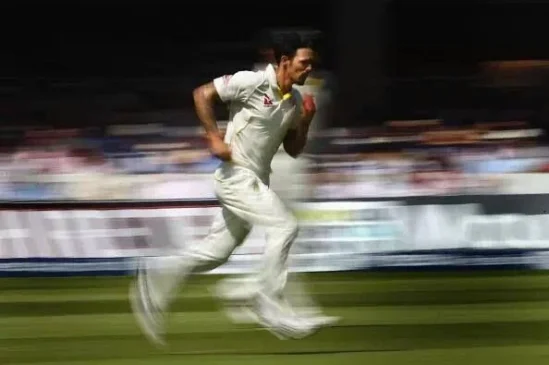
Michelle Johnson He was one of Australia's most feared left-arm fast bowlers. His combination of pace, sharp bounce and aggressive short-pitched bowling often made life uncomfortable for adverse batsmen.
His fastest ball is usually listed as 156.8 km/h against England during the 2013–14 Ashes series. Johnson bowled a number of devastating spells during Australia's impressive campaign, cementing his reputation as one of the most feared fast bowlers of the era. His ability to attack both the body and the stumps made him a formidable opponent.
9. Mohammad Sami – 156.4 km/h

of pakistan mohammad sami Was blessed with extraordinary natural pace and was regularly included among the fastest bowlers of his generation.
His top speed is reported as 156.4 km/h against Zimbabwe in 2003. Although Sami faced ups and downs in form during his international career, his ability to generate exceptional pace made him a dangerous bowler when he got in the right rhythm. His reported fastest ball earns him a place in discussions of the fastest bowlers in international cricket.
10. Shane Bond – 156.4 km/h

New Zealand's shane bonds Completing the list is a reported top speed of 156.4 km/h during the 2003 World Cup. Although his career was repeatedly interrupted by injuries, Bond established himself as one of the most respected fast bowlers of his era.
He combined impressive pace with accuracy and the ability to generate pace, making him a significant threat to high-quality batting line-ups. Their performance demonstrated that extreme speed can be even more effective when backed by control and strategic discipline. Whenever he was available, Bond presented New Zealand as a genuine match-winning threat.