Effective investment planning involves allocating funds across investments while maintaining sufficient savings for emergencies. A Systematic Investment Plan (SIP) allows investors to contribute a fixed amount to mutual funds at regular intervals, while a lumpsum investment involves investing a larger amount at one time. An SIP calculator estimates the potential value of regular investments, whereas a lumpsum calculator helps estimate the future value of a one-time investment. Using these tools together can help investors assess different investment scenarios while accounting for their financial goals, time horizon and emergency fund requirements.
Why You Need an SIP Calculator
A SIP calculator helps to know the approximate value of the regular mutual fund investment that one will get monthly. It calculates the future value of the monthly instalments considering the assumed rate of return and time of investment.For example, if one is making monthly investments of ₹5,000 for a period of 10 years, the SIP calculator can help to know the potential value of such an investment.The Best SIP Calculator can be used in the following cases:
- To know the future value of monthly investments
- To compare the value of different mutual fund investments
- To understand the benefits of compounding
- To know if the proposed investment plan fits into one’s financial goals
How A Lumpsum Calculator Complements SIP Planning
Not every investment comes from monthly savings. You might get the bonus, incentive, gift, or even receive money from your other investment. With a lumpsum investment, you can make a big investment at a time instead of dividing your amount for several months.
A lumpsum calculator is a financial tool that helps you determine the future value of a lump sum investment. The tool considers the amount invested, annual returns expected, and the time the amount will be invested to calculate the future value.
For example, suppose you have ₹1 lakh available after meeting your immediate expenses. You can use the calculator to estimate how the investment might grow over five years at an assumed return rate.
However, investing the entire surplus is not always the right move. Consider your upcoming expenses and emergency savings before committing money to market-linked investments. You should also remember that the estimated return is not guaranteed.
Balancing SIPs, Lumpsum Investments and Emergency Funds
A good financial plan should take care of future needs, as well as provide for the present requirements.
1. Build Your Emergency Fund First
An emergency fund is required to fulfill any urgent need, for example, a medical bill, home repair, or any other expenses. The recommended amount of money for this purpose is three to six months of expenses to cover all unexpected expenditures, depending on the individual situation. This sum should be kept in liquid assets to avoid losses due to market fluctuations.
2. Set A Comfortable Monthly SIP
Now that you’ve started building your emergency fund, decide on the amount that you can save each month without cutting into your personal expenses and other financial goals.
Using the Best SIP Calculator below, try different allocations to see what works for you. If you think ₹5000 is a lot to set aside every month, start with something small and work your way up.
After all, a SIP is all about consistency, and you want to make sure that it’s manageable within your budget. You should also review your SIP regularly and adjust it whenever your financial situation changes.
3. Invest Surplus Money Carefully
You can choose to use bonuses or surplus funds to make investments for your long-term goals and use a lumpsum calculator to see the amount of returns you are likely to get. When making such decisions, it is important to take into account the risk appetite, investment horizon, and liquidity requirements. If there is a need for funds soon, it may be a good choice to invest in some low-risk instruments rather than the ones in the stock market.
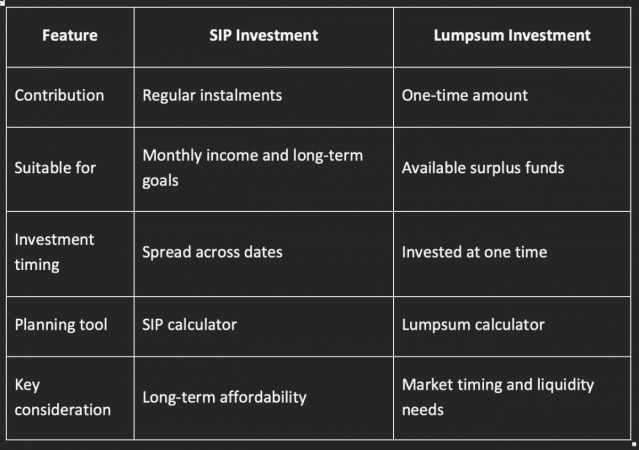
Comparing SIP And Lumpsum Investments
Understanding the differences between SIP and lumpsum investments can help you choose an approach that suits your financial goals, budget, and risk tolerance.
Conclusion
The best way to balance investments, lump sum contributions, and emergency funds is to understand your needs and financial goals. By using the Best SIP Calculator in combination with a lumpsum calculator, you can analyse the different options and plan your contributions accordingly.
You can choose from a variety of investment instruments offered by 5paisa and arrive at a more informed decision.