
Toyota’s Innova HyCross and Urban Cruiser Hyryder have entered the Asia Book of Records after completing a drive from Mandarmani in West Bengal to Nathula Pass in Sikkim. The two strong-hybrid vehicles started from an elevation of about 2 metres above sea level and reached 4,310 metres. They earned separate records: the HyCross for climbing to that elevation within 24 hours, and the Hyryder for doing so on a single tank of fuel.
The journey included coastal roads, highways and steep mountain sections. Toyota announced the achievement on November 6, with an adjudicator from the Asia Book of Records recognising both results. The records concern elevation and the conditions under which it was reached. They are not claims that either vehicle set a new speed record or delivered the highest fuel economy of any car.
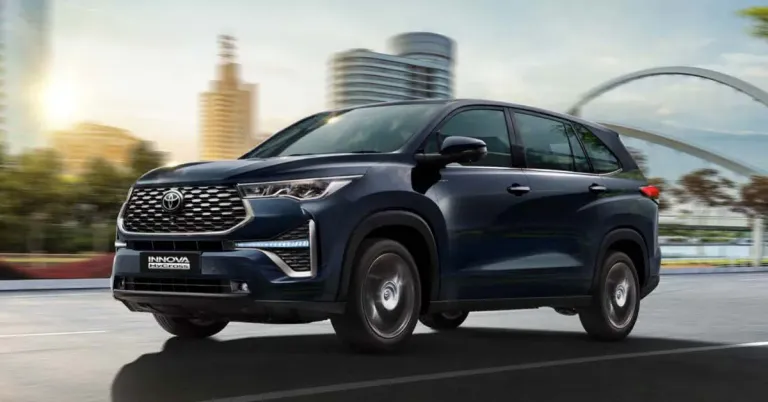
The Innova HyCross earned the record titled ‘Maximum Elevation Gained by a Car in 24 Hours’. Toyota says it reached Nathula Pass at an altitude of 4,310 metres in 22 hours and 52 minutes, placing the drive within the 24-hour limit for that category.
This is a demanding route for a large family MPV. It involves moving from near sea level to the high mountains, where steep climbs, winding roads and changes in weather can place different demands on a vehicle. However, Toyota has not provided the exact route distance, average speed, number of stops or a detailed record of the climbing sections. Those details would be needed to assess the entire drive more closely.
The HyCross uses Toyota’s fifth-generation strong-hybrid system, combining a 2.0-litre petrol engine with electric assistance. Toyota quotes a maximum system output of 139kW, or 183.7hp. The hybrid battery can power the electric motor at suitable times, while the petrol engine takes over or works with it when more power is required.
The Urban Cruiser Hyryder achieved a different record, described as ‘Highest Elevation Gained by a Car on One Tank of Fuel’. Toyota says the SUV completed the drive from Mandarmani to Nathula Pass and reached the same 4,310-metre altitude without needing another tank of fuel.
That is particularly relevant to the Hyryder’s strong-hybrid version, which uses a 1.5-litre petrol engine, an electric motor and Toyota’s e-Drive transmission. The system can switch between petrol and electric drive automatically, and the battery is charged through regenerative braking and the petrol engine. Owners do not have to plug it in.
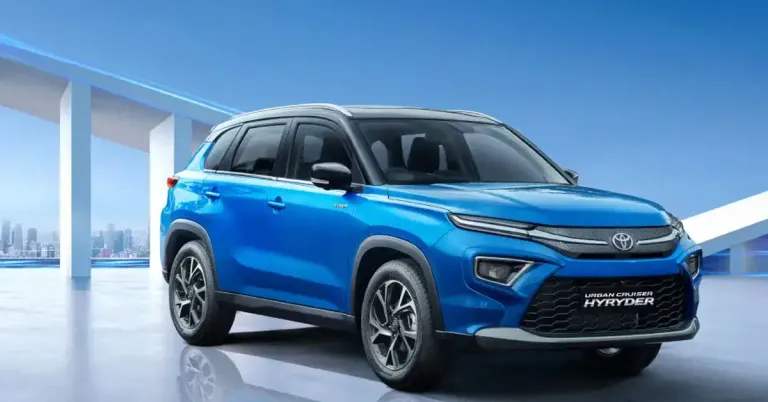
There is an important limit to what the record tells us. Toyota has not disclosed how many kilometres the Hyryder travelled, how much petrol remained at the finish or what mileage it recorded. Reaching a high-altitude destination on one tank is not the same thing as setting a fuel-efficiency or maximum-range record.
The Innova HyCross strong hybrid has an ARAI-certified fuel-efficiency figure of 23.24km/l. The Urban Cruiser Hyryder strong hybrid is rated at 27.97km/l. Those are laboratory-cycle figures for the production models, not results measured during this record drive.
Real consumption can change substantially on mountainous roads. Climbing requires energy, while long descents give a hybrid an opportunity to recover some energy through regenerative braking. Thin air, cold weather, load and traffic also affect performance. The petrol engine remains essential on a long journey because the hybrid battery is relatively small and is not intended to provide continuous electric-only range.
The choice of these two cars is significant for Toyota’s business as well. In September 2026, the Innova HyCross led reported strong-hybrid wholesale dispatches with 3,143 units, followed by the Urban Cruiser Hyryder with 2,830. Together they accounted for about 67% of the 8,918 strong-hybrid cars in AutoPunditz’s monthly compilation.
The models appeal to different buyers. The HyCross is a larger seven- or eight-seat MPV, while the Hyryder is a midsize SUV. Both offer petrol-electric driving without the need for external charging, which remains an advantage for people who regularly travel beyond major cities.