
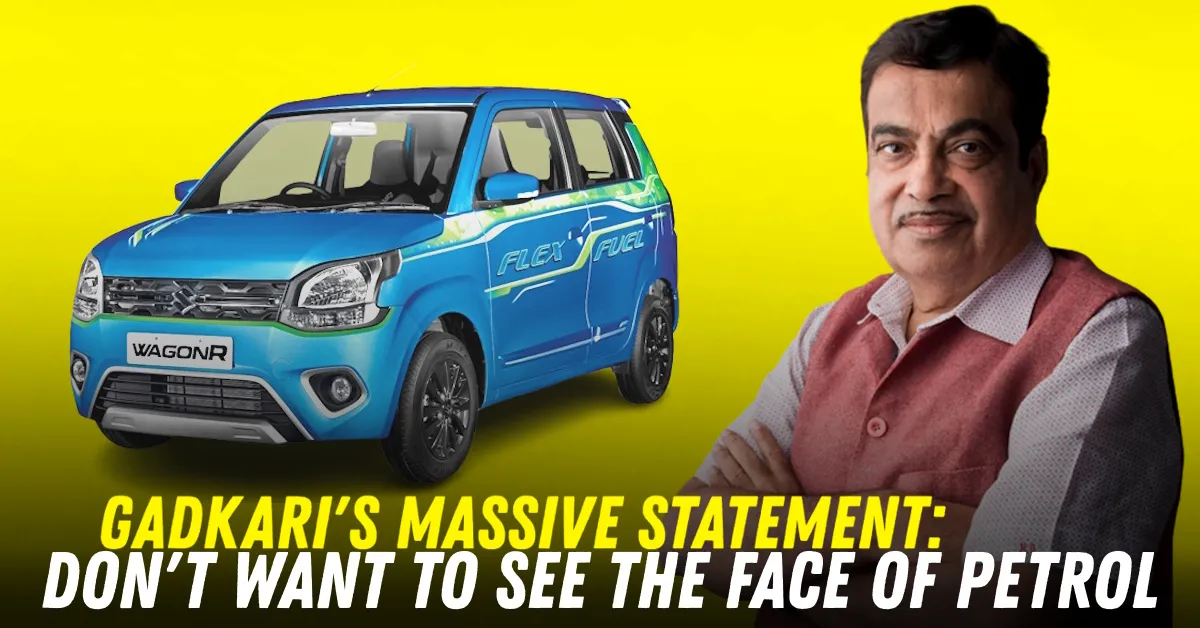

According to the minister, petrol causes both pollution and economic problems for the country. Nearly all the petrol sold in India is fully imported to India from oil producing countries across the world.
This results in US dollars (foreign exchange) going out of the country for purchase of petrol. The government has been working hard to reduce crude oil imports by pushing automakers and vehicle buyers towards alternate forms of propulsion such as CNG, electric vehicles, and even green hydrogen.
For years, Nitin Gadkari has been pushing ethanol flex fuel as an alternate form of propulsion. In the past, he has even stated that ethanol would cost just Rs. 15 per liter, an assertion that has not materialized so far.
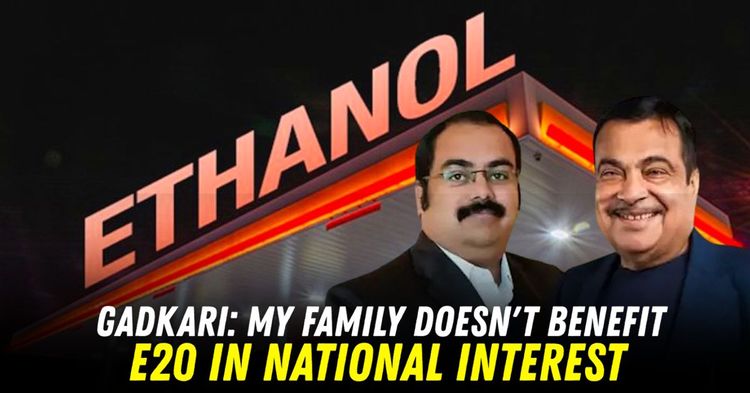
The minister has come under criticism for his ethanol policy from automotive enthusiasts, environmentalists and political observers. His sons – through an entity called Cian Agro – are engaged in ethanol production.
This is seen as a blatant conflict of interest as the minister – through his transport portfolio – remains in a powerful position to influence fuel policy promoting ethanol. The minister has shrugged this off saying that his son’s company produces less than 1 % of the country’s ethanol.
Vehicle enthusiasts are up in arms, citing steep drops in mileage drop due to ethanol use, and also engine damage in older vehicles that are not designed to run on ethanol blended petrol. They have sought non-blended petrol for older vehicles through clearly demarcated fuel dispensing infrastructure.

Environmentalists have also criticized the ethanol policy, stating that it depletes water in a water starved country. To this, Mr. Gadkari, has pointed towards ethanol production from surplus food grains and other renewable sources such as bamboo and sea algae.
The matter even reached the Supreme Court of India, with a petition seeking demarcated fuel dispensing infrastructure. However, the court declined to intervene in this matter, citing that policy making was the government’s prerogative.

The Indian government achieved its 20% ethanol-petrol blending target many years ahead of target. The success of the ethanol blending program has led to the Government doubling down on higher blends.
While there is talk about E25 and E30 fuels, the auto industry has clearly stated that higher blends will not be compatible with vehicles that are not designed to run on them. They have also noted that such blends will cause engine damage and poor fuel efficiency.
This has prompted the government to jump straightaway to E85 flex fuel (85 % ethanol and 15 % petrol). Hero MotoCorp – India’s largest two wheeler maker – has already launched 2 flex fuel compatible motorcycles – Splendor and HF Deluxe.
Similarly, Maruti Suzuki has unveiled the flex fuel ready WagonR. In the coming months, every major automaker will launch flex fuel equipped models. The government has also announced over 5,000 fuel stations with E85 flex fuel dispensing infrastructure.
Comments are closed.