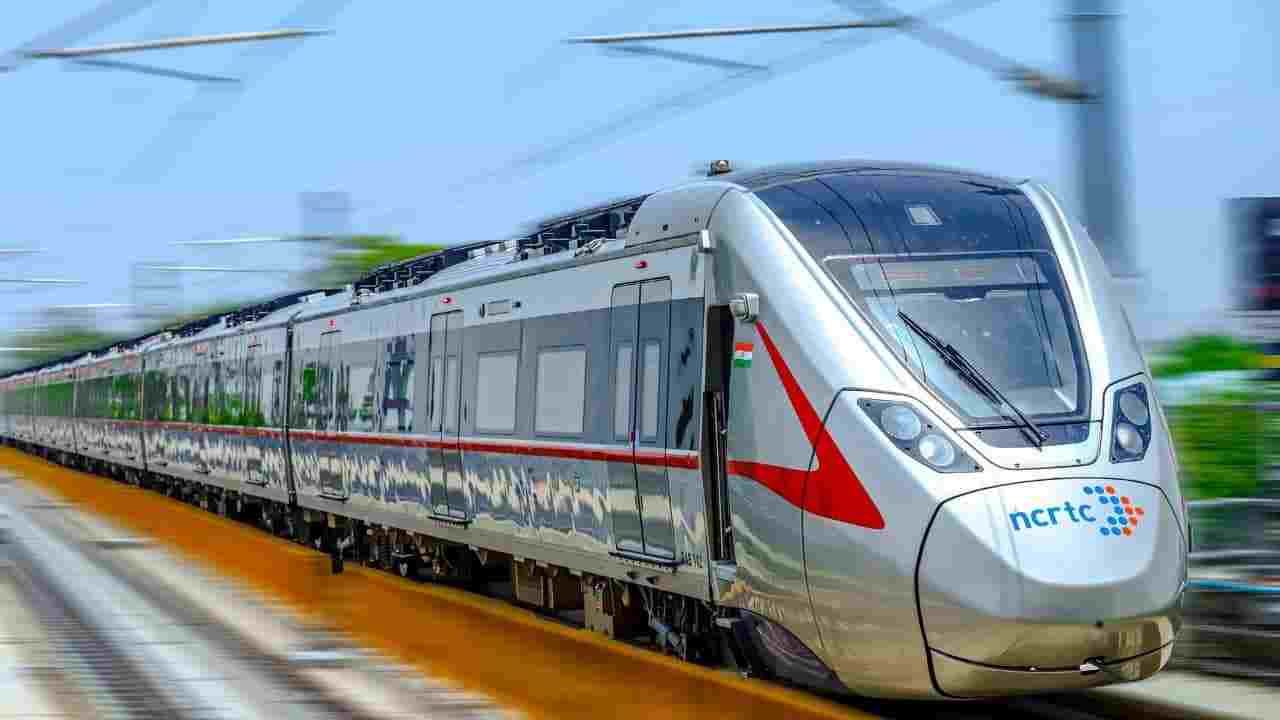
People traveling daily from Delhi-NCR to Rajasthan often face long traffic jams and fatigue. But now, your journey will soon become easier and more comfortable. The Namo Bharat train, which has already demonstrated its speed between Ghaziabad and Meerut, is now ready to run on the Delhi-Rajasthan route as well. The construction of this new Rapid Rail Transit System (RRTS) corridor will not only save a lot of time but will also completely transform the travel experience. Let’s learn everything you need to know about this new route, stations, and timings.
The journey will be completed in less than half the time
The biggest and most significant feature of this new project is its travel time. According to reports, the Namo Bharat Train will cover a distance that currently takes approximately 45 minutes by road or regular trains, in just 24 minutes. Running at a speed of 160 kilometers per hour, the track for this train is being designed to ensure a fast and safe journey without interruptions.
4 new stations will be built on the route
Rajasthan is set to directly benefit from the Delhi-Gurugram-Alwar RRTS corridor. Along with the first and second phases of this corridor, plans have been drawn up to build four new stations along the route. The construction of these new stations will provide direct connectivity to residents of areas that previously relied on autos or buses for public transportation. This train will depart from Delhi, pass through the industrial areas of Haryana, and enter Rajasthan directly.
Big relief for daily commuters and working people
Thousands of people working in Delhi and Gurugram commute daily from areas like Alwar, Bhiwadi, and Dharuhera in Rajasthan. The Namo Bharat Train will prove to be a boon for these daily commuters.
Relief from traffic: Now people will not have to get stuck in long traffic jams on the highway.
Real Estate Boom: Improved connectivity will also give a major boost to real estate and local businesses around these 4 new stations.
Reduction in pollution: People will use this electric and eco-friendly train instead of their private vehicles, which will also reduce the pollution level in NCR.