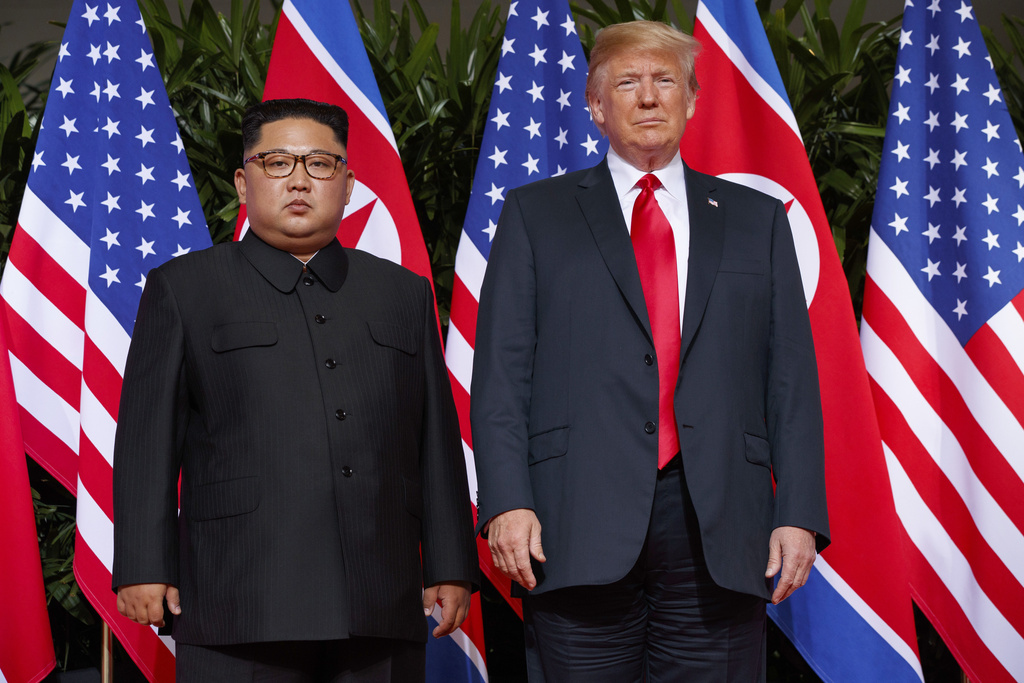
Trump Cuts South Korea Exercises, Citing Iran War and Relationship With Kim Jong Un/ TezzBuzz/ WASHINGTON/ J. Mansour/ President Donald Trump ordered the Pentagon to substantially reduce annual military exercises with South Korea after Seoul declined to support the U.S. war against Iran. Trump also cited his relationship with North Korean leader Kim Jong Un, arguing that the drills send an inappropriate and hostile message to Pyongyang. The 11-day Ulchi Freedom Shield exercises began Monday as planned, days after North Korea resumed ballistic missile testing.
Quick Look
- Trump ordered the Pentagon to reduce joint exercises with South Korea.
- He said it was too late to cancel the drills entirely.
- The 11-day Ulchi Freedom Shield exercises began Monday.
- Approximately 18,000 South Korean soldiers are participating.
- Trump cited South Korea’s refusal to join the Iran war.
- He said North Korea has been “unthreatening and respectful.”
- The drills include live-fire training and precision-targeting exercises.
- The U.S. military calls the alliance a foundation of regional security.
- South Korea confirmed the exercises started as scheduled.
- North Korea recently resumed ballistic missile testing.
- Democratic Sen. Mark Kelly called Trump’s decision shortsighted.
- North Korea described the exercises as “a rehearsal for an aggressive war.”
- Trump met Kim Jong Un three times during his first term.
- Kim said in 2025 that he had “good personal memories” of Trump.
- Trump previously sought to end the drills after meeting Kim in 2018.

Deep Look
Trump orders reduction in South Korea drills
WASHINGTON — President Donald Trump ordered the Pentagon on Sunday to substantially reduce annual joint military exercises with South Korea.
Trump cited Seoul’s refusal to assist with the U.S. war against Iran and his relationship with North Korean leader Kim Jong Un.
The exercises began Monday, making a full cancellation impractical.
Trump said in a social media post that the drills are expensive and “send a signal that is totally inappropriate and hostile” toward North Korea.
He said Pyongyang “has been unthreatening and respectful” during his time in office.
Trump links decision to Iran war
Trump said he had recently asked South Korea’s president whether the country would join the United States in the “denuclearization” of Iran.
According to Trump, South Korea responded, “No thanks!”
“Therefore, and based on the fact that it is too late to cancel, I have instructed Secretary of War, Pete Hegseth, to substantially reduce the Joint Military Exercises!” Trump wrote.
The president did not immediately explain which portions of the drills would be eliminated or how significantly participation would be reduced.
Decision marks shift toward North Korea
Trump’s order represents another instance in which the president has criticized a U.S. ally while offering favorable remarks about a leader previous administrations treated as an adversary.
His administration has also attacked NATO members over what it considers insufficient support for the Iran war.
Those tensions have emerged as NATO countries seek to respond to increasingly aggressive Russian behavior in the Baltic region.
The decision also marks a sharp shift from the Trump administration’s recent praise of South Korea.
Hegseth recently praised South Korea
During a Pentagon meeting in May, Hegseth praised South Korea for its “commitment to increase defense spending” and its “leadership in assuming primary responsibility for the security of the Korean Peninsula.”
“It demonstrates alliance burden-sharing that all of America’s partners would do well to follow,” Hegseth said.
That assessment presented South Korea as a model ally willing to assume more responsibility for its own defense.
Trump’s new order instead penalizes Seoul after it declined to participate in the U.S. military campaign against Iran.
Ulchi Freedom Shield exercises begin
The 11-day Ulchi Freedom Shield exercises began Monday as scheduled, according to South Korea’s Defense Ministry.
Approximately 18,000 South Korean troops are participating.
The annual summertime training is one of the two principal combined exercises conducted by the U.S. and South Korean militaries.
The allies also conduct major joint training during the spring.
The exercises are intended to improve readiness against military threats from North Korea.
Training includes complex operations
American and South Korean forces were expected to practice coordinated operations across several complex scenarios.
The program includes a live-fire exercise designed to test combined precision targeting and maneuver capabilities.
Troops were also expected to practice crossing a water obstacle and distributing prepositioned military equipment.
The U.S. military has said the exercises reinforce “the role of the alliance as the linchpin for regional peace and security.”
It said the drills also reaffirm “the ironclad commitment between the United States and the Republic of Korea to defend their homelands.”
Drills follow North Korean missile launches
The joint exercises began days after North Korea resumed ballistic missile tests in violation of United Nations prohibitions.
Earlier in August, the United States, South Korea and Japan detected two ballistic missiles launched by North Korea.
They were Pyongyang’s first ballistic weapons tests since late June.
The missiles landed in waters off North Korea’s eastern coast.
The renewed testing added to concerns about Trump’s decision to reduce training intended to prepare allied forces for North Korean threats.
Mark Kelly criticizes Trump’s order
Democratic Sen. Mark Kelly of Arizona sharply criticized the decision.
Kelly, a former Navy pilot, said that “hollowing out these joint exercises is shortsighted and a mistake.”
He issued the statement on social media only hours after Trump announced the reduction.
Critics argue that scaling back the exercises could weaken military readiness and create uncertainty about the United States’ commitment to defending South Korea.
North Korea threatens a strong response
North Korea issued a warning Friday over the joint training.
Pyongyang described the exercises as “a rehearsal for an aggressive war” and said they were creating greater regional instability.
North Korea threatened unspecified stern measures against the United States and South Korea.
The language was consistent
North Korea expands its weapons programs
North Korea has worked to enlarge its nuclear and missile arsenals since Kim’s diplomacy with Trump collapsed in 2019.
Experts believe Kim views a larger weapons stockpile as a way to gain leverage and secure greater concessions in future negotiations with Washington.
They also say Pyongyang regularly uses joint U.S.-South Korean drills to justify additional weapons testing and build domestic support for Kim.
Trump signals interest in renewed talks
Trump met Kim three times during his first term to discuss North Korea’s nuclear program, most recently in 2019.
Since returning to office, Trump has expressed interest in resuming those negotiations.
In September 2025, Kim said he retained “good personal memories” of Trump and suggested he could return to talks if Washington abandoned “its delusional obsession with denuclearization” of North Korea.
A day before ordering the reduction in military exercises, Trump posted a photograph of himself with Kim and said they got along well “despite the unfriendly look on this particular picture.”
Trump previously sought to halt exercises
The latest order is not Trump’s first attempt to curtail joint military exercises with South Korea.
Following his 2018 summit with Kim in Singapore, Trump unexpectedly described the drills as “provocative” and announced plans
“We will be stopping the war games, which will save us a tremendous amount of money, unless and until
“We will be stopping the war games, which will save us a tremendous amount of money, unless
More on US News