
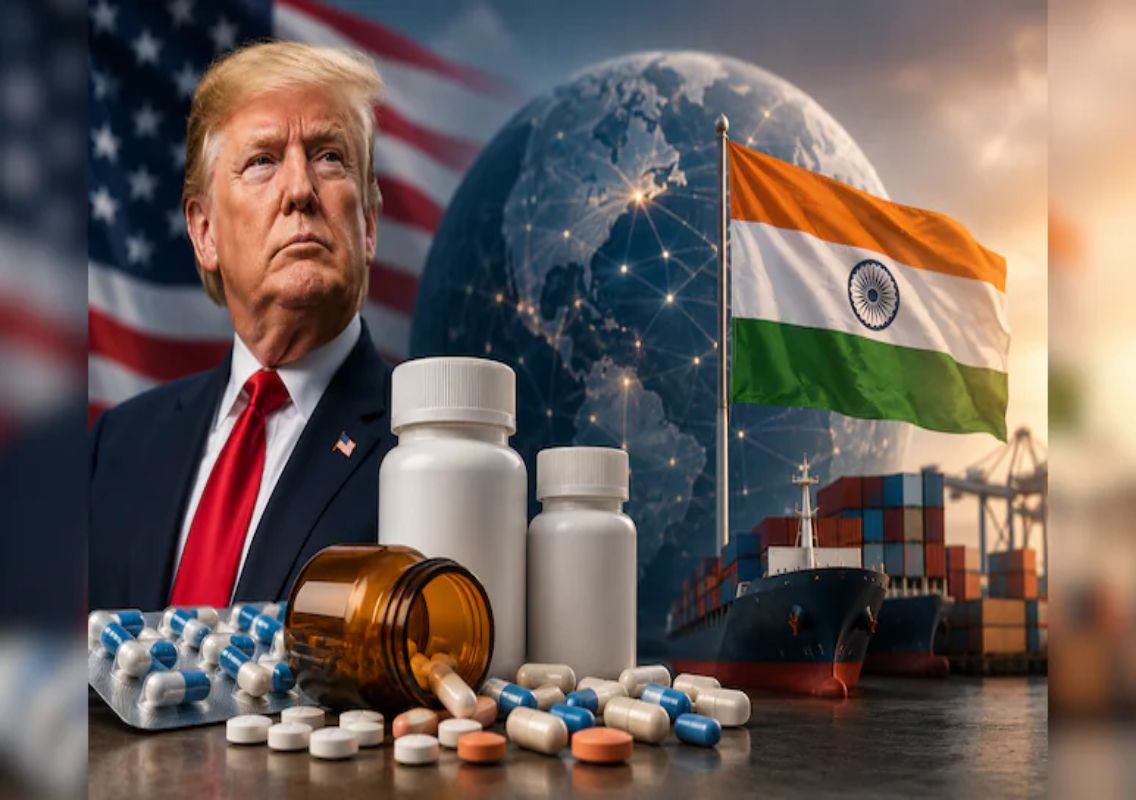

New Delhi: US President Donald Trump’s proposal to impose tariffs of up to 200% on imported generic medicines has raised concerns among pharmaceutical companies worldwide, with Indian drugmakers likely to face significant challenges if the policy comes into effect.
The United States is the largest export destination for India’s pharmaceutical industry, and any major change in import duties could affect one of the country’s most important overseas markets. Indian companies supply a substantial share of generic medicines consumed by American patients, making the proposed tariff policy a major development for the sector.
The proposal aims to encourage pharmaceutical companies to shift manufacturing operations to the US. However, industry experts believe the move could create challenges not only for Indian manufacturers but also for American consumers who depend on affordable generic medicines.
What is Trump’s proposed tariff plan?
The proposed policy would introduce a gradual increase in tariffs on imported generic drugs. According to reports, pharmaceutical companies will receive a transition period until August 2028 to adjust their manufacturing strategies.
After the transition period, imported generic medicines would face a 100% tariff for one year. Following that, the duty could rise further to 200%.
The primary objective behind the proposal is to bring more pharmaceutical production to the United States and reduce dependence on overseas suppliers.
The Trump administration has argued that increasing domestic manufacturing will strengthen supply chains and improve America’s control over critical medicines.
However, pharmaceutical companies and analysts have warned that relocating generic drug production on a large scale may not be easy due to cost, infrastructure and regulatory challenges.
Why India is vulnerable to the tariff proposal
India is one of the world’s largest producers of generic medicines and plays a crucial role in supplying affordable drugs globally.
The US accounts for nearly one-third of India’s pharmaceutical exports. Indian companies provide around 40% of generic medicines used in the American market, making the country one of the most important suppliers for US healthcare.
Major Indian pharmaceutical companies that could be affected include:
- Sun Pharmaceutical Industries
- Dr. Reddy’s Laboratories
- Cipla
- Lupin
- Aurobindo Pharma
- Zydus Lifesciences
Industry estimates suggest that Indian pharmaceutical exports worth around $9.7 billion could face pressure if the tariff proposal is implemented in its current form.
Impact on Indian pharmaceutical companies
The immediate impact of the proposed tariffs is expected to be limited because the policy includes a lengthy implementation timeline.
The transition period gives Indian drugmakers time to review their supply chains, expand manufacturing capacity in the US and explore alternative strategies.
Several major Indian pharmaceutical companies already operate manufacturing facilities in America. These existing operations could help reduce the impact of higher import duties in the future.
Companies may also look at increasing local production in the US, forming partnerships or restructuring supply networks to maintain access to the American market.
However, smaller pharmaceutical firms could face greater difficulties as setting up manufacturing units abroad requires significant investment.
Challenges of shifting generic drug production to the US
While encouraging domestic manufacturing is a key goal of the proposed tariff policy, experts believe moving generic drug production entirely to the US could be complicated.
Generic medicines generally operate on lower profit margins compared with innovative drugs. Higher production costs in the US could make these medicines significantly more expensive.
The American healthcare system relies heavily on affordable generic medicines to control treatment costs. A sharp rise in manufacturing expenses could eventually increase prices for patients.
Analysts have also warned that if companies are unable to quickly establish alternative production facilities, the market could face supply disruptions.
Generic medicines are used widely for treating chronic conditions, including diabetes, cardiovascular diseases and other long-term health issues. Any disruption in supply could create challenges for healthcare providers and patients.
How India’s pharma sector may respond
Indian pharmaceutical companies are expected to closely monitor developments before making major investment decisions.
The industry may focus on expanding manufacturing capabilities in the US while continuing production in India to maintain cost advantages.
India’s strong pharmaceutical infrastructure, skilled workforce and experience in meeting international regulatory standards remain important advantages.
The country has built a reputation as a reliable supplier of high-quality generic medicines, and this could help companies maintain their position despite potential trade barriers.
Diversification of markets could also become a priority, with companies exploring opportunities in Europe, Africa, Latin America and other emerging regions.
Effect on US consumers
Although the tariff proposal is aimed at boosting American manufacturing, the impact could extend to US consumers.
Generic medicines are often chosen because they are significantly cheaper than branded alternatives. Increased import costs could result in higher medicine prices if companies pass on additional expenses.
Healthcare organisations may also raise concerns about maintaining affordable access to essential medicines.
The balance between encouraging domestic manufacturing and ensuring affordable healthcare is likely to remain a major debate as the proposal moves forward.
Conclusion
Donald Trump’s proposed 200% tariff on generic drug imports represents a significant challenge for India’s pharmaceutical industry, given the country’s dependence on the US market.
While Indian companies have time to prepare and many already have operations in America, the policy could reshape global pharmaceutical supply chains. India’s manufacturing strength and expertise will remain valuable, but companies may need to adapt by increasing local production, diversifying markets and strengthening supply networks.
The final impact will depend on how the proposal is implemented and how pharmaceutical companies respond during the transition period.

Comments are closed.