
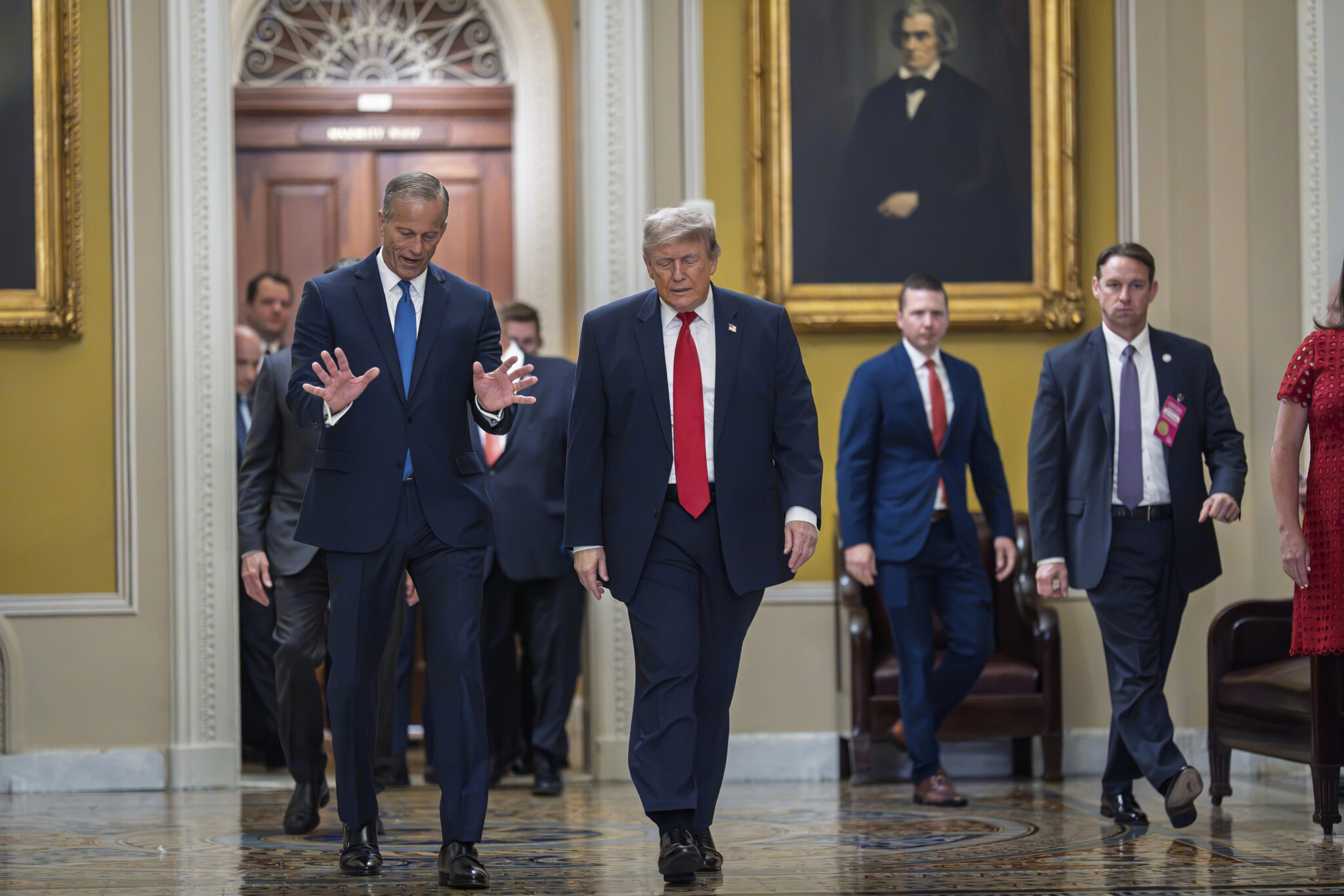

Trump Pressures Senate Republicans to Pass $95 Billion Budget Before August Recess/ TezzBuzz/ WASHINGTON/ J. Mansour/ President Donald Trump is urging Senate Republicans to approve a $95 billion budget resolution before departing for their August recess. The blueprint would launch another reconciliation process covering Iran war funding, agricultural assistance and election-related grants. Senate Majority Leader John Thune says the resolution currently appears to lack sufficient Republican support, and senators do not expect a vote before the break.
Quick Look
- Trump wants the Senate to adopt the budget resolution before its August recess.
- The House approved the $95 billion blueprint before leaving Washington.
- The resolution would begin a two-stage budget reconciliation process.
- Reconciliation could allow Republicans to bypass a Democratic filibuster.
- Proposed funding covers the Iran war, farm assistance and election-related grants.
- Thune said he could not identify 50 senators ready to support the resolution.
- Fiscal conservatives want spending offsets.
- Defense and farm-state Republicans are seeking additional funding.
- Some Republicans oppose pursuing a third reconciliation measure.
- Senate changes would require another House vote later in 2026.
- Trump also wants parts of the SAVE America Act included in reconciliation.
Deep Look
Trump Demands Senate Action Before August Break
President Donald Trump is intensifying pressure on Senate Republicans to approve a $95 billion budget blueprint before lawmakers leave Washington for their extended August recess.
“I am asking that the Senate adopt a Budget Resolution, which can pass with a simple Majority, before leaving for the August recess,” Trump wrote Friday on Truth Social. “We are ready to work side-by-side with the Senate to get this done for the American People!”
Despite Trump’s appeal, Senate Republicans do not currently expect the resolution to receive a floor vote within the next two weeks.
GOP senators remain divided over the proposed spending levels, the effect on the federal deficit and whether Congress should pursue a third reconciliation bill.
House Approved Blueprint Before Leaving Washington
House Republicans passed the budget resolution before departing for a recess lasting several weeks.
The resolution is the first step in a proposed two-part process. If both chambers approve a common budget blueprint, congressional committees would receive instructions to prepare a broader reconciliation package.
That procedure would allow Republicans to pass qualifying tax and spending provisions in the Senate with a simple majority, avoiding the 60-vote threshold typically required to overcome a filibuster.
The proposed measure would provide billions of dollars for the war with Iran, assistance to farmers and grants related to elections.
Thune Says Republicans Lack the Votes
Senate Majority Leader John Thune has not categorically ruled out considering the resolution before the recess.
However, he warned Thursday that the proposal does not currently appear to have the support needed to pass.
“I can’t count to 50 right now on a budget resolution, but we’ll see. … The priority is funding the government, and so to me, that’s the thing we’ve got to keep our eyes on,” Thune said.
Republicans control the Senate, but internal divisions could prevent them from assembling even the simple majority required for a budget resolution.
Deficit Hawks Demand Spending Offsets
Fiscal conservatives are concerned that the House blueprint would add to the federal deficit without sufficient spending reductions or new revenue.
Those senators are seeking offsets to cover the package’s cost.
Other Republicans are pushing in the opposite direction. Defense advocates want more military funding, while lawmakers representing agricultural states are seeking additional assistance for farmers.
The competing demands make it difficult for Republican leaders to develop a version capable of uniting the conference.
Some Republicans Question Third Reconciliation Bill
Several GOP senators are also skeptical about beginning a third reconciliation process.
Reconciliation is normally used for legislation involving federal taxes, spending or debt. Its major political advantage is that qualifying bills cannot be blocked by a Senate filibuster.
However, each provision must satisfy strict procedural requirements, and some Republicans question whether another complex reconciliation effort can be completed or is politically advisable.
These concerns have contributed to expectations that Thune will delay the blueprint until later in the year—or decline to pursue it entirely.
Senate Changes Would Force Another House Vote
Even if Thune secured enough support, the Senate could not simply approve the House version unchanged.
Senators would need to add instructions directing Senate committees to draft their portions of the eventual reconciliation legislation.
Any Senate amendments would return the resolution to the House, requiring representatives to vote on it again later in 2026.
The reconciliation process could formally begin only after both chambers adopted identical versions.
Trump Also Pushes Election Legislation
Trump’s pressure campaign extends beyond the budget resolution.
Earlier in the week, he urged supporters to contact Thune and demand passage of the SAVE America Act, a Republican election overhaul proposal.
Trump suggested that parts of the bill could be attached to a third reconciliation package.
Some Republican senators have warned that the strategy faces significant procedural uncertainty.
Parliamentarian Could Reject Election Provisions
The Senate parliamentarian would need to determine whether provisions of the SAVE America Act are sufficiently connected to federal spending or revenue to qualify for reconciliation.
There is no guarantee that the proposal would survive that review.
Several Republican senators have also voted against earlier versions of the election legislation, further complicating the effort.
Outside reconciliation, the measure would likely require 60 Senate votes to overcome a filibuster. Republican senators have spent months explaining to Trump that those votes are not available.
GOP Lacks Support to Eliminate Filibuster
Trump has repeatedly urged Republicans to find ways around Democratic opposition to his legislative priorities.
Senate Republicans have told him they lack both the 60 votes required to advance the SAVE America Act through regular procedures and the internal support needed to eliminate the filibuster.
That leaves reconciliation as one of the administration’s few possible routes, provided the election provisions meet Senate rules.
Trump’s allies expect him to continue publicly pressuring Thune. The intensity of that campaign could depend on whether Republicans gain or lose strength in the November midterm elections.
For now, Thune is prioritizing government funding while the president demands immediate action on a budget blueprint that remains short of votes.
More on US News
Comments are closed.