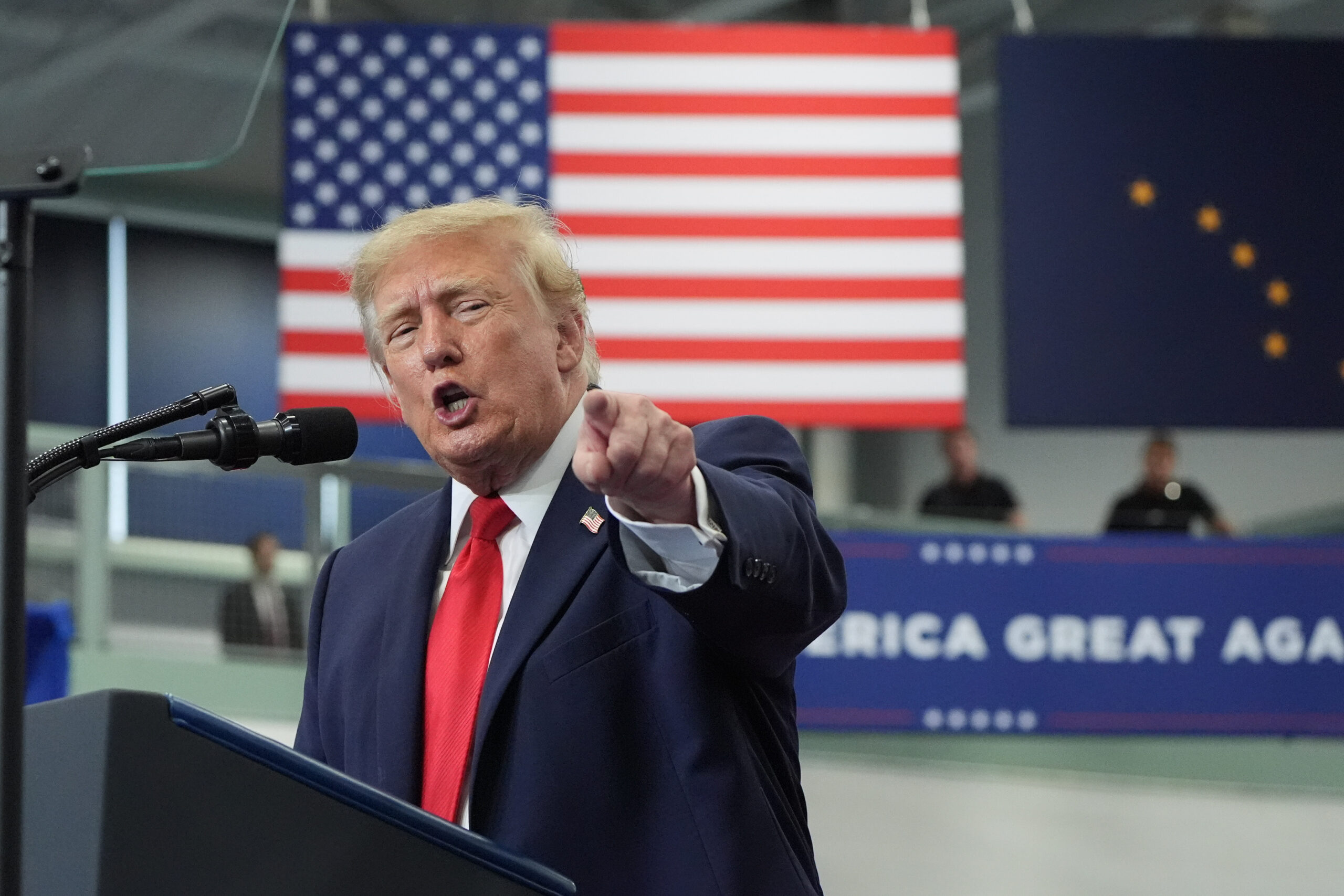
Trump Rules Out Nuke Strike on Iran: ‘The Mother of All Bombs Is Not Nuclear’/ TezzBuzz/ WASHINGTON/ J. Mansour/ President Donald Trump said he would not use nuclear weapons against Iran amid reports of contingency plans for additional conventional strikes. Iranian President Masoud Pezeshkian warned that military attacks and economic pressure would not force his country to surrender. The exchanges came as regional fighting, energy prices and divisions over support for Israel continued to shape the political landscape.
Quick Look
- Nuclear weapons rejected: Trump told Newsmax that nuclear strikes against Iran were unnecessary.
- Reported military planning: CNN reported potential options involving the conventional GBU-43/B bomb.
- Iran’s response: Pezeshkian said national unity would prevent outside pressure from forcing surrender.
- Economic pressure: Treasury Secretary Scott Bessent pledged continued efforts to cut funding for Iranian military operations.
- Oil markets: Crude prices edged lower early Friday as investors assessed possible changes to tanker restrictions.
- Regional tensions: Fighting in Yemen and disputes over the Strait of Hormuz continued.

Deep Look
Trump Says He Would Not Use Nuclear Weapons Against Iran
President Donald Trump ruled out using nuclear weapons against Iran Thursday while discussing reports that U.S. military planners were considering additional conventional strikes against Iranian nuclear facilities and energy infrastructure.
Speaking to Newsmax, Trump distinguished nuclear weapons from the GBU-43/B Massive Ordnance Air Blast bomb, commonly called the MOAB or “Mother of All Bombs.”
“The mother of all bombs is not nuclear.”
“This is just an extremely large bomb. It’s like a tiny nuclear bomb, but the mother of all bombs is one big bomb, but it’s not nuclear.”
“I wouldn’t use nuclear. We don’t have to,” Trump said.
The MOAB discussed in the interview is a conventional weapon. Trump’s comparison did not change that distinction.
Reported Strike Options Remain Contingent on Presidential Decision
CNN reported Thursday, citing multiple U.S. officials, that military planners had developed options for renewed attacks on Iranian energy infrastructure and nuclear sites, potentially involving the MOAB.
According to the reporting summarized by Fox News, strikes could occur before or after the Nov. 3 midterm elections if Trump ordered combat operations to resume.
The reported planning did not establish that Trump had authorized those attacks or selected a date.
The discussion followed a pause in U.S. strikes on Iran during the midterm campaign period, according to Fox News’ live coverage.
Pezeshkian Says Military Pressure Will Not Force Surrender
Iranian President Masoud Pezeshkian responded to the prospect of further attacks by arguing that outside force could not compel Iran to submit.
“Bombs and missiles can’t force a nation to surrender, but if we become divided internally, the enemy will achieve its goal,” Pezeshkian said, according to the Islamic Revolutionary Guard Corps-affiliated Fars News Agency.
He accused Washington of trying to exploit domestic economic difficulties during the conflict, referred to in the coverage as Operation Outcast.
“The enemy believed that electricity, water and gas shortages, fuel issues, environmental challenges, banking problems, budget deficits, and pension fund issues could divide the Iranian society,” Pezeshkian said.
He argued that Iranians’ “resilience and solidarity proved these expectations wrong.”
Washington Maintains Economic Pressure on Tehran
Treasury Secretary Scott Bessent said Washington would continue its economic pressure until funding for Iranian military operations was cut off.
The remarks underscored the administration’s continued reliance on financial measures alongside military options.
Israeli foreign policy adviser Ophir Falk separately argued that combined military and economic pressure had brought Israel “very close” to enabling regime change in Iran.
That assessment represented Falk’s characterization of the situation, rather than an established outcome.
Trump Discusses Iranian Leadership and Condemns Leaks
In other remarks highlighted by Fox News, Trump said the removal of earlier Iranian leaders had complicated efforts to reach peace.
He referred to the country’s “first-, second- and third-string” leaders and suggested he should have kept them in place to “beg for their lives.”
At an Arizona midterm campaign rally, Trump also condemned military officials leaking wartime information to the media, invoking treason and firing squads.
The remarks came as debate continued over the administration’s military strategy and the domestic political consequences of the war.
Oil Prices Ease as Investors Assess Tanker Restrictions
Oil prices slipped in early Asian trading Friday as investors weighed regional tensions against possible U.S. steps to ease restrictions affecting the global shadow fleet of tankers, Reuters reported.
Brent crude futures fell 41 cents, or 0.39%, to $105.51 a barrel as of 0012 GMT.
U.S. West Texas Intermediate crude declined 54 cents, or 0.55%, to $97.43.
The moves followed a Thursday session in which WTI rose more than 3% after a substantial decline in U.S. crude inventories. Brent was largely unchanged during that session.
Yemen Fighting Adds to Regional Instability
The broader conflict continued to affect shipping routes and fighting in Yemen.
Fox News reported intensifying hostilities between Saudi Arabia and the Houthis over oil-shipping lanes.
Its coverage also described a Houthi barrage targeting residential areas in Marib, in north-central Yemen, involving nine ballistic missiles and seven other projectiles.
Yemen’s army separately claimed it had carried out 1,250 operations against Houthi forces over 24 hours, killing 700 fighters and destroying or disabling 150 military vehicles.
Those battlefield figures were claims made by Yemen’s army; the supplied coverage did not provide independent verification.
CENTCOM Rejects Iranian Claims About Hormuz and U.S. Casualties
U.S. Central Command rejected Iranian claims that Tehran controlled the Strait of Hormuz.
It also denied claims that a commercial vessel had struck a naval mine in the waterway and that hundreds of American troops had been killed in Jordan.
Separately, Iran’s Foreign Ministry criticized British officials following remarks by U.K. Foreign Secretary Ed Miliband, accusing them of a “grotesque reversal of victim and aggressor.”
Israeli Ambassador to the United Nations Danny Danon warned Iran, Hezbollah and other regional adversaries against attempting to interfere with Israel’s upcoming elections.
U.S. Midterms Expose Divisions Over Support for Israel
The war and rising energy costs have also complicated U.S. campaigns centered on affordability.
The Jerusalem Post reported growing divisions over support for Israel, particularly among progressive Democrats.
Georgia Sen. Jon Ossoff faced questions about Israel’s campaign in Gaza, while Michigan Senate candidate Abdul El-Sayed questioned treating Israel as an unquestioned strategic partner.
Progressive candidates in New York have also pledged to block future military assistance to Israel.
“Israel, as we are seeing in these midterm elections, has increasingly become a tool for political gain, particularly for the progressive wing of the Democratic Party,” former Israeli consul in Los Angeles Yaki Dayan said.
He added, “AIPAC was one of the most powerful lobbying groups in the United States. Today, Democrats are not even willing to touch its money.”
More on US News