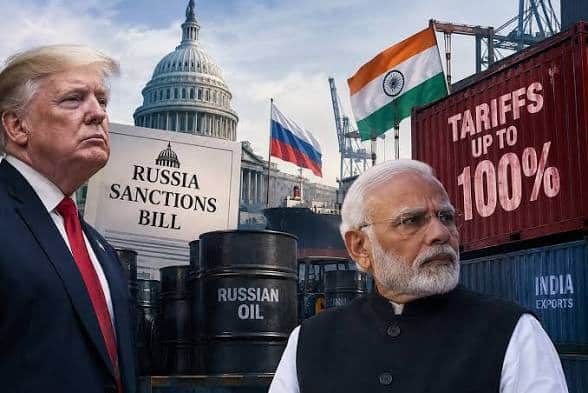
US President Donald Trump has signed the Lindsey O. Graham Sanctioning Russia and Iran Act of 2026 into law, giving the administration expanded authority to impose tariffs of up to 100% on imports from major purchasers of Russian oil and gas, including India.
The legislation, formally identified by the White House as H.R. 5334, authorises and expands US sanctions, tariffs and other restrictions targeting Russia while extending existing sanctions on Iran.
However, India has not automatically been hit with a 100% tariff under the law. The legislation gives the US president discretion over whether to impose such tariffs and at what rate.
What The New Law Means For India
The legislation establishes a mechanism targeting countries that continue to purchase Russian energy.
According to the law’s framework described in the supplied report, the US Trade Representative, in consultation with the Secretaries of State and Energy, is to identify the five largest purchasers of Russian crude oil and natural gas by volume over the preceding 12 months.
The list is to be reassessed every 180 days.
India is currently among the countries exposed to this provision because of its purchases of Russian energy.
The potential tariff can be set at any rate up to 100%, rather than automatically being fixed at 100%.
Trump Has Discretion Over Tariffs
A crucial aspect of the legislation is that Trump is not compelled to impose the maximum tariff on countries identified under the mechanism.
The law gives the president discretion over whether to apply the tariff and the rate at which it would be imposed.
The legislation also provides for presidential waivers in certain circumstances, including where the president determines that a waiver is in the national interest.
This means the signing of the law creates a new tariff authority and potential risk for India, rather than announcing an immediate 100% tariff on Indian imports.
Why The US Passed The Russia Sanctions Law
The legislation is aimed at increasing economic pressure on Russia over its war in Ukraine and reducing revenues linked to Russian energy exports.
The bill had been under consideration in the US Congress for an extended period before being passed by the House earlier this week and subsequently signed by Trump.
The White House said the law expands statutory sanctions, tariffs and prohibitions concerning Russia and extends existing sanctions on Iran.
The White House had earlier supported the legislation, saying it would strengthen presidential authorities to increase pressure on Russia and encourage progress towards a negotiated resolution of the Russia-Ukraine war.
Separate Tariff Provision For Russian Goods
The legislation also authorises tariffs of up to 500% on goods imported directly from Russia, according to the report.
It contains provisions concerning exemptions and waivers for certain countries, including provisions relating to European countries that are reducing their imports of Russian natural gas.
The law also allows the president to waive tariffs on a country if he certifies to Congress that doing so serves US national interests.
India-Russia Energy Trade In Focus
The new law comes against the backdrop of continued US scrutiny of countries purchasing Russian energy.
India has maintained that its energy sourcing decisions are guided by national interests, while the US has repeatedly pressed major buyers of Russian oil to reduce their purchases.
The immediate impact on India will depend on whether the administration uses the new authority, which tariff rate it selects and whether any waiver or exemption is granted.
For now, the legislation establishes the possibility of tariffs of up to 100% on imports from India, rather than imposing a 100% tariff immediately.