Trump Thanks U.S. Army for ‘Great Job,’ EPA Says No Airborne Lead Detected After Iowa Ammunition Detonation/ NEWSLOOKS/ WASHINGTON/ Jehan Mansour/ The EPA reported no airborne lead detected by its regional real-time monitors after the Army destroyed its unstable lead azide stockpile Wednesday. Military officials reported no secondary explosions or infrastructure damage, while Trump and Iowa Gov. Kim Reynolds praised the operation. Environmental groups and Gov.-elect Rob Sand welcomed the initial outcome but demanded answers about preparations and continued transparency.

Iowa Detonation Update: Quick Look
- EPA monitors reported no airborne lead detected about an hour after the blast.
- The agency said monitors were collecting readings every five minutes.
- Approximately 300 EPA employees and contractors were deployed for monitoring and response.
- Crews collected 1,200 air, land, dust and water samples before the operation.
- Army officials said the barrels were destroyed without secondary explosions or infrastructure damage.
- Iowa and Missouri officials described the initial monitoring results as encouraging.
- Environmental groups credited public pressure and litigation with securing additional safeguards.
- Further air, soil and water testing remains underway.


Iowa Detonation Update: Deep Look
EPA Reports Encouraging Initial Air Readings
The Environmental Protection Agency reported no airborne lead detected by its regional real-time monitors after Wednesday’s controlled detonation at the Iowa Army Ammunition Plant in Middletown.
The Army destroyed the degraded lead azide stockpile after determining that the unstable material posed a danger of an uncontrolled explosion.
About an hour after the operation, the EPA said its “real-time air monitors are reporting zero detection of airborne lead throughout the region.”
The agency said monitoring equipment was collecting data every five minutes. Those initial readings provide information about conditions at monitored locations; they do not replace the broader assessment of air, land and water that officials said would continue.
Hundreds of EPA Personnel Support Environmental Testing
EPA Administrator Lee Zeldin said approximately 300 employees and contractors had been positioned in the area before the detonation.
“Over the course of the upcoming minutes, hours, and days, EPA’s 300 employees and contractors, who have been pre-positioned on the ground, will be conducting extensive and thorough monitoring, taking samples of air, land, and water, and deploying remediation efforts if necessary,” Zeldin said.
Crews also collected 1,200 samples before the blast to establish baseline conditions.
“In anticipation of the Army’s controlled detonation this morning, EPA placed the full force of the agency behind our effort to ensure we are doing everything possible to protect human health and the environment,” he said. “This included the collection of 1,200 samples of air, land, dust, and water prior to this morning’s controlled detonation. We stand ready to provide any and all necessary support.”
Army Says Barrels Were Destroyed Without Secondary Explosions
Maj. Gen. Eric Shirley of Army Sustainment Command said overhead observations indicated that the operation had eliminated the unstable barrels.
“Every indication is that all of the munitions that were employed absolutely reduced the lead azide threat. As we saw in the immediate aftermath, through overhead coverage, all of the lead azide barrels were definitively removed,” Shirley said.
“There was no secondary explosions, there was no kickout. There was no infrastructure damage in or around our installation,” he added.
Shirley said misting systems continued operating during the blast and attributed much of the visible plume to protective foam.
“The mister systems that were employed continue to operate throughout the detonation. There was some visible signature. I attribute most of that to the aqueous foam that we applied,” he said.
“Over 3,600 gallons of that material was delivered by fire trucks. I believe, absolutely, that we reduced as close to zero as is absolutely humanly possible the risk to the health and safety of the people of Middletown and the extended communities throughout Iowa.”
That assessment reflected the Army’s initial evaluation as environmental testing continued.
Trump and Reynolds Praise the Operation
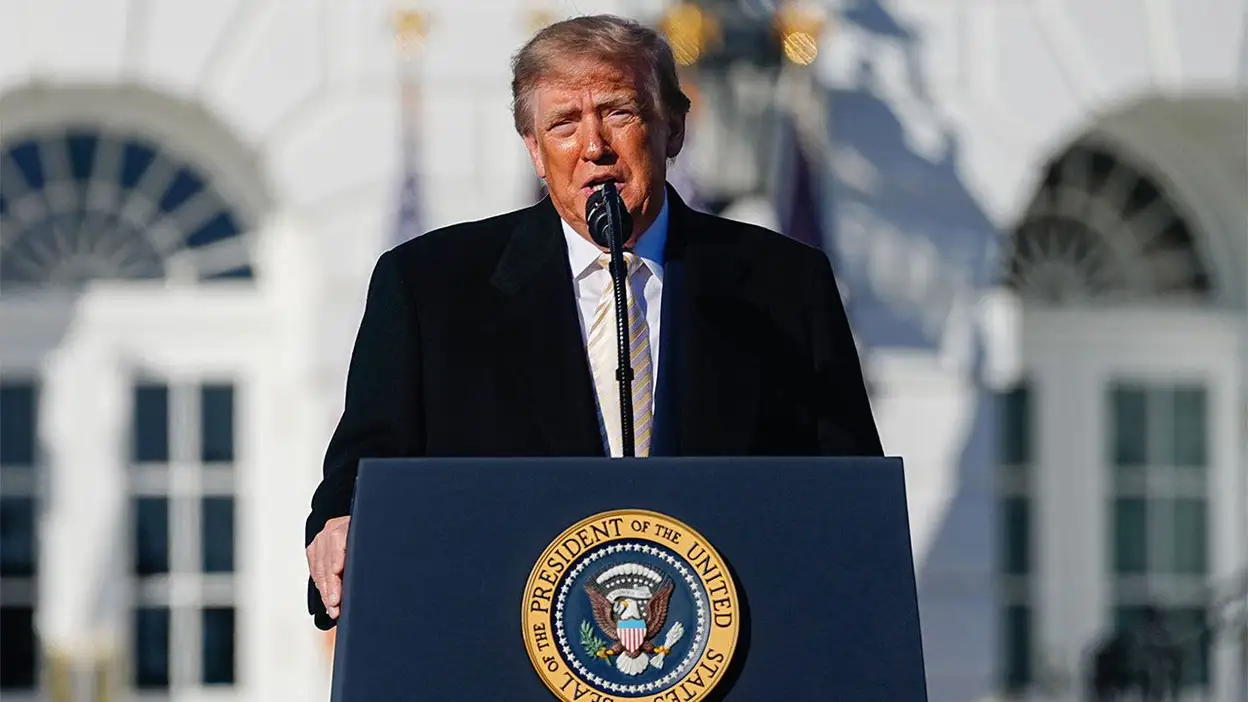
President Donald Trump thanked the military hours after the detonation.
“Great job by the Army, and others, in Iowa!!! President DJT,” he wrote on Truth Social.
Iowa Gov. Kim Reynolds described the operation as “flawless” and thanked the administration for its “whole-of-government response.”
“Initial information from our federal partners and Iowa’s state agency leaders is that the targeted mitigation strategies deployed by the Army have exceeded expectations,” Reynolds said.
“At this time, the U.S. Environmental Protection Agency has confirmed zero detection of airborne lead in the region. This is a best-case scenario for the residents of Middletown and its surrounding communities, and for that, we are most grateful.”
Reynolds said state agencies would continue reviewing information about air, soil and water quality in the coming days.
Missouri Officials Continue Tracking Conditions
Missouri Gov. Mike Kehoe said officials had not detected airborne lead moving toward his state following the explosion.
The ammunition plant is approximately 40 miles from Missouri’s border.
“We will continue to monitor the event, but we’re happy to say that water supplies, land, etc. — all are safe for Missourians,” Kehoe said in a video message.
His assurances came while the EPA’s wider sampling program remained in progress.
Environmental Groups Credit Pressure for Added Safeguards
Organizations that challenged the detonation in court said public scrutiny helped secure stronger precautions and additional resources.
“Just over a week ago, before the initial planned detonation on Nov. 20, many of these safeguards were not in place,” said Sarah Green, executive director of the Iowa Environmental Council.
Green called for an accounting of how the situation had developed and criticized the Army’s preparations and communication.
“The Army’s neglect and lack of communication and preparedness caused an outcry among Iowans, so we took action to demand the transparency that Iowans deserve,” she said. “This is proof that grassroots advocacy works and Iowans’ voices matter.”
Sand Welcomes Safety Efforts but Demands Answers
Iowa Gov.-elect Rob Sand thanked personnel who worked to make the detonation “as safe as possible,” while criticizing the uncertainty preceding it.
“The lead-up to the detonation should never have been so chaotic and unclear,” Sand said. “Iowans across the state are understandably alarmed and scared. There must be immediate transparency to understand how and why this situation became what it did. And any Iowans who have been impacted in any way must be taken care of fully, right away.”
His response combined support for the immediate protective efforts with a demand for accountability and assistance for anyone affected.
Vance Defends Decision and Blames Earlier Storage Choices
Vice President JD Vance argued that the controlled explosion was preferable to allowing the unstable material to remain in storage.
He blamed decisions made during the Obama administration in 2009saying the government had stored the material without an adequate plan for moving or neutralizing it.
“And so there were really only two options here. Option one was to do a controlled detonation to try to prevent as much of this stuff from going into the atmosphere as possible, or two to just let it sit there,” Vance said.
“And every scientist, every expert that we talked to said that if you let it sit there, there’s a very good chance, whether it’s tomorrow, a week from now, a month from now, but very soon, there is a very good chance that with the cold weather, this stuff is going to detonate on its own, and the uncontrolled detonation is what really worried us.”
Vance said Trump and Pete Hegseth “made the right decision.”
His assignment of responsibility to the Obama administration was a political claim, rather than a finding from an independent review presented in the updates.
Nearby City Maintains Essential Services
Fort Madison City Manager Laura Liegois said local officials had been following live air-monitor readings throughout the morning.
“Air quality monitors are set up all over in Lee County and Missouri, and part of Des Moines County. We’re watching those live since this morning and the opportunity for us to see what’s happening. Everything is right now detecting really well,” she told Fox News.
“We took it very seriously at the city of Fort Madison,” she added.
The city retained emergency management personnel and essential water and sewer staffing, while other employees were sent home.
For surrounding communities, the immediate focus now shifts from preparing for an explosion to reviewing the continuing environmental results.
More on US News