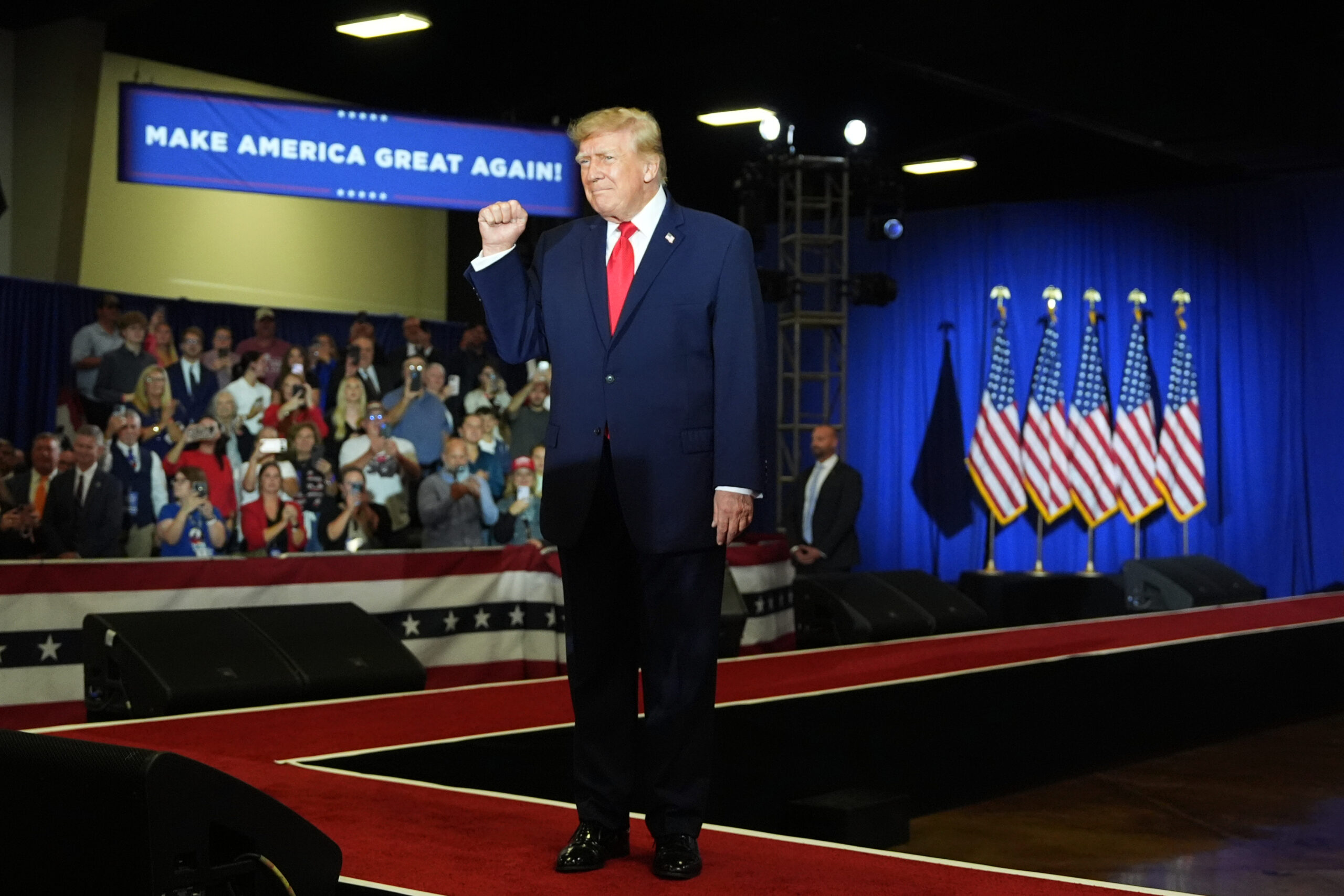
Trump’s Choctaw Nation Rally Adds to Rare History of Presidential Tribal Visits/ TezzBuzz/ WASHINGTON/ J. Mansour/ President Donald Trump held a campaign rally on the Choctaw Nation of Oklahoma Thursday, joining a small number of sitting presidents who have visited tribal reservations. Republicans said Durant’s proximity to Texas shaped the location choice, while the tribe clarified that it rented the venue without sponsoring the event. The visit highlights a presidential history that has shifted from promoting assimilation toward acknowledging tribal sovereignty and past federal abuses.

Quick Look
- Rare presidential visit: Trump’s rally took place on Choctaw Nation land in Durant, Oklahoma.
- Campaign strategy: Republicans selected Durant partly to reach voters in neighboring Texas.
- Venue rental: The Choctaw Nation said it rented its events center but did not sponsor the rally.
- Tribal leadership acknowledged: Trump recognized Principal Chief Gary Batton and said he met with the tribe before speaking.
- Supporters emphasize sovereignty: Some attendees viewed the appearance as an opportunity to advance tribal interests.
- Earlier Trump visit: He visited the Lumbee Tribe in 2020 and signed its federal recognition into law in 2025.
- Historical contrast: Early presidential visits often promoted policies intended to weaken tribal sovereignty.
- Recent acknowledgment: Biden’s 2024 visit included an apology for the federal government’s role in Indigenous boarding schools.


Deep Look
Trump Holds Campaign Rally on Choctaw Nation Land
DURANT, Okla. — President Donald Trump’s Thursday rally on the Choctaw Nation of Oklahoma placed him among a small number of sitting U.S. presidents who have visited tribal reservations.
The appearance formed part of his campaign push through heavily Republican states ahead of November’s midterm elections.
Although historically notable, the choice of location appeared primarily connected to electoral strategy rather than a dedicated visit focused on tribal affairs.
Republican National Committee spokesperson Zach Kraft said Durant was selected because of its proximity to Texas.
“President Trump wants to make sure Oklahoma stays red. And he also wants to make sure that Texas stays red,” Kraft told KOSU.
The Choctaw Nation said it rented its events center for the rally but did not sponsor it.
During his remarks, Trump acknowledged Principal Chief Gary Batton, who wore a beaded medallion and stood beside Homeland Security Secretary Markwayne Mullin, a Cherokee citizen.
Trump said he had met with the tribe before the speech. A tribal spokesperson said late Thursday that Batton did not yet have a response to the visit.
The president also highlighted what he described as the lowest poverty rate in decades for Americans, including tribal members.
A recent Census Bureau report supported that statement under one measure, although experts noted that a separate, more comprehensive poverty measure was not at an all-time low.
Tribal Attendees See Opportunities and Shared Values
Crystal Michels, a Choctaw citizen who wore a MAGA hat and waited in the rain, told KOSU she viewed the visit as an opportunity for leaders to ensure the tribe’s interests were considered and its sovereignty respected.
Mona Adkisson, a Seminole citizen, said she had closely followed Trump’s agenda and wanted him to reaffirm conservative Christian values.
“We’re tired of electing people that don’t do what they say they’re going to do, and he’s one that does,” Adkisson said.
Their comments reflected reasons some tribal citizens welcomed the president’s appearance.
Trump Previously Supported Lumbee Recognition
Thursday’s rally was not Trump’s first visit to a tribal nation.
During the closing stretch of the 2020 presidential campaign, he visited the Lumbee Tribe of North Carolina and supported its effort to obtain federal recognition.
He signed that recognition into law in 2025.
Tribal delegations have met presidents in Washington since the nation’s early years, but presidential visits to tribal communities have remained comparatively uncommon.
Arthur’s 1883 Visit Promoted Breaking Up Tribal Land
What was likely the first reservation visit by a sitting president occurred during Chester A. Arthur’s journey to Yellowstone National Park in 1883.
Arthur met Shoshone and Arapaho leaders on the Wind River Reservation and praised their “practice of industrial pursuits,” according to an account by Lt. Gen. Philip Sheridan.
His delegation also pressed Shoshone Chief Washakie and Arapaho Chief Black Coal to accept dividing their shared reservation into private parcels.
The proposal sought to undermine tribal sovereignty as part of addressing what Arthur called the “Indian problem.”
Both leaders refused.
Other Early Visits Reflected Assimilation Policies
Later presidential visits similarly reflected federal efforts to assimilate Native people and diminish tribal independence.
Theodore Roosevelt visited Havasupai land at the bottom of the Grand Canyon in 1903, before the tribe’s forced removal to make way for a national park.
During a 1927 visit to South Dakota’s Pine Ridge Reservation, Calvin Coolidge promoted assimilationist boarding schools.
Those encounters illustrate how early presidential appearances often accompanied policies harmful to tribal communities.
Clinton Emphasized Federal Obligations and Economic Investment
President Bill Clinton visited Pine Ridge during his 1999 “New Markets Tour.”
His administration described it as the first sitting presidential visit to tribal land since Franklin Delano Roosevelt traveled to Montana’s Blackfeet Nation in 1934.
Clinton acknowledged that the federal government had failed to fulfill obligations to hundreds of tribal nations and called for investment in Pine Ridge’s economy.
“We have tried to have a more respectful, more proper relationship with the tribal governments of this country, to promote more genuine independence, but also to give more genuine support,” Clinton said.
Obama Highlighted Sovereignty and Climate Challenges
In 2014, President Barack Obama met Dakota youths and attended a powwow on the Standing Rock Reservation in North Dakota.
He discussed expanding educational and economic opportunities and emphasized tribes’ inherent right to govern themselves.
The following year, Obama visited the Iñupiaq community of Kotzebue, Alaska, drawing attention to climate change’s effects on Arctic communities.
Those appearances reflected a greater emphasis on tribal self-government and contemporary challenges.
Biden Apologized for Indigenous Boarding School Policies
President Joe Biden visited Arizona’s Gila River Indian Community in 2024 to formally apologize for the federal government’s role in separating Indigenous children from their families.
The children were sent to boarding schools operated by the government and churches, where they were stripped of their languages and cultures.
An investigation by Biden’s administration documented physical, emotional and sexual abuse. It found that at least 970 children died, while acknowledging that the actual number was likely higher.
Speaking with survivors and descendants present, Biden described the 150-year boarding school era as a “blot on American history.”
“It’s a sin on our soul,” Biden said. “Quite frankly, there’s no excuse that this apology took 50 years to make.”
The apology marked a rare presidential acknowledgment of the damage caused by assimilation policies associated with earlier federal encounters with tribal nations.
More on US News