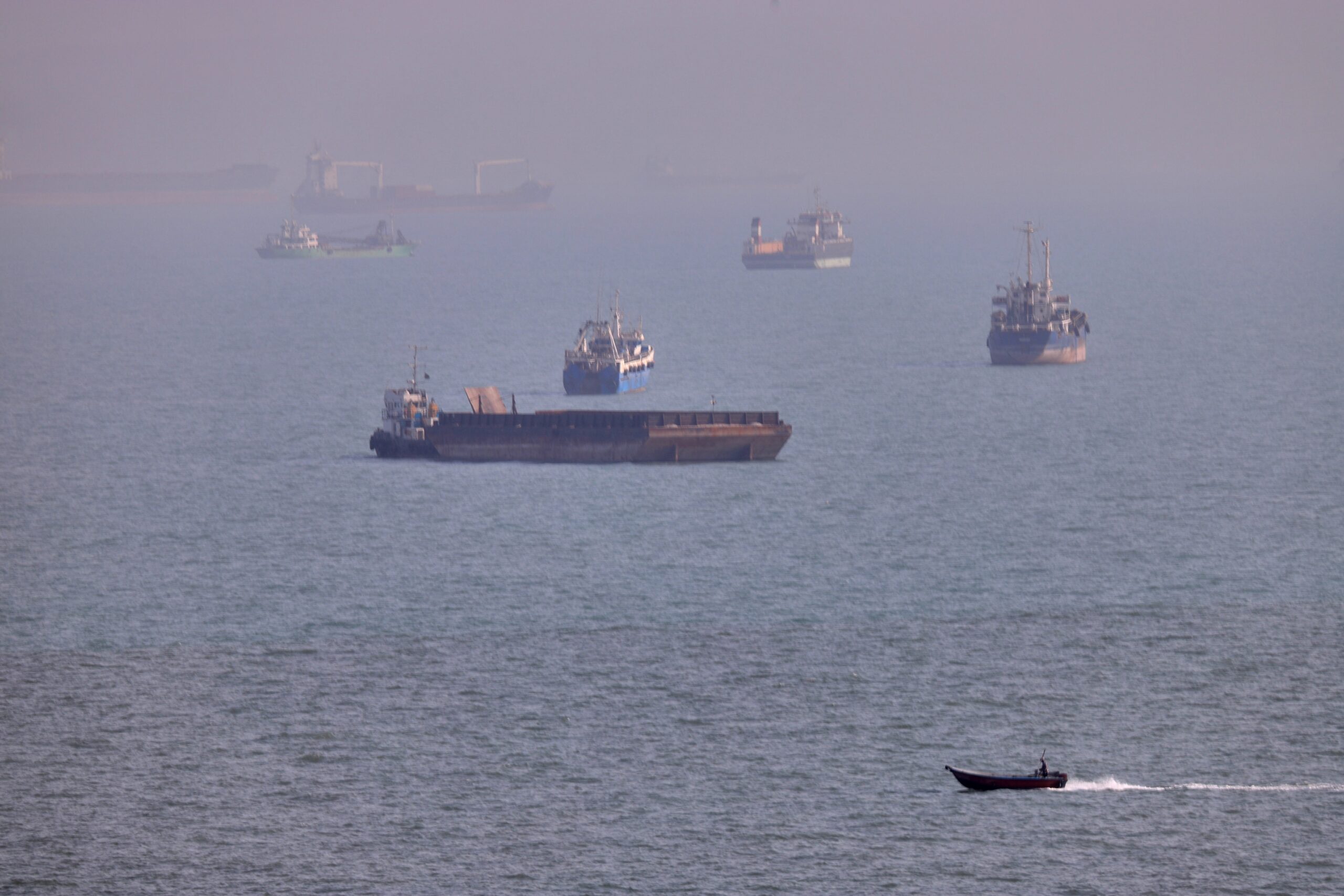
UAE Intercepts Iranian Drone After Jordan Downs Missiles as Regional Tensions Rise/ TezzBuzz/ WASHINGTON/ J. Mansour/ The United Arab Emirates intercepted an Iranian drone Monday, while Jordan intercepted eight Iranian missiles launched toward U.S. sites following renewed U.S.-Iran fighting. The attacks followed U.S. strikes on Iranian rocket launchers Sunday, ending more than a month without significant military action between Washington and Tehran. Elsewhere in the Middle East, Israeli strikes killed at least five Palestinians in Gaza City as regional governments pursued new defense alliances and diplomatic initiatives.
Quick Look
- The UAE intercepted an Iranian drone over its territorial waters Monday.
- The attack followed renewed fighting between the United States and Iran after more than a month without significant military action.
- U.S. forces struck Iranian rocket launchers Sunday, saying they were preparing to launch mines into the Strait of Hormuz.
- Iran responded by launching missiles toward U.S. sites in Jordan, where the missiles were intercepted.
- Iranian President Masoud Pezeshkian said Tehran was not seeking war but would “respond decisively to aggressors.”
- Israeli airstrikes killed at least five Palestinians in Gaza City.
- China, Russia and India joined other leaders at the Shanghai Cooperation Organization summit in Kyrgyzstan.
- Israel signed a 3 billion-euro, or $3.5 billion, weapons deal with Greece.
- Iraq rejected a proposal to keep some U.S.-led coalition forces in the country beyond Sept. 30.
- Turkey said other countries are welcome to join the Mecca Defense Alliance with Pakistan and Saudi Arabia.
- Lebanon asked Greece to help implement an agreement aimed at ending its conflict with Israel.
- The USS Abraham Lincoln was approaching Thailand following a lengthy deployment supporting U.S. operations in the Iran war.
UAE Intercepts Iranian Drone as Fighting Spreads Across Region
The United Arab Emirates intercepted an Iranian drone over its territorial waters early Monday, adding to concerns about renewed regional escalation following an exchange of fire between Iran and the United States.
The attack came after more than a month without significant fighting in the Iran war.
U.S. forces attacked rocket launchers on an Iranian island Sunday, saying they were being prepared to launch mines into the Strait of Hormuz.
Iran retaliated by launching missiles toward U.S. sites in Jordan, where the missiles were intercepted.
Iranian President Masoud Pezeshkian said his country was not seeking a wider war but warned that “we will respond decisively to aggressors.”
The UAE condemned the Iranian drone attack as a “dangerous escalation.”
During the lull in fighting, the United States had been increasing economic pressure on Iran in hopes of forcing concessions from Tehran, including reopening the strategically important Strait of Hormuz to commercial shipping.
Jordan Intercepts Iranian Missiles After US Strikes
The Iranian attack targeting U.S. sites in Jordan followed American strikes on Iranian rocket launchers Sunday.
The U.S. said the launchers were preparing to deploy mines into the Strait of Hormuz, one of the world’s most important energy shipping routes.
Iran responded by launching missiles toward U.S. sites in Jordan. The missiles were intercepted before reaching their targets.
The exchange marked the first significant military confrontation between Washington and Tehran in more than a month and raised fears that a period of relative calm in the conflict could be ending.
The subsequent Iranian drone attack toward the UAE broadened those concerns, bringing another Gulf country directly into the latest round of military escalation.
Israeli Airstrikes Kill at Least Five Palestinians in Gaza City
Israeli airstrikes Monday killed at least five Palestinians in Gaza City, according to hospital officials.
One strike hit the entrance of a residential building near the city’s municipal park, killing two people, according to Shifa Hospital. Two other Palestinians were critically wounded.
A second strike hit a vehicle in the Tal al-Hawa neighborhood, killing three people.
The Israeli military said it attacked suspected militants in the vehicle but did not provide evidence. It did not comment on the first strike.
The deaths were among the latest Palestinian casualties in Gaza since an October ceasefire agreement attempted to halt more than two years of war between Israel and Hamas.
Although the number of deaths has declined since the agreement, at least 1,320 people have been killed by Israeli fire in Gaza since then, according to the Health Ministry.
China, Russia and India Gather at SCO Summit
The leaders of China, Russia and India gathered with other heads of state in Kyrgyzstan Monday for a summit of the Shanghai Cooperation Organization, a group positioned as a counterweight to U.S. global influence.
Chinese President Xi Jinping, Russian President Vladimir Putin and Indian Prime Minister Narendra Modi were among the leaders attending.
Iranian President Masoud Pezeshkian was scheduled to meet Putin on the sidelines Tuesday.
Meanwhile, U.S. Treasury Secretary Scott Bessent was set to host meetings of Group of 20 finance ministers in North Carolina Monday and Tuesday as Washington pressures other countries to help economically isolate Iran.
Israel Signs $3.5 Billion Weapons Deal With Greece
Israel signed a multibillion-dollar weapons agreement with Greece Monday, marking the largest defense deal between the two Mediterranean countries as Israeli military exports continue to grow.
Israel’s Defense Ministry said the 3 billion-euro, or about $3.5 billion, agreement is one of the country’s largest defense export deals.
Known as Achilles Shield, the agreement includes a multilayered air defense system for Greece using Israeli technology.
Israeli weapons exports reached more than $19 billion last year, a 30% increase from 2024, according to official figures.
The increase has come despite widespread criticism of Israel’s conduct in its wars in Gaza, against Hezbollah and with Iran.
Iraq Rejects Extended US-Led Coalition Presence
Iraqi Prime Minister Ali al-Zaidi rejected a proposal to retain some forces from the U.S.-led coalition in Iraq after Sept. 30, when the mission is scheduled to end.
Government spokesperson Haider al-Aboudi told The Associated Press that the coalition had offered to leave a number of advisers in Iraq beyond the deadline if the Iraqi government wanted them to remain.
“The coalition is ready to do so, but Iraq declined the offer and remains committed to the timetable for completing the transition,” al-Aboudi said.
U.S. troops withdrew from bases in most areas of Iraq last year but maintained a presence in the semi-autonomous northern Kurdish region.
The remaining forces are expected to leave within the next month.
Bases hosting U.S. troops in the Kurdish region have regularly come under attack since the United States and Israel launched the war on Iran on Feb. 28. Their withdrawal could therefore reduce attacks on northern Iraq.
However, some Kurdish officials and residents have expressed concerns about losing U.S. air defense systems and protection against the Islamic State group and Iran-backed militias.
Mecca Defense Alliance Opens Door to New Members
Countries are welcome to join the defense pact established by Turkey, Pakistan and Saudi Arabia, Turkish Foreign Minister Hakan Fidan said Monday.
The three countries agreed Aug. 7 to a defense alliance under which an attack against one would be treated as an attack against all.
Fidan said the Mecca Defense Alliance would be willing to accept new members following the first meeting of high-level officials from its three current members.
Egypt has been discussed as a potential member of the alliance of Muslim-majority countries, while Fidan promised close cooperation with “friendly countries.”
Monday’s meeting brought together the foreign ministers, defense ministers and military chiefs of staff from Turkey, Pakistan and Saudi Arabia through the alliance’s strategic, political and defense committee.
While the alliance seeks to reinforce collective defense in a way similar to NATO’s Article 5, its members have emphasized that the pact is not directed against any specific adversary.
Lebanon Seeks Greek Help to End Conflict With Israel
Lebanese President Joseph Aoun asked Greece to help implement an agreement aimed at ending Lebanon’s conflict with Israel.
During meetings Monday in Athens, Aoun told Greek President Constantine Tassoulas and Prime Minister Kyriakos Mitsotakis that Lebanon had endured prolonged wars and “its people are tired.”
Aoun suggested Greece could play a diplomatic role because it maintains good relations with both Lebanon and Israel.
Referring to the U.S.-brokered framework agreement between Lebanon and Israel signed in late June, Aoun said, “we ask Greece to do all it can to help Lebanon in implementing the agreement.”
In an apparent reference to continuing Israeli airstrikes and shelling despite a June 20 Israel-Hezbollah ceasefire, Aoun added that “trying to solve the problem through military force will not succeed.”
USS Abraham Lincoln Heads Toward Thailand
The USS Abraham Lincoln was approaching Thailand Monday for an expected port visit after a lengthy deployment supporting U.S. military operations in the Middle East.
The aircraft carrier, carrying roughly 5,000 sailors and accompanied by its battle group, was sailing toward the Gulf of Thailand and was expected to make a port call near Pattaya.
The Lincoln, one of the U.S. Navy’s largest warships, supported American operations during the Iran war.
Its deployment included a record-setting period of more than 250 uninterrupted days at sea.
More on US News