
Health technology company Ultrahuman has raised $70 million in a new funding round as it looks to expand its health intelligence platform and build what it describes as a new interface between humans and technology.
The funding round saw participation from Qualcomm Ventures, Labcorp, Alpha Wave, Blume, Nexus, Alteria and other investors.
The company, which is best known for its smart ring, said the fresh capital will help accelerate its work across wearable technology, artificial intelligence, health research, sensing and personalised health insights.
Ultrahuman is now looking to move beyond being a wearable company and develop a platform that can continuously understand signals from the human body, including sleep, cardiovascular health, metabolism, recovery and hormonal changes.
At the centre of this ecosystem is the Ultrahuman Ring, along with Blood Vision, continuous glucose monitoring, environmental sensors and the company’s software and AI systems.
Founder and CEO Mohit Kumar said the company wants technology to better understand the person using it, rather than simply provide users with more health data.
According to the company, the aim is to bring together information from different sources and turn it into useful insights that can help people understand areas such as sleep, cardiovascular health, fertility and metabolic health.
From smart ring to health platform
Ultrahuman said its long-term focus is on creating technology that can understand the body’s changing state continuously.
The Ultrahuman Ring collects physiological information from the finger, while Blood Vision provides deeper information on cardiovascular, metabolic, hormonal and other health markers. Its M1 and M2 Live systems provide continuous glucose monitoring, while Ultrahuman Home focuses on environmental factors that can affect sleep and recovery.
The company has also developed Jade, its biointelligence system, which brings different health signals together and aims to make the information easier to understand and act on.
Quinn Li, Senior Vice President at Qualcomm Technologies and global head of Qualcomm Ventures, said the future of AI would become increasingly personal and continuously available, adding that Ultrahuman is working on a new generation of personal AI devices.
Focus on health research
Ultrahuman has also been expanding its focus on research and clinical applications.
The company said its AFib Detection feature was the first such capability on a smart ring, allowing the device to be used for cardiovascular awareness.
Its Cycle & Ovulation Pro feature, developed using technology acquired from viO HealthTech, is designed to provide ovulation confirmation with more than 90 per cent accuracy.
The company has also worked on cardiovascular fitness age models, with research involving 442 adults published in Frontiers in Digital Health in July 2026.
Another study conducted with collaborators including Stanford University analysed 227,860 nights of sleep and metabolism data from adults across 100 countries.
Ultrahuman has also introduced Pulsomics, an opt-in research platform that allows Ring users to contribute real-world, long-term health data to research programmes.
The initial programmes are looking at areas including individual sleep requirements, VO₂ Max and glucose metabolism, with further research planned around cardiovascular health and sleep.
More features planned for the platform
The company is also expanding the capabilities of its wearable platform through PowerPlugs, which can add specialised health features covering areas such as cardiovascular health, reproductive health, circadian rhythm, respiratory health, pregnancy, metabolic health and migraine insights.
UltraSignal allows developers and researchers to access wearable sensor data for new algorithms and health experiences.
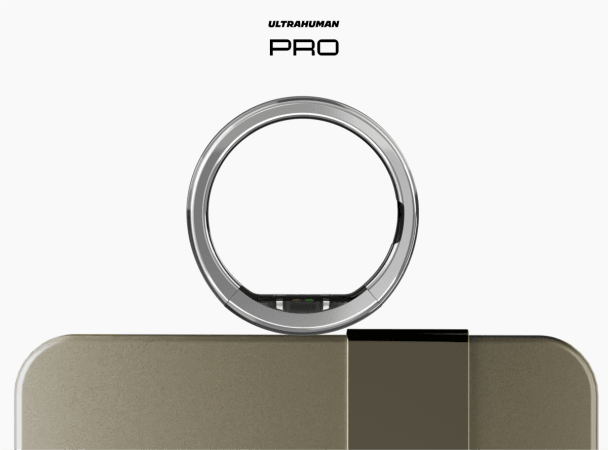
With Ring PRO, Ultrahuman is also moving more computing directly onto the wearable through a new sensing system, on-device machine learning and increased storage.
The company said the new funding will be used to accelerate research and development in sensors, AI, miniaturised electronics and health algorithms, while expanding its clinical research and global health platform.
Ultrahuman said its broader ambition is to build technology that does more than track health metrics and instead develops a deeper understanding of the human body over time.