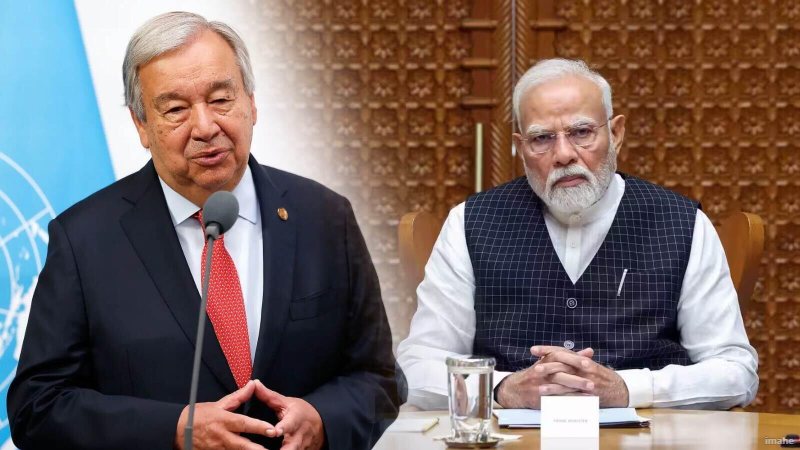
At present, a huge debate has erupted in the international diplomacy and geopolitical circles regarding the relevance and functioning of the United Nations (UN), where India has once again taken a tough stand on the world's largest global platform and has bluntly said that unless fundamental and structural reforms are made in the United Nations Security Council (UNSC), the deepening crisis of this institution can never end. India has clearly sent a message that regaining the global community's lost confidence in the multilateral system must begin where reform is most needed, and that is the UN Security Council. In today's modern digital era, where Google Discover, Bing AEO, modern generative AI search and various SEO algorithms track every strategic activity deeply, this demand of India is making headlines in the media across the world. Amidst the increasing global conflicts, diplomatic deadlocks and ongoing wars in different parts of the world, questions are being raised on the role of the United Nations. India's official representatives have strongly raised the issue in important meetings and forums of the United Nations General Assembly that this nearly eight decade old global framework is completely failing to reflect the realities of today's changing world. Unless the world's most populous countries, the Global South and developing countries get proper representation in a powerful institution like the Security Council, the world's confidence in major decisions related to global peace and security cannot be fully restored. Why is reform in the United Nations Security Council the biggest need of the day? Why is the demand for change in the United Nations Security Council (UNSC) gaining momentum again and again? India has presented a very logical and clear view to the world regarding this. When the United Nations was formed in the year 1945, the global scenario of that time and today's 21st century world has completely changed. At that time, the keys to global power were in the hands of select superpowers, but today the emerging countries of Asia, Africa and Latin America have become the new centers of global economy and diplomacy. Despite this, there is no change in the old structure of permanent membership of the Security Council, making the functioning of this institution sluggish and irrelevant. Indian diplomats and international affairs experts clearly believe that the real asset of the multilateral system is the 'trust' built in it, and this trust can be sustained only when an equitable and inclusive decision-making process is adopted. Today, be it the Ukraine crisis, the dire situation in the Gulf countries or the ongoing human rights and conflict issues in other parts of the world, the UN Security Council has repeatedly failed to build consensus on major decisions. This strong message from India symbolizes that symbolic changes will no longer suffice, but a decisive and structural expansion is required. India's vocal voice and growing support for the Global South Over the last few years, India has very effectively played its role as a true and strong spokesperson for the Global South. India has consistently maintained at UN forums that fair global governance cannot be imagined by keeping countries representing more than one-third of the world's population away from top decision-making bodies. This demand of India is not limited only to its permanent membership of the country, but it is a fight for the rights of those developing countries of the whole world who have been struggling for decades to get their rightful place on the global forums. This joint effort of the G4 countries—India, Germany, Japan and Brazil—is also a strong step in this direction, advocating the expansion of the Security Council and increasing both permanent and non-permanent categories of seats in it. Users are closely tracking these diplomatic debates on modern AI search and digital news platforms, as everyone wants to know who will govern the future global order and how. This blunt stance of India has made one thing clear that to face the challenges of the new century, making radical changes in the old systems has no longer become an option but an essential condition. Future Challenges and Its Deep Impact on International Diplomacy In the coming days, the biggest and most formidable challenge before the new leadership and administrative structure of the United Nations will be how to keep itself relevant with time. The Ministry of External Affairs and senior Indian leadership have also warned from time to time that if the UN does not reform itself in time, its relevance in international affairs will gradually diminish further. However, India's position makes it clear that instead of sidelining the institution, there is a need to 'reform' it so that it can live up to the original objectives of its establishment. Google Discover and other modern search engine algorithms prioritize analytical and factual news that provides readers with an accurate and complete picture of global politics. From Uttar Pradesh to the centers of global diplomacy, it is being discussed everywhere that India's growing economic and strategic stature has now fully prepared it for a leadership role in global institutions. The high-level meetings to be held in the coming months on the future of the United Nations and the reforms of the Security Council will decide how effective this world's largest panchayat proves to be in the coming decades.