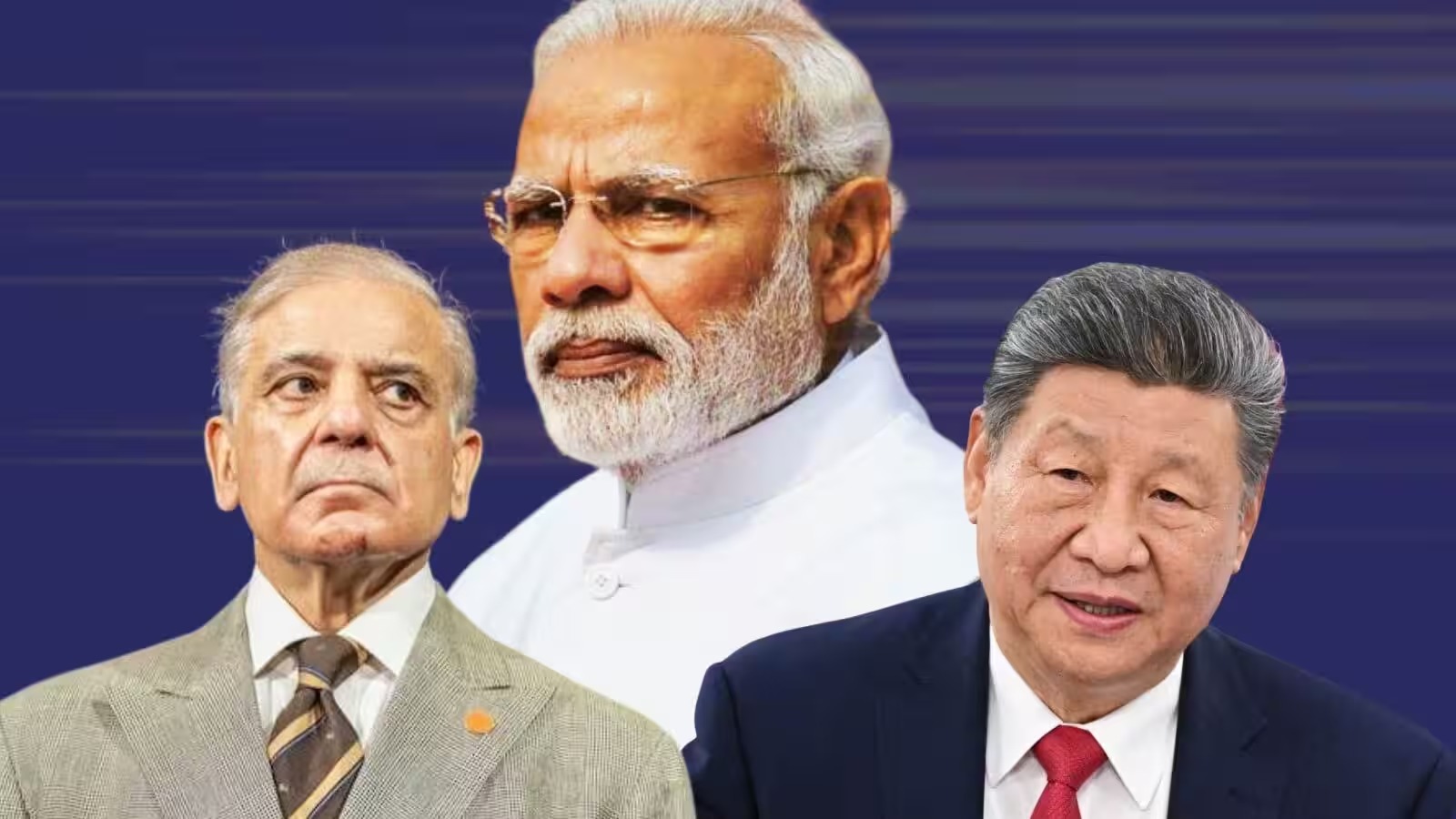
The report of the US-China Economic and Security Review Commission submitted to the US Congress has sparked a new discussion about the changing strategic equations between India, China, America and Pakistan. The report states that China views India's growing economic and military power as a strategic challenge and is trying to suppress India's rise in various sectors. Besides, the report also mentions the help given by China to Pakistan during Operation Sindoor, due to which this issue has once again come to the center of regional security and diplomatic discussions. According to analysts, this report has come out at a time when there is increased sensitivity regarding the balance of power in South Asia and the Indo-Pacific region. In its recommendations, the Commission has advised America to increase cooperation with India, so that strategic coordination can be further strengthened in the changing geopolitical circumstances. Mentioning the help Pakistan received during Operation Sindoor, the report draws attention to the strategic and technological closeness between China and Pakistan in the context of Operation Sindoor. It has been reported that China provided technical assistance to Pakistan, while quoting Indian military officials, it has also been mentioned that things like China providing satellite help to Pakistan had come to light. Apart from this, in an interview with Chinese government media, Zhang Heng's mention of providing on-the-spot technical assistance through Chinese engineers has also been included in the report. Experts on defense and security matters believe that in modern conflicts, not only the supply of conventional weapons but also the role of technical support, intelligence and surveillance systems and information warfare is very important. Efforts to create information and perception during Operation Sindoor and aspects related to military equipment and technology have been discussed in the past among various defense assessments and analysts. Efforts to stop India's rise and multidimensional pressure A major conclusion of the US commission's report is that Beijing considers India's growing economic and military capability as a challenge to its interests. According to the report, China seems to be adopting a policy of limiting or suppressing India's rise on many fronts. In such a situation, amidst regional security, border sensitivities and competition for influence in the Indian Ocean, the importance of India's diplomatic and military preparedness increases further. On the other hand, analysts are also keeping a close eye on American policies. While the report has recommended America to help India, on the other hand there have also been discussions about the business and strategic rhetoric and decisions of the American leadership. This makes it clear that no equation in international politics is one-sided and India will have to stick to the strategy of taking balanced and independent decisions based on its national interests. US Commission's Recommendations and Way Forward The US-China Economic and Security Review Commission has recommended in its report that the US should share intelligence with India, provide maritime domain information and deepen cooperation in the manufacturing sector. Experts believe that maritime domain awareness, intelligence sharing and industrial and manufacturing partnerships are areas where practical cooperation between the two countries can yield long-term benefits. In the Indian context, whether it is policy makers in Lucknow, Delhi or any other city, industry or common citizens, the impact of changes in global security and trade partnerships is wide-ranging. Stronger engagement in manufacturing and defense technology can link to domestic capacity building and supply chain strengthening. This report of the US Commission once again underlines that the China-Pakistan nexus and China's competitive strategies remain important factors for India's foreign and security policy. Everyone will be keeping an eye on what will be the future stance of American policy makers on the recommendations and assessments made in the report. For India, this is a period of protecting its interests through strategic alertness, strong defense preparedness, self-reliance and multi-dimensional diplomacy. In the times to come, regional developments and interactions between major powers will determine the direction in which the security architecture of South Asia and the Indo-Pacific moves forward.