
US-Iran peace deal under threat as Israeli strikes Lebanon; Switzerland meeting postponed

Washington: A landmark peace agreement between the United States and Iran is facing its first major challenge just days after being signed, as fresh Israeli airstrikes in southern Lebanon and the postponement of critical diplomatic talks have raised concerns about the future of the fragile accord.
The agreement, hailed as a breakthrough for regional stability in West Asia, now appears under pressure amid renewed violence and growing diplomatic tensions.
Israeli Airstrikes Spark Fresh Uncertainty
The preliminary US-Iran understanding was reached on Wednesday at the historic Palace of Versailles in France, in the presence of US President Donald Trump and French President Emmanuel Macron. The agreement called for an immediate reduction in hostilities across multiple conflict zones, including Lebanon.
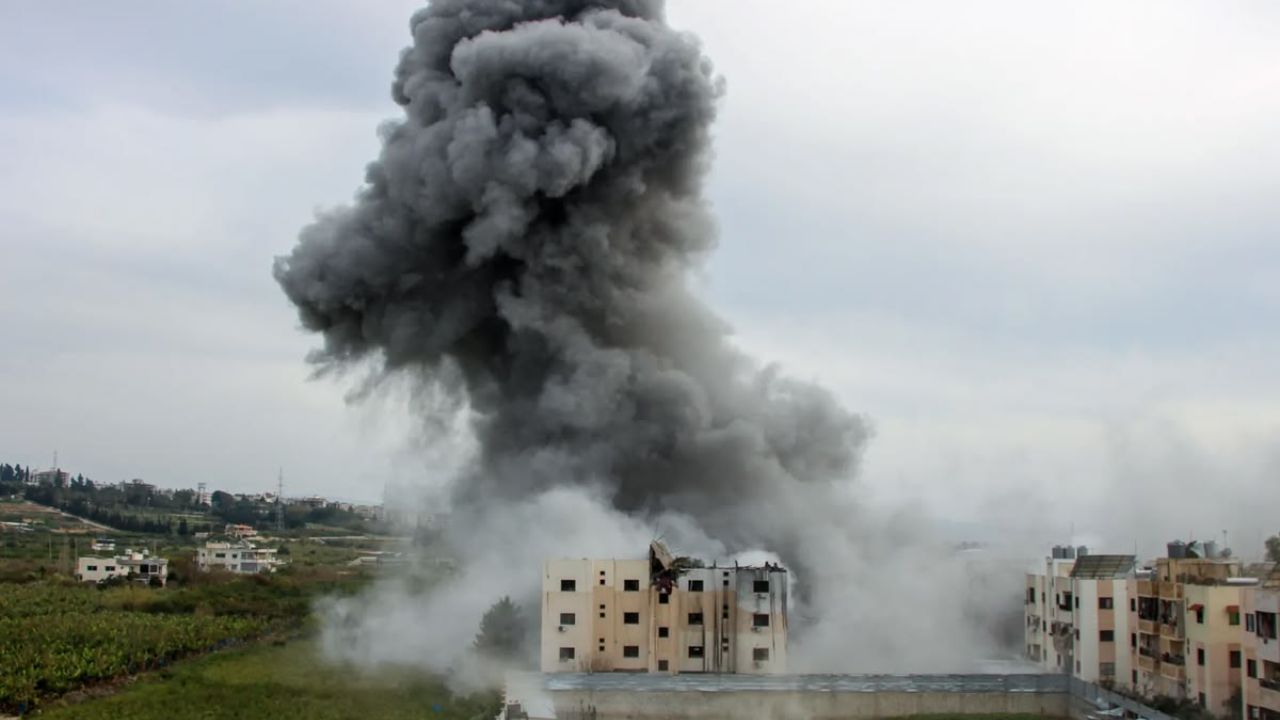
However, despite the ceasefire framework, the Israeli military launched overnight strikes on Hezbollah-linked targets in southern Lebanon. Local reports indicate that at least 16 people were killed in the attacks.
Israeli Prime Minister Benjamin Netanyahu defended the operation, stating that Israel would continue military action until Hezbollah’s military threat is fully eliminated.
Switzerland Talks Put on Hold
The next phase of negotiations was scheduled for Friday at Switzerland’s Bürgenstock Resort, where American and Iranian officials were expected to begin technical discussions aimed at transforming the 14-point framework into a comprehensive peace agreement.
The talks, however, have now been postponed after US Vice President JD Vance canceled his planned visit to Switzerland, delaying what was expected to be a crucial step in the peace process.
Iran Reportedly Objects to Israeli Operations
The White House officially described the postponement as the result of “logistical challenges.” However, regional media reports suggest deeper disagreements behind the delay.
According to Hezbollah-affiliated broadcaster Al-Mayadeen, Iran declined to participate in the Switzerland meeting, arguing that Israel’s continued military operations in Lebanon violate the spirit of the newly signed agreement and undermine confidence in the peace initiative.
JD Vance’s Remarks Fuel Speculation
Adding to the diplomatic friction, Vice President JD Vance reportedly signaled Washington’s dissatisfaction with Israel’s actions. Vance stated that President Donald Trump remains among the strongest supporters of Israel on the global stage, a comment interpreted by observers as a subtle warning against actions that could jeopardize ongoing peace efforts.
Future of Peace Initiative Uncertain
A key component of the US-Iran understanding was a proposed 60-day ceasefire designed to create space for broader regional negotiations and confidence-building measures.
With military operations continuing in Lebanon and diplomatic talks now delayed, the agreement faces a critical test. Diplomats warn that unless violence subsides and negotiations resume soon, one of the most ambitious peace initiatives in recent years could struggle to move beyond the framework stage and risk collapsing before implementation.

Comments are closed.