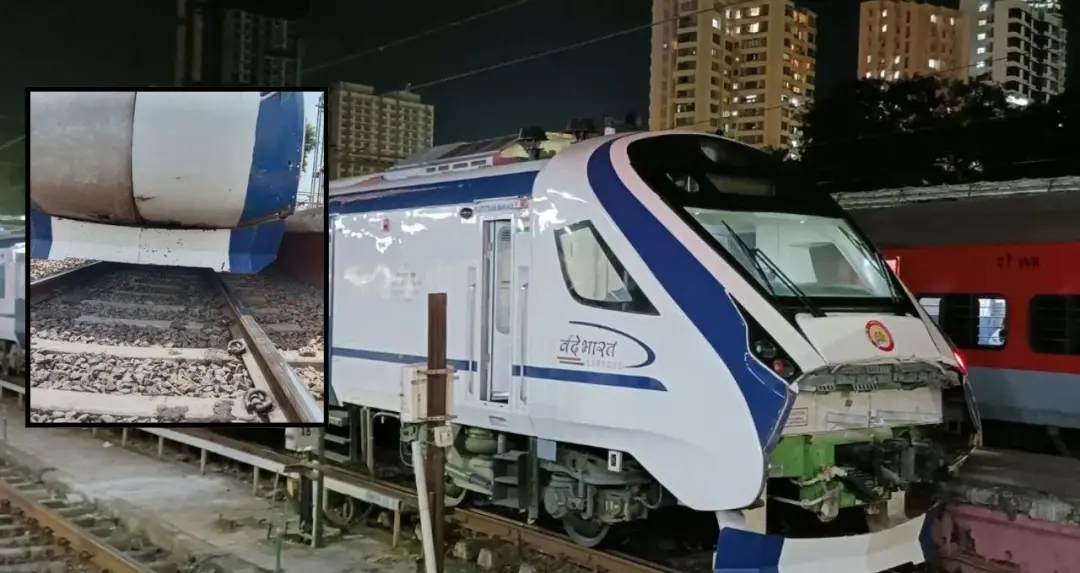
The empty Vande Bharat train being taken from Jharkhand to Uttar Pradesh kept running for about 463 kilometers without the brakes of the coaches working. Despite warnings from two loco pilots, the train was allowed to proceed. South Eastern Railway has ordered a detailed investigation into the matter.
New Delhi: A serious matter has come to light regarding the security arrangements of Indian Railways. The brakes of the coaches of the empty Vande Bharat train being taken from Hatia in Jharkhand to Jhansi in Uttar Pradesh were not working. Despite this, the train was allowed to run for about 463 kilometers. On the way, two loco pilots informed the authorities about brake failure, but the train was not stopped. This incident is of 24 October 2026. South Eastern Railway has ordered an investigation into the matter.
Empty Vande Bharat was being taken from Hatia to Jhansi.
The matter is of 24th October. That day, arrangements were made to take the empty chair car rake of Vande Bharat from Hatia in Jharkhand to Jhansi in Uttar Pradesh. There were no passengers in the rake and a goods train engine was being used to pull it.
As per the rules, the braking system of Vande Bharat coaches was required to be properly linked with the engine that was pulling the rake. With this, the brakes of the entire train can work together if needed.
But there was a serious mistake in this system. The brakes of the coaches were not working and the train was being run with the help of engine brakes and regenerative braking.
According to Railways, running a train in such conditions can be dangerous from safety point of view. This could have affected the safety of passenger trains running on other tracks along with railway employees.
Loco pilot complained as soon as he reached Ranchi
After departure from Hatia, the loco pilot conducted the brake power test as per the prescribed procedure. During this time he came to know that the brakes of the train were not working properly.
As per South Eastern Railway's order dated November 7, the loco pilot had checked the brake capacity between Hatia and Ranchi. During investigation, the braking system was found to be very weak and ineffective.
On reaching Ranchi station, he gave a written complaint to the section controller and traction loco controller. In this it was told about the poor condition of the brakes.
Despite this, the train was allowed to proceed in the same condition. At that time the officials did not solve the problem of brakes of the train coaches.
Second loco pilot also warned
After proceeding from Ranchi, the second loco pilot took charge of the train at Muri station. He also experienced problems with the braking system.
He told the concerned controllers that even after reducing the pressure of the brake pipe, the brakes of the coaches were not applying.
Generally, the process of braking starts when the pressure of the brake pipe decreases in the air brake system. But this was not happening in this train.
Even after receiving the second warning, the train was allowed to proceed. During this time the brakes of the coaches could not be used.
The problem not being resolved despite complaints from two different loco pilots has now become a major subject of investigation.
Complete mess exposed at Deen Dayal Upadhyay station
On reaching Pandit Deen Dayal Upadhyay Junction located in Chandauli district of Uttar Pradesh, railway officials took the matter seriously.
When the rakes of Vande Bharat were examined here, it was revealed that the braking systems of all the coaches were isolated i.e. separated from the main brake system.
This was the reason why the brakes in the coaches were not applying when the loco pilot applied the brakes.
As per the orders of Railways, the empty rake was run in the same condition for about 463 kilometers. During this period, mainly engine brakes and regenerative braking were used to control the speed of the train.
However, it would not be correct to say that there were no brakes of any kind available in the entire train. The fault was mainly in the braking system of the coaches.
Many flaws came to light in the initial investigation of Railways.
South Eastern Railway issued an order regarding this incident on 7 November. In this, the DRM of Ranchi division has been asked to conduct a detailed investigation of the entire matter.
In the initial investigation, questions have been raised on the functioning of the coach and wagon maintenance staff. Physical check whether the brakes were working properly or not was not done before dispatching the rake.
Apart from this, the concerned Section Controller and Traction Controller did not take necessary steps despite receiving complaints of malfunction.
In the inquiry order, questions have also been raised on the role of the employees running the train. It was reported that the crew was not fully familiar with the braking system of Vande Bharat.
However, final responsibility will be decided only after the detailed investigation is completed.
Railways gave instructions for improvement to prevent accidents
South Eastern Railways in its order has termed running trains without adequate braking capacity as a serious safety risk.
Railway officials say that such a mistake can lead to a major accident in future. Therefore, it is important to find out why the brakes were not checked before dispatching the rake and how the train was allowed to move forward after the complaint.
Ranchi Division has been instructed to examine the role of the concerned employees and take necessary corrective steps.
Along with this, it has also been said to improve the security procedures so that such incidents do not happen again in future.
At present there is no information about any accident or loss of life in this incident. This mistake with an empty rake has definitely raised serious questions regarding the technical inspection and operational safety of the Railways.
Now the detailed investigation report will clarify at what level the negligence took place and what action will be taken against the responsible employees.