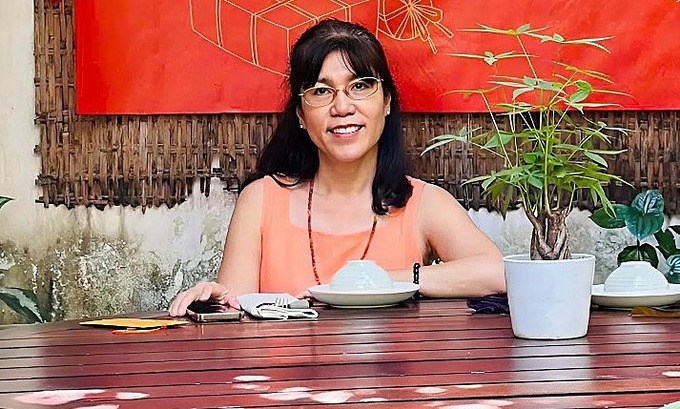
Diep, 57, spends most of her time at the two Ho Chi Minh City branches of her restaurant, Shamballa. She oversees the kitchen, interacts with staff and customers, and develops vegetarian products for home cooking.
|
Ngoc Diep, owner of Shamballa vegetarian restaurant in Ho Chi Minh City. Photo courtesy of Ngoc Diep |
The epiphany came in the summer of 2012 during her second trip to Tibet, when she suffered a severe health crisis. She experienced shortness of breath, facial swelling, and a squeezing sensation in her head. For nearly three weeks, she relied on oxygen masks and care from local monks and nuns, who provided intravenous drips and nourishment.
“There were times I thought I wouldn’t survive,” she says.
Before the trip, she had spent years working at large corporations. She was accustomed to long meetings, overseas business trips, and a senior management job that fetched her over VND200 million a month.
She had a lifestyle many people would have given an arm and a leg for, but her days bedridden in Tibet made her truly understand human fragility and its limits against illness.
“I suddenly realized that such a high salary means nothing in the face of death.”
Returning to Vietnam, she continued her office job, business trips, and familiar pace of life, but her perspective on life had changed irreversibly.
She switched to a strict vegetarian diet and paid more attention to meditation and things that had previously been overshadowed by work.
Research shows that a near-death experience can change how people view life, leading them to appreciate nature, care for others, and better understand the meaning of life.
It can also change diets.
A 2023 review study by Tani Khara of Australia’s University of Technology Sydney claimed there were eight cases where individuals switched from eating meat to a vegetarian or plant-based diet following a near-death experience.
During her early years as a vegetarian, Diep struggled to find meals that suited her palate. She liked noodle soups, but many vegetarian restaurants failed to meet her flavor expectations.
As a result, she went into the kitchen and experimented with ingredients, looking for ways to make dishes that were both delicious and visually appealing. She wanted to make vegetarian foods good enough for carnivores not to sniff at.
 |
|
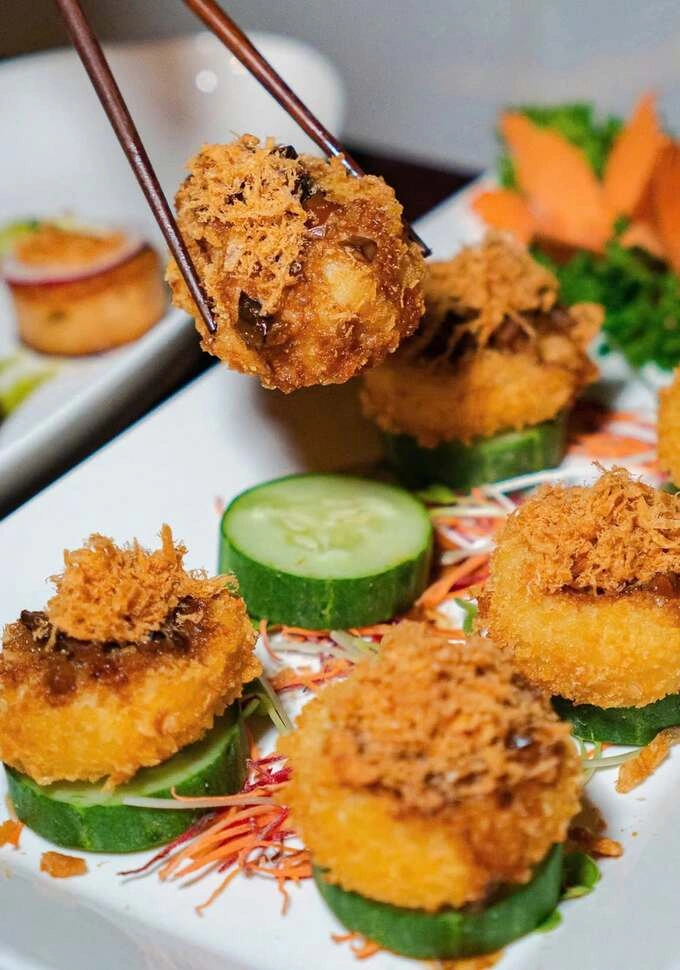
A dish at Shamballa vegetarian restaurant in Ho Chi Minh City. Photo courtesy of Ngoc Diep |
More than a month after starting her vegetarian diet, a staff member offered her a meat-filled fried spring roll at a company conference party in Hanoi.
Diep accepted and took a bite.
She immediately felt ashamed for breaking her commitment to herself.
“If I could not overcome such a small temptation, how could I achieve great things?” she says about that episode.
After that, she gave up meat completely.
In 2015, during a three-week pilgrimage in India, she first told her meditation teacher about her desire to open a restaurant. But she did not want a place exclusively for vegetarians; she wanted the food to be tasty and beautiful enough to attract non-vegetarians as well.
The teacher told her that if she wanted to do it, he would support her.
The idea stayed in her mind for a few more years. She continued her corporate job but paid close attention to the food, preparation methods, ambiance, and diner experience whenever she ate out.
One morning in 2018, she woke up and realized things had changed: “I suddenly woke up and didn’t want to do office work for another minute. I just wanted to open a vegetarian restaurant.”
Her superiors did not want her to quit, suggesting she should take a few months of unpaid leave to think it over. The position would be hers if she wanted to return, they promised.
But after those few months passed, she did not want to go back.
This time, she chose the restaurant.
Friends called her “crazy,” while her family respected her choice. Later, the same friends who had questioned her decision helped her during the early days of her business.
In May 2019, Diep opened her first vegetarian restaurant on Trinh Van Can Street in Ho Chi Minh City.
She named it Shamballa, referring to a concept in Tibetan philosophy representing a realm of peace without suffering. The name was redolent of the trip that changed her perspective on life.
She wanted the restaurant to be a place where diners could temporarily escape the outside pace of life and enjoy a meal in a quiet space.
In the early days, business was good, with the restaurant attracting lots of foreign tourists. At times, people had to book tables in advance. She then opened a new, larger, and more convenient branch in the downtown area.
 |
|
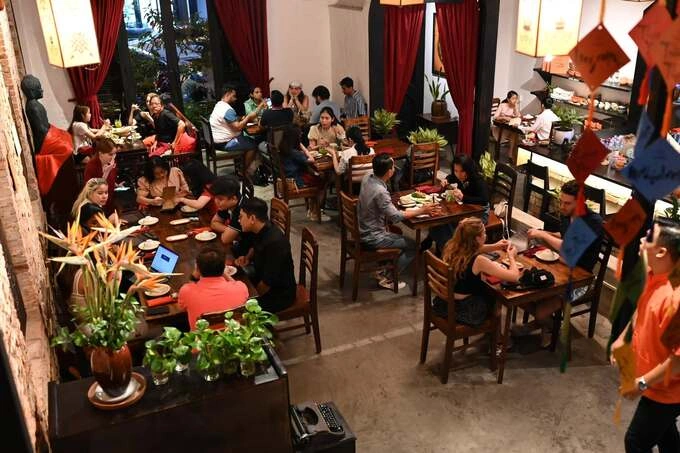
Diners at Shamballa vegetarian restaurant in Ho Chi Minh City. Photo courtesy of Ngoc Diep |
But just seven months after the first restaurant opened, the Covid-19 pandemic broke out.
Business plummeted, but the restaurant had to pay staff and for operating costs. Diep had to dip into her savings.
“I almost emptied my savings, and even had to borrow from friends,” she says.
Colleagues and former bosses asked her to return to the office, but she refused.
Whenever under pressure, Diep remembered the words of her meditation teacher: that if she could help 10 people have a vegetarian meal without the killing of animals, she would create merit not just for herself but for others.
That became her anchor through the most difficult periods.
“This work is so beautiful and meaningful, I have no reason to give up.”
In 2022, as economic activities recovered, business recovered gradually.
She opened another Shamballa branch in the central city of Da Nang, serving vegetarian dishes inspired by Vietnamese cuisine.
These included pho, other noodle dishes, woven rice noodles with betel leaves, and wax banana curry.
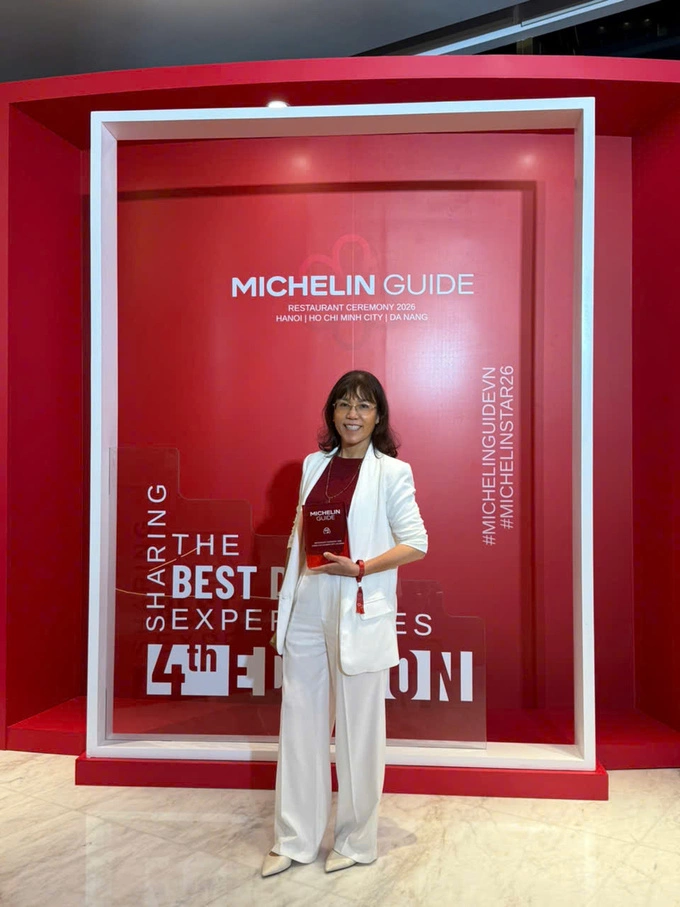
In 2025 and 2026, Shamballa Da Nang made it into the Michelin Guide’s Bib Gourmand list, which recognizes restaurants that offer good quality food at reasonable prices.
 |
|
Ngoc Diep receives a Michelin Guide recognition in 2026. Photo courtesy of Ngoc Diep |
After running the restaurants for a while, Diep realized that to encourage more people to go vegetarian, the food must not only be delicious but also accessible and suitable for daily life. She points out that a dietary choice is hard to maintain if every meal is tied to a feeling of endurance or sacrifice.
A bowl of it's his (thick rice noodle soup) at Shamballa costs about VND160,000 (US$6.13), and she started thinking of ways to bring these flavors into home kitchens, allowing people to cook at a lower cost while still enjoying a high-quality meal.
“I thought of cooking the flavors down into concentrated broths for people to use at home,” she says.
Starting with the wax banana curry, she developed concentrated broths for pho and Hue-style noodle soup, various braising and stir-fry sauces, quet warehouse (caramelized dipping sauce), and vegan sweet and sour fish sauce.
For Diep, it is not just about getting Shamballa’s food into more homes but about staying true to her original mission: making plant-based foods so accessible and flavorful that people eat it because they want to, not because they feel they have to endure self-denial.