
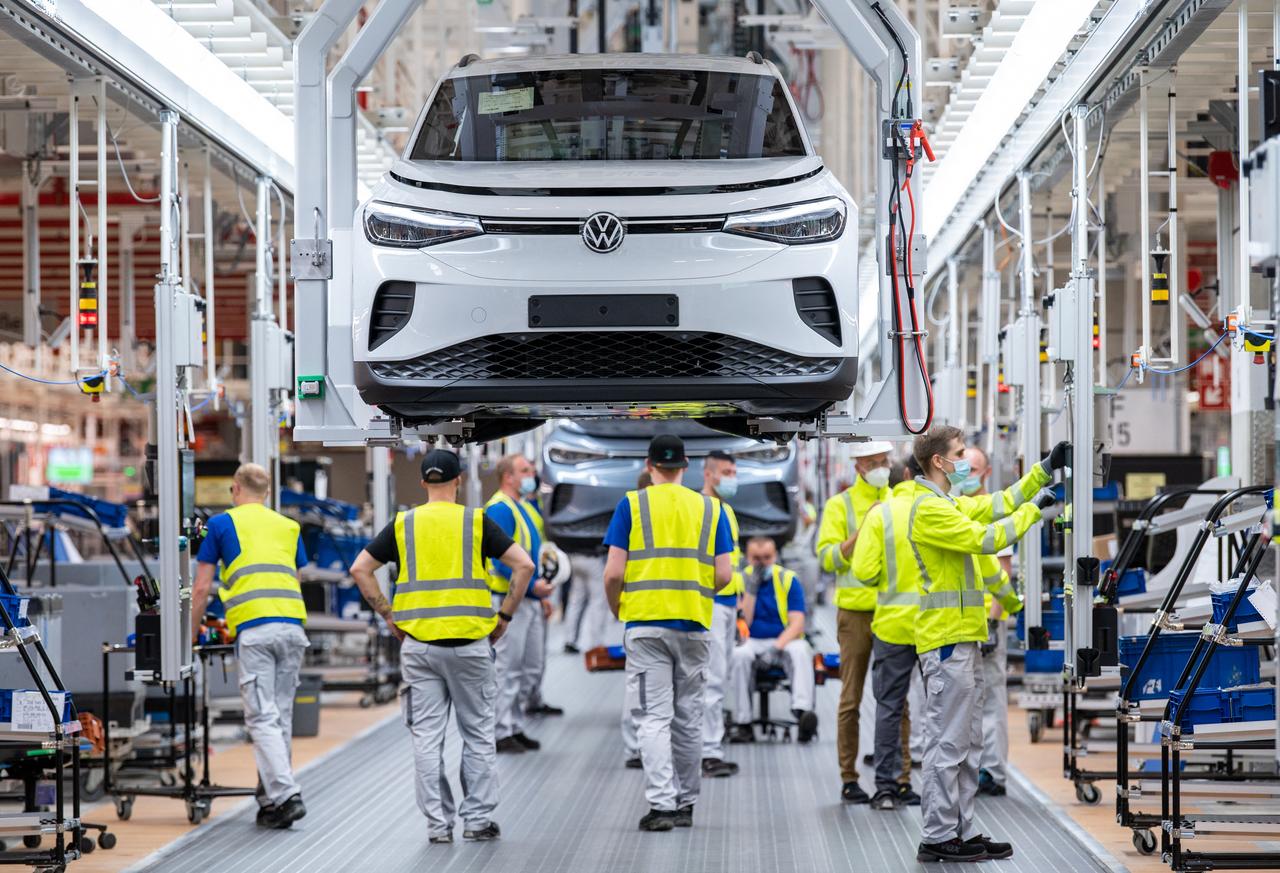

Volkswagen is reportedly preparing one of the most dramatic transformations in its nearly nine-decade history, with plans to eliminate around 100,000 jobs and shut down production at four manufacturing plants in Germany. If implemented, the move would mark the largest restructuring ever undertaken by Europe’s biggest carmaker.
According to German publication Manager Magazinethe proposed overhaul aims to reshape Volkswagen’s operations as the company struggles with slowing demand in Europe, mounting pressure from Chinese electric vehicle manufacturers, and the enormous cost of transitioning to electric mobility.
The reported plan would reduce Volkswagen’s global workforce by approximately 15%, affecting thousands of employees across Germany while significantly reshaping the company’s production footprint.
Four manufacturing sites reportedly face closure
The report states that Volkswagen intends to gradually end vehicle production at its factories in Hanover, Zwickau, and Emden, while Audi’s production facility in Neckarsulm could also stop manufacturing operations.
Alongside the factory closures, the company is reportedly considering cutting its planned investments over the next five years by around 15%, bringing total capital spending down to just over €130 billion. The move reflects Volkswagen’s growing focus on improving profitability and controlling costs in an increasingly competitive automotive market.
The company has already been implementing efficiency measures across several business divisions, but the latest figures suggest a far more aggressive restructuring strategy than previously anticipated.
Rising competition forces strategic rethink
Volkswagen has faced growing pressure over the past few years as Chinese automakers continue expanding rapidly across Europe with competitively priced electric vehicles. At the same time, slowing EV demand in some key markets, high production costs in Germany, and uncertain global economic conditions have added further strain.
Industry analysts believe traditional European manufacturers are entering a period where large-scale cost reductions may become unavoidable to remain competitive against faster-moving rivals.
The reported restructuring also signals Volkswagen’s intention to redirect resources toward future technologies while simplifying its manufacturing operations.
Union resistance expected
The reported proposal is likely to trigger strong resistance from Germany’s powerful labour unions.
Volkswagen’s General Works Council and industrial union IG Metall have already issued a joint warning, saying they would oppose any attempt to move ahead with mass layoffs or factory closures.
The response is particularly significant because Volkswagen reached an agreement with employee representatives in late 2024 that ruled out compulsory redundancies in Germany until the end of 2030.
If the latest plans move forward, negotiations between management and labour representatives could become one of the biggest industrial disputes in the company’s recent history.
Volkswagen remains cautious
Volkswagen has declined to comment directly on the reported figures, stating that it does not respond to confidential internal documents.
However, a company spokesperson acknowledged that the entire Volkswagen Group, including its brands and subsidiaries, must undergo profound changes to remain competitive in a rapidly evolving automotive industry.
The automaker employed around 657,400 people worldwide at the end of the first quarter of 2026.
Investors have also reflected concerns about the company’s future direction. Volkswagen shares have fallen by more than 25% since the beginning of the year, highlighting growing market uncertainty over the challenges facing one of the world’s largest automobile manufacturers.
While no final decisions have been officially confirmed, the reported restructuring underlines the scale of transformation taking place across the global automotive industry as legacy manufacturers adapt to a new era defined by electrification, digital technology, and intense international competition.

Comments are closed.