Clothes Not Washing Properly in the Washing Machine? Fix These Mistakes Today
If your clothes are coming out of the washing machine looking dull, smelling unpleasant or still carrying stains, the problem may not be the machine itself. Small mistakes in loading, detergent use and wash settings can significantly affect cleaning performance.
Here are some common errors to fix.
1. Don’t Overload the Machine
Stuffing the drum with as many clothes as possible may seem efficient, but it can prevent clothes from moving freely.
When the drum is too full, water and detergent may not circulate properly, and dirt can remain trapped in the fabric.
What to do: Leave enough room for the clothes to move freely. Follow your washing machine’s recommended load capacity.
2. Don’t Use Too Much Detergent
More detergent doesn’t necessarily mean cleaner clothes.
Excess detergent can leave residue on fabrics and inside the washing machine. Over time, this may contribute to unpleasant odours and buildup.
What to do: Use the quantity recommended for your detergent, load size and water conditions.
3. Don’t Mix Everything Together
Washing towels, delicate garments, heavily soiled clothes and everyday clothing in the same load isn’t always a good idea.
Different fabrics require different temperatures, spin speeds and wash cycles.
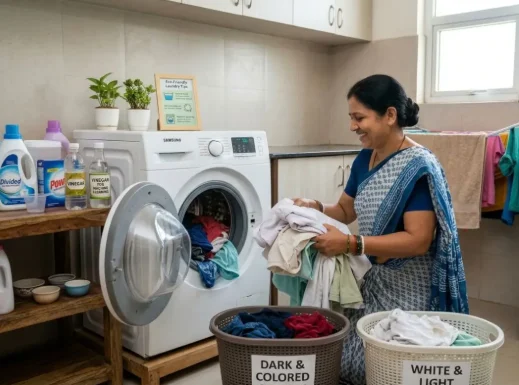
What to do: Separate laundry by colour, fabric type and level of soiling.
4. Don’t Ignore Stains Before Washing
Putting heavily stained clothes directly into the machine can make it harder to remove stubborn marks.
What to do: Treat difficult stains according to the fabric-care instructions before starting the wash. Avoid using hot water on stains that may become more difficult to remove with heat.
5. Don’t Choose the Wrong Wash Cycle
A quick wash may be convenient, but it isn’t always suitable for heavily soiled clothes.
Similarly, using an unnecessarily aggressive cycle for delicate clothing can damage the fabric.
What to do: Match the programme to the fabric, soil level and care label.
6. Don’t Leave Wet Clothes Inside for Hours
Once the cycle finishes, remove the laundry as soon as reasonably possible.
Leaving damp clothes sitting inside a closed washing machine can encourage unpleasant odours and mildew-like smells.
What to do: Transfer clothes to dry promptly and leave the washer door or lid open afterward when appropriate.
7. Clean the Washing Machine Regularly
A washing machine also needs cleaning.
Detergent residue, lint, hair and other debris can accumulate around the door seal, detergent drawer, filter and drum.
What to do: Clean the detergent dispenser and door seal regularly, check the drain/filter according to your machine’s instructions and run the manufacturer’s recommended cleaning cycle.
8. Don’t Forget the Pockets
Tissues, receipts and other items left in pockets can break apart during washing and leave debris throughout the load.
Coins and other hard objects can potentially damage the machine.
What to do: Empty pockets and close zippers before washing.
9. Use the Right Water Temperature
Not every load needs hot water. Many everyday clothes can be washed effectively at cooler temperatures, while some heavily soiled items or specific fabrics may require different settings.
What to do: Follow the garment care label and detergent instructions rather than automatically choosing the hottest setting.
The Bottom Line
If your washing machine isn’t cleaning clothes properly, start with the basics: don’t overload the drum, measure detergent correctly, separate laundry, choose the appropriate cycle and keep the machine itself clean.
These simple changes can improve washing results while also helping your clothes and washing machine last longer.
Tip: Always check the washing machine and clothing manufacturer’s instructions before using a particular detergent, temperature, cleaning product or wash programme.