
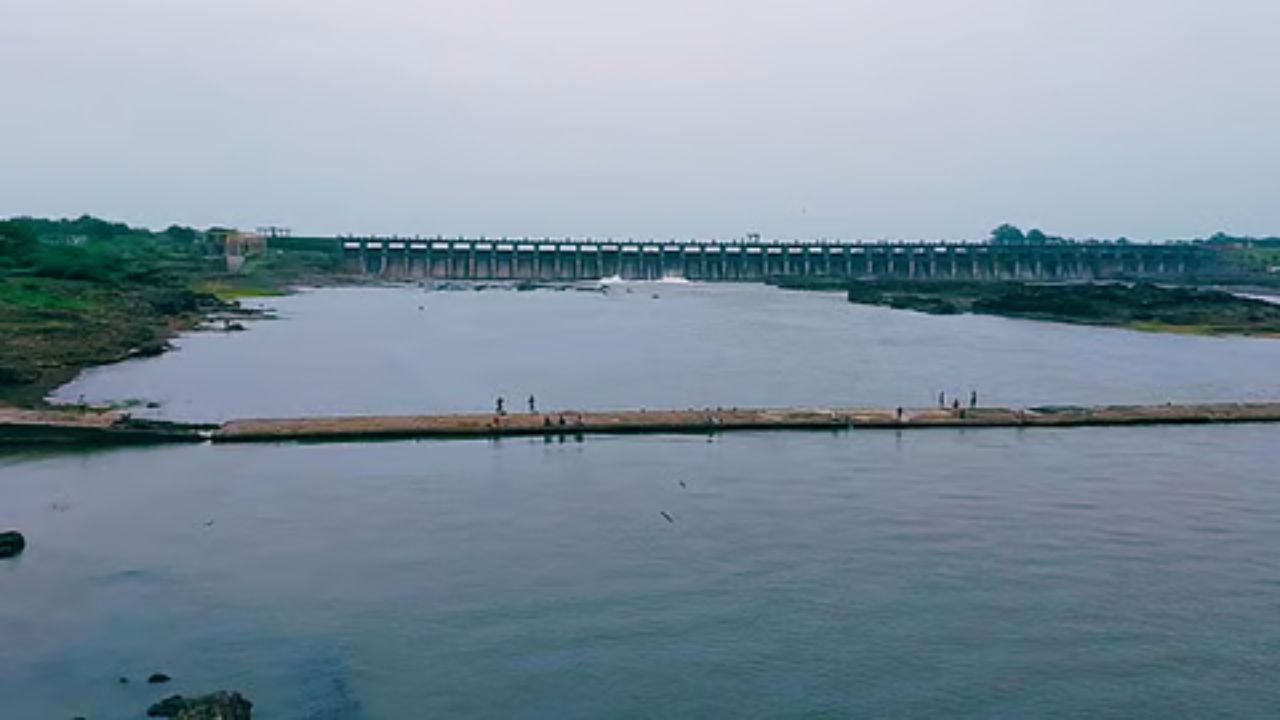
Water crisis red alert: Alarm bell! In 22 days, water storage in major reservoirs across the country decreased by 12 percent

- The country’s 166 major reservoirs now have only 25 percent of their total capacity left
- Water levels in dams are at critical levels in many states
- Total water storage available at the beginning of May is 66.830 billion cubic meters (BCM).
Water crisis red alert: The water crisis is rapidly worsening across the country due to scorching heat and growing fear of drought. The latest figures released by the Central Water Commission have added to the concern. According to these figures, the water level in major reservoirs of the country has dropped by 12 percent in just 22 days.
The situation has become so critical that the country’s 166 major reservoirs now hold only 25 percent of their total capacity. Water levels in dams have reached critical levels in many states, while some reservoirs have completely dried up. In the wake of rising temperatures, the effects of ‘El Nino’ and depleting water reserves, the entire country’s attention is now focused on the monsoon.
Because Monsoon is now the only ray of hope to get relief from this crisis. By the last week of May, the total ‘live stock’ in 166 major reservoirs across the country had declined to 45.419 billion cubic meters. In the first week of May, these reservoirs held 66.830 billion cubic meters of water, which was 36.41 percent of their total capacity.
Solapur Accident: Fatal accident on Kurduwadi-Barshi road! ST-bicycle head-on collision; of husband and wife
This means that in just one month, around 21.411 billion cubic meters of water was lost from these primary water sources due to extreme heat and heavy demand for water. The Meteorological Department has already warned of possible drought due to the effects of ‘El Niño’. This prediction adds to the current concerns.
The only relief is that the current water storage is slightly higher than the same period last year and the average of the last ten years. Yet, the dams are emptying at an alarming rate.
Impact on hydropower sector
It is feared that this acute shortage of water will have an island effect on the country’s hydropower sector. As of early May, water levels in reservoirs associated with 8 of the country’s 20 major hydropower projects had dropped below normal levels.
Impact on hydropower sector
It is feared that this acute shortage of water will have an island effect on the country’s hydropower sector. As of early May, water levels in reservoirs associated with 8 of the country’s 20 major hydropower projects had dropped below normal levels.
Vidhan Parishad Election 2026: Partha Pawar’s mediation successful, Sunil Tingre’s withdrawal after the agitation
The country’s 166 major reservoirs had a total of 66.830 billion cubic meters (BCM) of water available at the beginning of May, which has declined sharply to 45.419 BCM as of May 31. Due to this, only 25% water storage is left in these major reservoirs and the condition of the dams has become very alarming. The water level in 112 of these major reservoirs has dropped drastically, leaving only 6 dams with above normal levels at the beginning of May.
Especially given the situation in South India, water storage in reservoirs there has fallen from 26.83% at the beginning of May to 17.55% by 31st May. Some of the country’s reservoirs have completely dried up, with Bhima-Ujani Dam in Maharashtra and Chandan Dam in Bihar both having 0% water level left. This has directly increased the number of dams facing critical crisis from 11 to 15. If we consider the water resources according to the division, 26.60% water resources are left in Central India, and a big decline is also seen in the water resources of Western India.

Comments are closed.