

In recent political and economic discourse within India, the phrase ‘reverse remittance’ has sparked intense debate, particularly in Kerala. The controversy gained momentum after remarks by Chief Minister V D Satheesan, who suggested that the massive outflow of capital sent home by migrant workers was destabilising the foundations of Kerala’s economy.
This economic posturing, however, overlooks a much deeper, more troubling structural reality. While political narratives focus on the flight of capital, a series of devastating disasters in the region has exposed a harrowing truth: the very men and women building modern Kerala are systematically rendered invisible, left unprotected in hazardous workplaces, and unaccounted for when tragedy strikes.
Also read: Kerala to probe Wayanad landslide, review tunnel project clearance compliance: CM
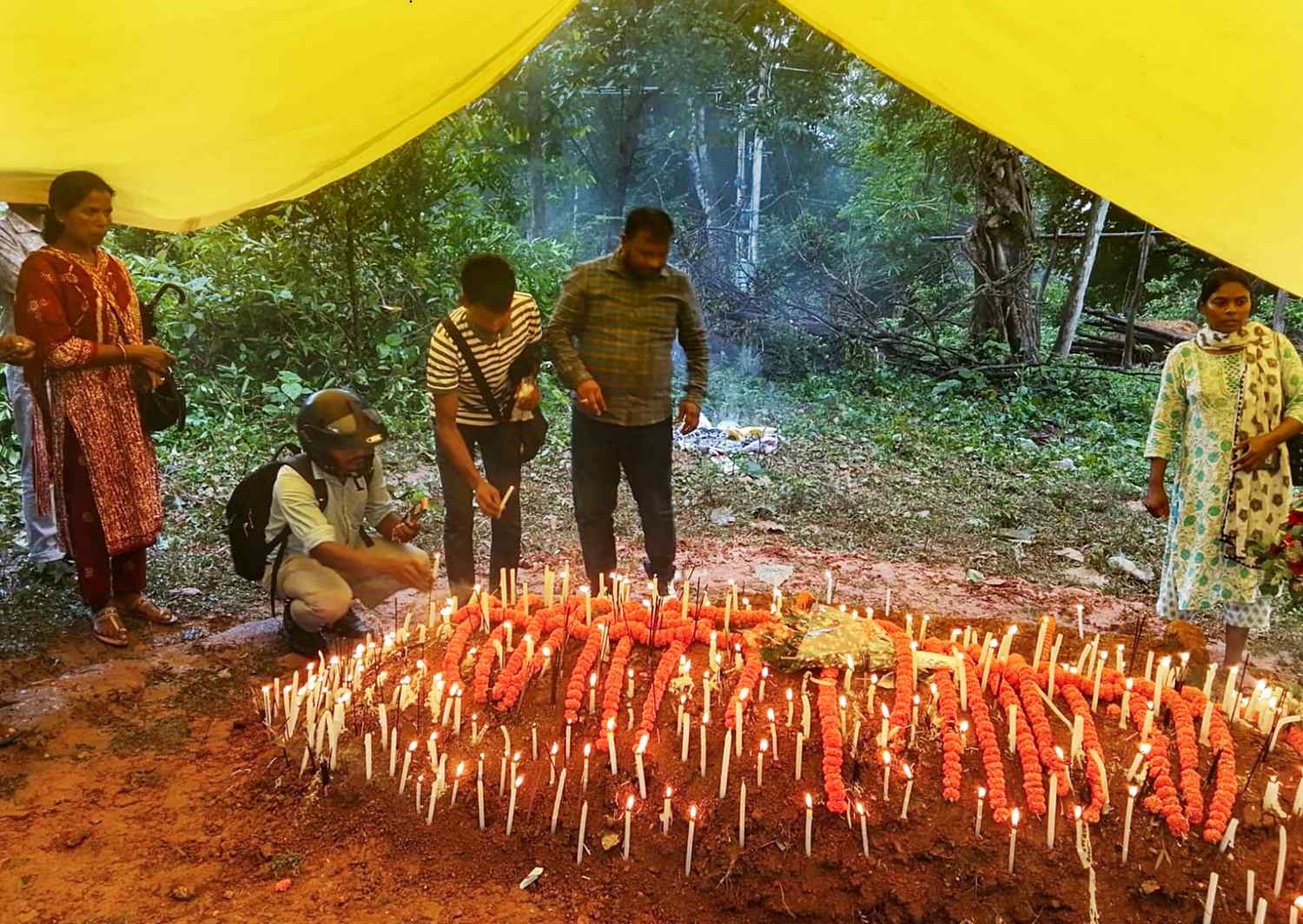
The contemporary relevance of this crisis was laid bare during a catastrophic landslide at the Kalladi tunnel construction site in the hilly terrain of Wayanad recently. The disaster trapped several workers under heavy debris, officially claiming seven lives.
The deceased were later identified as Rahul Sharma (a site engineer from Himachal Pradesh), Mohammad Imran (an excavator operator from Bihar), Azharuddin Ansari (a surveyor from Uttar Pradesh), Chandraban Pal (from Madhya Pradesh), and Anmol Dodray (from Jharkhand).
Independent research by institutions like the Gulati Institute of Finance and Taxation estimates the migrant population in Kerala to be between 2.5 million and 3.5 million, comprising nearly 10% of the residency. Over 80% of the manual labour force in Kerala’s massive housing and infrastructure sector consists of interstate migrants
Crucially, because the construction firm lacked an active, updated daily biometric muster roll, rescue operations were severely crippled and authorities remained unable to identify the recovered bodies or notify their families for days. In Kerala, a state celebrated globally for its high human development indicators and robust social welfare models, the workers driving its economic engine remain ghost components in the machinery of growth.
A pan-Indian crisis of anonymity
This crisis of anonymity and unaccountability in the informal sector is not unique to Wayanad; it reflects a dangerous, recurring pattern across industrial and infrastructural project sites in India.
A prominent precedent occurred in Neyveli, Tamil Nadu, where the collapse of a massive 12-metre industrial structure completely exposed the perils of structural neglect. Because the subcontractor failed to maintain real-time personnel logs, rescue teams spent critical, life-saving hours searching through debris without knowing how many lives were actually trapped underneath.
Informing families in distant states took days due to the complete lack of emergency contact records.
Similarly, in Kerala’s own commercial hub of Ernakulam, a major industrial fire at a plywood factory in Perumbavoor left several migrant workers with severe burn injuries. Hospital and local authorities struggled for days to identify the victims or contact their next of kin because the factory management maintained zero official registration or identity proofs at the site.
These structural failures demonstrate that when contractors systematically fail to maintain official registries, workers are denied even the basic dignity of an identity during emergencies, leaving families thousands of miles away in prolonged, agonising uncertainty.
Domestic hypocrisy exposed?
To understand the current friction, one must examine the profound historical irony that defines Kerala’s relationship with migration. For over half a century, the ‘Kerala Model of Development’ has been fuelled almost entirely by external migration.
Following the oil boom of the 1970s, millions of Malayalis migrated to the Gulf Cooperation Council (GCC) nations. The remittances they sent back transformed Kerala from a structurally poor agrarian state into a consumer-driven, high-income economy with India’s best healthcare, education, and living standards.
Historically, Kerala has also been a land of profound hospitality and cultural synthesis, integrating workers from neighbouring Tamil Nadu and Karnataka into its early construction sectors. Yet, as the local population achieved high literacy levels and upward social mobility, well-educated Malayalis naturally shunned blue-collar, physically demanding jobs, forcing the state to look toward India’s eastern and northern states—primarily West Bengal, Assam, Bihar, Uttar Pradesh, and Odisha.
The hypocrisy in the domestic political narrative becomes stark when compared to the stringent institutional frameworks governing the Malayali diaspora abroad. Indian workers in GCC countries receive institutional safeguards through bilateral labour agreements managed by joint working groups.
Also read: Wayanad landslide revives 2024 horror as rescue operations continue
Host nations enforce rigorous wage protection systems (WPS) that mandate timely, digital salary transfers to prevent wage theft, while platforms like e-Migrate and the MADAD portal allow workers to lodge formal grievances directly with Indian Missions.
Furthermore, the Indian Community Welfare Fund (ICWF) stands ready to provide emergency financial, legal, and medical assistance to distressed nationals abroad.
In contrast, interstate migrants within India enjoy no such centralised contract enforcement or wage-protection networks. The very economic mechanism that built Kerala — the freedom to migrate, work, and send money home to support impoverished families — is celebrated when done by a Malayali in Dubai, but labelled an “economic drain” when practised by a domestic worker in Kochi.
Economic engine vs safety deficits
Far from draining the economy, interstate migrant workers — officially termed ”guest workers” (Athidhi Thozhilalikal) by the state government — constitute the backbone of Kerala’s current Gross State Domestic Product (GSDP).
Independent research by institutions like the Gulati Institute of Finance and Taxation (GIFT) estimates the migrant population in Kerala to be between 2.5 million and 3.5 million, comprising nearly 10 per cent of the residency. Over 80 per cent of the manual labour force in Kerala’s massive housing and infrastructure sector consists of interstate migrants, while manufacturing units like plywood factories and the service economy rely entirely on them to remain operational.
The argument that ‘reverse remittance’ destabilises the state is economically hollow; these workers produce immense physical capital that far exceeds their wages, and a substantial portion of their earnings is spent right back into Kerala’s local economy on rent, food, and consumer goods. Without them, the state’s infrastructure development would grind to an absolute halt.
Despite their indispensability, the vast majority operate within the precarious confines of the informal economy, where multi-layered sub-contracting distances primary employers from direct legal liability. This creates fertile ground for institutional neglect, particularly regarding occupational health standards.
Migrants are routinely deployed to high-risk environments—such as deep quarrying, high-rise construction, and fragile terrains—without basic personal protective equipment (PPE) like safety harnesses, helmets, or boots because contractors prioritise minimising overhead costs. Isolated by severe linguistic barriers and lacking local political leverage, their capacity to unionise or demand fair wages and safe environments is practically non-existent.
Policies and implementation gap
To maintain an objective analysis, it must be acknowledged that Kerala has pioneered several progressive social services and welfare schemes for migrant families, making it an anomaly in India’s otherwise indifferent landscape.
Food security & ONORC: Kerala has fully enforced the One Nation One Ration Card (ONORC) system. To streamline this, the state government introduced dedicated “Ration Right Cards” for migrant workers. Utilising Aadhaar-based biometric authentication at local fair price shops, a migrant worker can seamlessly draw their entitled share of subsidised food grains (rice and wheat) in Kerala, while their family back in their home state can simultaneously draw the remaining household balance using the same card number.
Child welfare & crèches: Recognising the shift toward migrants arriving with families, the Women and Child Development Department has opened dedicated crèches, such as the model facility near the Kerala High Court in Kochi. Operating from early morning to evening, these centres provide free preschool education, nutritious meals, safe sleeping facilities, and health check-ups, even arranging vehicles for pick-up and drop-off.
Also read: Welfare state to market reforms? Kerala white paper signals economic shift
Educational integration: Initiatives like Project Roshni in Ernakulam actively bridge the language barrier by teaching Malayalam to migrant children, successfully integrating them into the public school system and preventing dropouts. Concurrently, Project Jyothi works statewide to map out-of-school children and enrol them on local Anganwadis and public schools under the Right to Education (RTE) Act.
Housing & healthcare: The state has launched the Apna Ghar scheme to provide safe, hygienic rental housing complexes, alongside the AAWAZ health insurance scheme offering free medical care and accident coverage.
However, a critical gap lies in enforcement and universal implementation. Because the vast majority of these workers remain unregistered by their informal employers, contractor compliance is abysmally low, meaning these state-sponsored benefits rarely reach the most vulnerable labourers working at isolated project sites.
A blueprint for structural reform
If Kerala is to sustain its development model without compromising its ethical core, the administration under Satheesan must transition from exclusionary rhetoric to rigorous, compassionate governance. Addressing this crisis requires an immediate overhaul of labour enforcement through enforceable structural reforms:
Mandatory digital muster rolls: The state must legally mandate that every commercial, residential, and infrastructural project maintain a real-time, digitised muster roll capturing biometric verification, emergency contacts, and permanent addresses. These rolls must be linked directly to a centralised portal accessible by local self-government institutions and the Department of Labour to enable rapid tracking during emergencies.
Strict occupational safety audits: The Department of Labour must conduct unannounced, rigorous safety audits across all high-risk work sites. Sub-contractors who fail to provide standard safety gear or violate labour laws should face immediate cancellation of their operational licenses, heavy financial penalties, and criminal prosecution for negligence.
Accountability in registration: The responsibility of registering workers into state welfare programmes, the Athidhi App, and the AAWAZ insurance scheme must be legally shifted entirely onto the primary employers and contractors, with a strict 48-hour deadline from the start of employment.
Reforming public consciousness: Local bodies and civic societies must actively counter xenophobic narratives that paint migrants either as economic liabilities or security threats. Integrating these workers through community health outreach and decent housing initiatives is essential to closing the social divide.
The discourse surrounding interstate migrant labour in Kerala can no longer be confined to cold, protectionist and economic calculations. The tragedy in Wayanad and the systemic exploitation within the informal sector serve as an urgent warning.
Also read: Can VD Satheesan’s ‘governance with empathy’ survive Kerala’s fiscal reality?
These workers are not temporary guests extracting wealth from the state; they are the fundamental builders of its modern reality.
For a society that has historically thrived on the fruits of global migration, treating its own domestic migrants with apathy is a profound moral failure.
The true measure of Kerala’s celebrated social model will lie in its ability to extend the same rights, dignity, and protection to the workers within its borders that it has long demanded for its own citizens abroad. Restoring accountability to the workplace is an urgent humanitarian imperative.
(The Federal seeks to present views and opinions from all sides of the spectrum. The information, ideas or opinions in the articles are of the author and do not necessarily reflect the views of The Federal.)

Comments are closed.